Pearson+ LogoPearson+ Logo
Ch. 28 - Green Algae and Land Plants
Freeman - Biological Science 7th Edition
Freeman7th EditionBiological ScienceISBN: 9783584863285Not the one you use?Change textbook
Chapter 28, Problem 6

Soils, water, and the atmosphere are major components of the abiotic (nonliving) environment. Describe how green plants affect the abiotic environment in ways that are advantageous to humans.

Verified step by step guidance
1
Step 1: Understand the question. The question is asking you to describe how green plants, which are biotic or living components of the environment, interact with the abiotic or nonliving components (soil, water, and atmosphere) in ways that benefit humans.
Step 2: Consider the role of green plants in the soil. Green plants help to prevent soil erosion by holding the soil together with their roots. They also enrich the soil by adding organic matter when they die and decompose. This makes the soil more fertile and better for growing crops, which is advantageous for humans.
Step 3: Think about the relationship between green plants and water. Green plants play a crucial role in the water cycle. They absorb water from the soil and release it into the atmosphere through a process called transpiration. This helps to regulate the amount of water in the environment and contributes to rainfall patterns, which can be beneficial for human activities like agriculture.
Step 4: Reflect on how green plants interact with the atmosphere. Green plants absorb carbon dioxide from the atmosphere and release oxygen through photosynthesis. This not only helps to regulate the levels of these gases in the atmosphere, but also provides the oxygen that humans and other animals need to breathe.
Step 5: Summarize your thoughts. Green plants interact with the abiotic environment in several ways that are advantageous to humans. They help to prevent soil erosion and enrich the soil, regulate the water cycle and contribute to rainfall patterns, and absorb carbon dioxide and release oxygen, helping to maintain the balance of gases in the atmosphere.

Verified video answer for a similar problem:

This video solution was recommended by our tutors as helpful for the problem above.
Video duration:
2m
Was this helpful?

Key Concepts

Here are the essential concepts you must grasp in order to answer the question correctly.

Photosynthesis

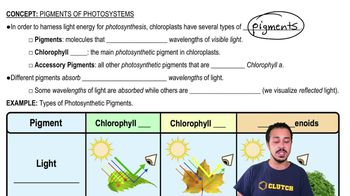
Photosynthesis is the process by which green plants convert sunlight, carbon dioxide, and water into glucose and oxygen. This process not only provides energy for the plants themselves but also produces oxygen, which is essential for the survival of most living organisms, including humans. The ability of plants to capture solar energy and transform it into chemical energy is fundamental to life on Earth.
Recommended video:
Guided course
05:58
Pigments of Photosynthesis

Soil Formation and Health

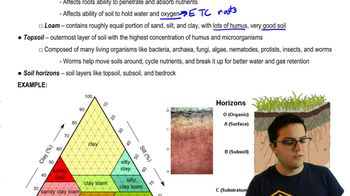
Green plants play a crucial role in soil formation and health through their root systems, which help to anchor soil and prevent erosion. Additionally, plants contribute organic matter to the soil as leaves and other plant materials decompose, enhancing soil fertility and structure. Healthy soils are vital for agriculture and support the growth of crops that are essential for human food supply.
Recommended video:
Guided course
06:13
Soil Composition

Water Cycle Regulation

Plants significantly influence the water cycle through processes such as transpiration, where they release water vapor into the atmosphere. This not only helps to regulate local humidity and temperature but also contributes to precipitation patterns. By maintaining the water cycle, plants ensure a stable supply of freshwater, which is crucial for human consumption, agriculture, and ecosystem health.
Recommended video:
Guided course
03:31
Cell Cycle Regulation