Pearson+ LogoPearson+ Logo
Ch. 44 - Animal Sensory Systems
Freeman - Biological Science 7th Edition
Freeman7th EditionBiological ScienceISBN: 9783584863285Not the one you use?Change textbook
Chapter 44, Problem 11a

Honeybees live in social groups consisting of a queen, up to several hundred male drones, and thousands of infertile female workers. The drones mate with the queen only, and the workers protect the hive, forage, and feed and groom the queen. The health of the hive depends on the female workers performing these duties instead of reproducing.
What roles do pheromones play in maintaining a functional beehive?
Scientists have identified dozens of pheromones used by honeybees for communication. Which type of sensory system uses pheromones?
a. Mechanoreception
b. Photoreception
c. Chemoreception
d. Thermoreception
e. Electroreception

Verified step by step guidance
1
Understand the role of pheromones: Pheromones are chemical signals released by an organism to affect the behavior or physiology of other members of the same species. In honeybees, pheromones are crucial for communication and maintaining social structure within the hive.
Identify the function of pheromones in a beehive: In the context of a beehive, pheromones help regulate the activities of the queen, drones, and worker bees. They can signal the presence of the queen, suppress the reproductive capabilities of worker bees, and coordinate foraging and defense activities.
Determine the sensory system involved: Pheromones are detected through a sensory system that can perceive chemical signals. This system is responsible for processing the chemical cues that pheromones provide.
Review the options for sensory systems: The options given are mechanoreception (sensing mechanical changes), photoreception (sensing light), chemoreception (sensing chemicals), thermoreception (sensing temperature), and electroreception (sensing electrical fields).
Select the correct sensory system: Since pheromones are chemical signals, the sensory system that detects them is chemoreception. Therefore, the correct answer is c. chemoreception.

Verified video answer for a similar problem:

This video solution was recommended by our tutors as helpful for the problem above.
Video duration:
1m
Was this helpful?

Key Concepts

Here are the essential concepts you must grasp in order to answer the question correctly.

Pheromones

Pheromones are chemical substances produced and released into the environment by animals, affecting the behavior or physiology of others of the same species. In honeybees, pheromones are crucial for communication within the hive, influencing roles such as mating, foraging, and maintaining social order. The queen releases specific pheromones to inhibit worker reproduction and ensure hive cohesion.
Recommended video:
Guided course
04:46
Smell and Taste

Chemoreception

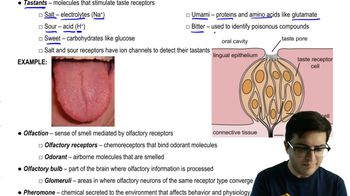
Chemoreception is the sensory system that detects chemical stimuli, allowing organisms to perceive pheromones. In honeybees, chemoreceptors located on their antennae detect pheromones, facilitating communication and coordination within the hive. This system is essential for interpreting chemical signals that regulate social behaviors and hive functions.
Recommended video:
Guided course
04:46
Smell and Taste

Social Structure of Honeybees

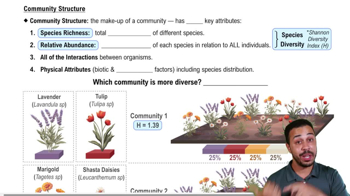
The social structure of honeybees is characterized by a division of labor among the queen, drones, and worker bees. The queen is responsible for reproduction, drones for mating, and workers for maintaining the hive. This structure relies on pheromonal communication to ensure that each group performs its specific roles, contributing to the overall health and efficiency of the hive.
Recommended video:
Guided course
04:25
Community Structure
Related Practice
Textbook Question

Scientists generally think that a 'good hypothesis' is one that is reasonable and testable and inspires further research into a phenomenon. Using these criteria, explain whether Dalton's hypothesis about color vision was a good hypothesis. Was it correct?

803
views
Textbook Question

Scientists collected data on the date of onset of the menstrual cycles in a group of women who moved into a college dormitory together in the fall. The y-axis of the graph shows the mean difference (in days) between the onset of a woman's cycle and the average onset date of the rest of the women. Evaluate whether these data provide evidence for the existence of a human pheromone.

603
views
Textbook Question

Design experiments to test the hypothesis that electric eels are both electrogenic and electroreceptive.

796
views
Textbook Question

Honeybees live in social groups consisting of a queen, up to several hundred male drones, and thousands of infertile female workers. The drones mate with the queen only, and the workers protect the hive, forage, and feed and groom the queen. The health of the hive depends on the female workers performing these duties instead of reproducing.

What roles do pheromones play in maintaining a functional beehive?

Honeybees produce an alarm pheromone when their hive is molested. This pheromone stimulates the bees to protect the hive. If you were to count the number of alarm pheromone receptors in honeybee tissues, which type of bee would likely have the most—a queen, a drone, or a worker? Why?

437
views
Textbook Question

Honeybees live in social groups consisting of a queen, up to several hundred male drones, and thousands of infertile female workers. The drones mate with the queen only, and the workers protect the hive, forage, and feed and groom the queen. The health of the hive depends on the female workers performing these duties instead of reproducing.

What roles do pheromones play in maintaining a functional beehive? Why might an alarm pheromone be more effective for triggering a protective response in a hive than signals that involve other senses, such as vision or hearing?

508
views
Textbook Question

Honeybees live in social groups consisting of a queen, up to several hundred male drones, and thousands of infertile female workers. The drones mate with the queen only, and the workers protect the hive, forage, and feed and groom the queen. The health of the hive depends on the female workers performing these duties instead of reproducing.

What roles do pheromones play in maintaining a functional beehive?

Researchers observed that the queen produces a pheromone that attracts both drones and workers. They hypothesized that this pheromone inhibits ovarian development in the workers, making the workers infertile. To test this hypothesis, they exposed workers to a synthetic version of the queen pheromone and then recorded their 'ovary development score.' (Higher scores indicate more fully developed ovaries.) The results are shown in the graph here. Do these results support the researchers' hypothesis? Why or why not? (*** signifies P<0.001.)

515
views