Pearson+ LogoPearson+ Logo
Ch. 44 - Animal Sensory Systems
Freeman - Biological Science 7th Edition
Freeman7th EditionBiological ScienceISBN: 9783584863285Not the one you use?Change textbook
Chapter 44, Problem 8

Scientists generally think that a 'good hypothesis' is one that is reasonable and testable and inspires further research into a phenomenon. Using these criteria, explain whether Dalton's hypothesis about color vision was a good hypothesis. Was it correct?

Verified step by step guidance
1
Identify the criteria for a 'good hypothesis' as stated: it should be reasonable, testable, and inspire further research.
Examine Dalton's hypothesis about color vision, which proposed that color blindness is due to a discoloration of the liquid medium of the eyeball.
Assess the reasonableness of Dalton's hypothesis by considering the knowledge and context of his time, recognizing that his hypothesis was based on his personal observations and experiences with color blindness.
Evaluate the testability of the hypothesis: Dalton's hypothesis was indeed testable as it could be, and was, investigated further by examining the eyes of individuals with and without color blindness.
Consider whether Dalton's hypothesis inspired further research: It did inspire further research into the mechanisms of color vision and the causes of color blindness, leading to the development of more accurate theories.
Conclude whether Dalton's hypothesis was correct: While it was not correct in its specifics (color blindness is actually due to variations in cones in the retina, not the liquid medium of the eyeball), it was a good hypothesis as it was reasonable, testable, and spurred further scientific investigation.

Verified video answer for a similar problem:

This video solution was recommended by our tutors as helpful for the problem above.
Video duration:
2m
Was this helpful?

Key Concepts

Here are the essential concepts you must grasp in order to answer the question correctly.

Hypothesis

A hypothesis is a proposed explanation for a phenomenon, serving as a starting point for further investigation. It should be testable and falsifiable, meaning that it can be supported or refuted through experimentation or observation. A good hypothesis not only addresses a specific question but also leads to additional research and inquiry.
Recommended video:
Guided course
08:22
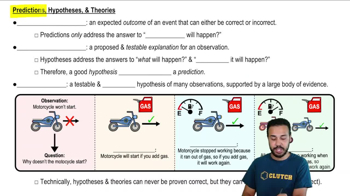
Predictions, Hypotheses, & Theories

Color Vision Theory

Color vision theory encompasses various scientific explanations for how organisms perceive color. Dalton's hypothesis, which suggested that color vision is based on the presence of specific color receptors in the eye, contributed to the understanding of color perception. Evaluating this theory involves examining its alignment with current knowledge of the visual system and its ability to explain color-related phenomena.
Recommended video:
Guided course
06:58
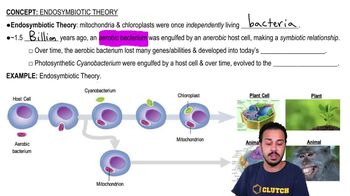
Endosymbiotic Theory

Scientific Validation

Scientific validation refers to the process of testing and confirming a hypothesis through empirical evidence. A hypothesis is considered valid if it consistently produces reliable results across different experiments and contexts. In the case of Dalton's hypothesis, assessing its correctness involves reviewing historical and contemporary research findings related to color vision and determining if they support or contradict his initial claims.
Recommended video:
Guided course
06:29
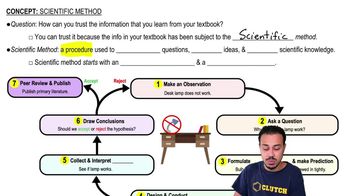
Scientific Method
Related Practice
Textbook Question

Considering that sounds and odors both trigger changes in the patterns of action potentials in sensory neurons, how does the brain perceive which sense is which when the action potentials reach the brain?

a. The action potentials stimulated by sounds are different in size and shape from those stimulated by odors.

b. The axons from different sensory neurons go to different areas of the brain.

c. Mechanoreception is not consciously perceived by the brain, whereas chemoreception is.

d. Chemoreception is not consciously perceived by the brain, whereas mechanoreception is.

882
views
Textbook Question

Give three examples of how the sensory abilities of an animal correlate with its habitat or method of finding food and mates.

727
views
Textbook Question

Compare and contrast the lateral line system of fishes with electroreception in sharks.

1093
views
Textbook Question

Scientists collected data on the date of onset of the menstrual cycles in a group of women who moved into a college dormitory together in the fall. The y-axis of the graph shows the mean difference (in days) between the onset of a woman's cycle and the average onset date of the rest of the women. Evaluate whether these data provide evidence for the existence of a human pheromone.

603
views
Textbook Question

Design experiments to test the hypothesis that electric eels are both electrogenic and electroreceptive.

796
views
Textbook Question

Honeybees live in social groups consisting of a queen, up to several hundred male drones, and thousands of infertile female workers. The drones mate with the queen only, and the workers protect the hive, forage, and feed and groom the queen. The health of the hive depends on the female workers performing these duties instead of reproducing.

What roles do pheromones play in maintaining a functional beehive?

Scientists have identified dozens of pheromones used by honeybees for communication. Which type of sensory system uses pheromones?

a. Mechanoreception

b. Photoreception

c. Chemoreception

d. Thermoreception

e. Electroreception

604
views