Skip to main content
Calculus
My Course
Learn
Exam Prep
AI Tutor
Study Guides
Textbook Solutions
Flashcards
Explore
Try the app
My Course
Learn
Exam Prep
AI Tutor
Study Guides
Textbook Solutions
Flashcards
Explore
Try the app
Back
Common Functions definitions
You can tap to flip the card.
Constant Function
You can tap to flip the card.
👆
Constant Function
A rule where every input yields the same output, resulting in a horizontal line with domain all real numbers and a single-value range.
Track progress
Control buttons has been changed to "navigation" mode.
1/15
Related flashcards
Related practice
Recommended videos
Common Functions quiz
Common Functions
15 Terms
Common Functions
0. Functions
4 problems
Topic
Patrick
Transformations
0. Functions
3 problems
Topic
Ally
0. Functions - Part 1 of 2
7 topics
14 problems
Chapter
Patrick
0. Functions - Part 2 of 2
8 topics
12 problems
Chapter
David-Paige
7:42
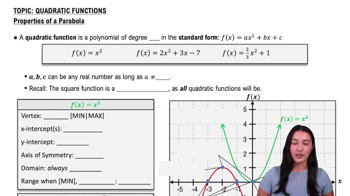
Properties of Parabolas
2047
views
54
rank
4:30
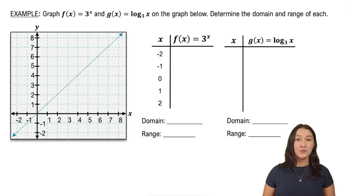
Graphing Logarithmic Functions Example 1
1330
views
49
rank
7:30
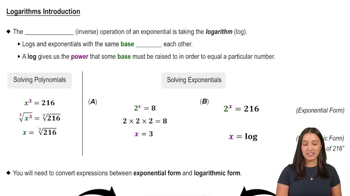
Logarithms Introduction
1615
views
48
rank
Terms in this set (15)
Hide definitions
Constant Function
A rule where every input yields the same output, resulting in a horizontal line with domain all real numbers and a single-value range.
Identity Function
A rule where each input equals its output, forming a straight line through the origin with both domain and range as all real numbers.
Square Function
A rule mapping each input to its square, producing a parabola opening upward with domain all real numbers and range from zero to infinity.
Cube Function
A rule mapping each input to its cube, creating a curve symmetric about the origin with both domain and range as all real numbers.
Square Root Function
A rule assigning each nonnegative input its principal square root, with domain and range both starting at zero and extending to infinity.
Cube Root Function
A rule assigning each input its cube root, resulting in a curve passing through the origin with domain and range as all real numbers.
Slope-Intercept Form
A linear equation format, y = mx + b, where m indicates steepness and b shows the y-axis crossing point.
Quadratic Function
A degree-two polynomial, typically f(x) = ax² + bx + c, whose graph is a parabola with a vertex and axis of symmetry.
Vertex
The highest or lowest point on a parabola, representing either a maximum or minimum value depending on the parabola's direction.
Axis of Symmetry
A vertical line dividing a parabola into two mirror-image halves, always passing through the vertex.
Polynomial Function
A rule involving only nonnegative integer exponents, always producing smooth, unbroken curves with domain all real numbers.
Degree
The largest exponent in a polynomial, determining the function's overall shape and the number of possible turning points.
Rational Function
A rule formed by dividing two polynomials, with domain restrictions wherever the denominator equals zero.
Exponential Function
A rule with a constant positive base (not 1) raised to a variable exponent, producing rapid growth or decay.
Logarithmic Function
A rule giving the power needed for a base to reach a number, serving as the inverse of an exponential function and featuring a vertical asymptote.
 BackBack

 7:42
7:42