Skip to main content
Cell Biology
My Course
Learn
Exam Prep
AI Tutor
Study Guides
Flashcards
Explore
Try the app
My Course
Learn
Exam Prep
AI Tutor
Study Guides
Flashcards
Explore
Try the app
Back
Eukaryotic Cell Architecture definitions
You can tap to flip the card.
Nucleus
You can tap to flip the card.
👆
Nucleus
Membrane-bound compartment housing genetic material and site of transcription, separated from cytoplasm by a double membrane.
Track progress
Control buttons has been changed to "navigation" mode.
1/15
Related flashcards
Related practice
Recommended videos
Eukaryotic Cell Architecture quiz #1
Eukaryotic Cell Architecture
40 Terms
Eukaryotic Cell Architecture quiz #2
Eukaryotic Cell Architecture
40 Terms
Eukaryotic Cell Architecture quiz #3
Eukaryotic Cell Architecture
40 Terms
Eukaryotic Cell Architecture
1. Overview of Cell Biology
7 problems
Topic
Prokaryotes vs. Eukaryotes
1. Overview of Cell Biology
7 problems
Topic
1. Overview of Cell Biology - Part 1 of 2
5 topics
14 problems
Chapter
1. Overview of Cell Biology - Part 2 of 2
5 topics
13 problems
Chapter
Guided course
03:05
Eukaryotic Genetics
580
views
6
rank
Guided course
03:00
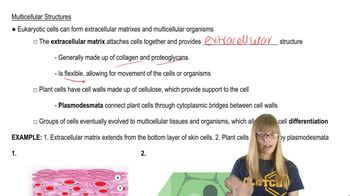
Multicellular Structures
488
views
4
rank
Guided course
03:10
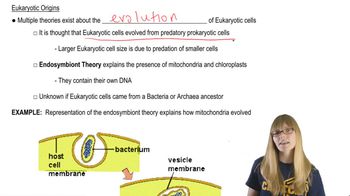
Eukaryotic Origins
613
views
6
rank
Terms in this set (15)
Hide definitions
Nucleus
Membrane-bound compartment housing genetic material and site of transcription, separated from cytoplasm by a double membrane.
Nuclear Envelope
Double membrane structure with pores, regulating exchange between the genetic compartment and the cytoplasm.
Nucleolus
Dense region within the genetic compartment responsible for ribosome assembly.
Organelle
Specialized, membrane-bound structure performing distinct cellular functions within the internal environment.
Plasma Membrane
Lipid bilayer boundary separating the cell from its surroundings, controlling molecular traffic.
Endoplasmic Reticulum
Network of membranes with rough regions for protein synthesis and smooth regions for lipid production.
Golgi Apparatus
Stacked membrane system modifying, sorting, and directing proteins to their destinations.
Mitochondrion
Energy-generating compartment producing ATP and containing its own genetic material and protein factories.
Chloroplast
Photosynthetic compartment in plants and algae, converting light energy to sugars and harboring its own DNA.
Cytoskeleton
Dynamic network of protein filaments providing structural support, shape, and facilitating internal transport.
Microtubule
Hollow protein cylinder involved in cell shape, organization, and movement of internal components.
Microfilament
Thin, polarized protein strand, also called actin filament, crucial for cell movement and muscle contraction.
Intermediate Filament
Stable protein fiber forming a scaffold that maintains cell integrity and resists mechanical stress.
Chromosome
Linear DNA-protein complex ensuring efficient genetic storage and distribution during cell division.
Extracellular Matrix
Flexible protein-rich network connecting animal cells, providing support and enabling coordinated movement.
 BackBack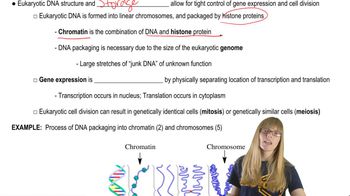
 03:05
03:05