Skip to main content
Financial Accounting
My Course
Learn
Exam Prep
AI Tutor
Study Guides
Flashcards
Explore
Try the app
My Course
Learn
Exam Prep
AI Tutor
Study Guides
Flashcards
Explore
Try the app
Back
Adjusting Entries: Depreciation definitions
You can tap to flip the card.
Depreciation
You can tap to flip the card.
👆
Depreciation
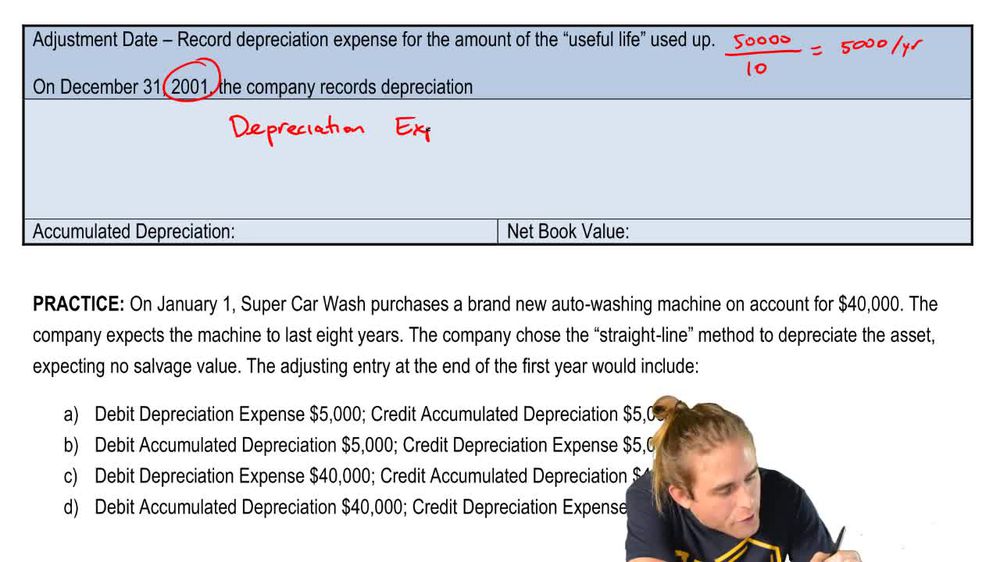
Allocation of a long-term asset's cost over its useful life to match expense with annual benefit received.
Track progress
Control buttons has been changed to "navigation" mode.
1/15
Related flashcards
Related practice
Recommended videos
Adjusting Entries: Depreciation quiz #1
Adjusting Entries: Depreciation
40 Terms
Adjusting Entries: Depreciation quiz #2
Adjusting Entries: Depreciation
10 Terms
Adjusting Entries: Depreciation
3. Accrual Accounting Concepts
10 problems
Topic
Summary of Adjusting Entries
3. Accrual Accounting Concepts
10 problems
Topic
3. Accrual Accounting Concepts
12 topics
14 problems
Chapter
Guided course
08:50
Adjusting Journal Entries: Depreciation (First Year)
2766
views
43
rank
Guided course
02:09
Adjusting Journal Entries: Depreciation (Second Year)
1996
views
36
rank
Terms in this set (15)
Hide definitions
Depreciation
Allocation of a long-term asset's cost over its useful life to match expense with annual benefit received.
Adjusting Entry
Accounting record made at period end to update accounts for events not yet reflected, such as depreciation.
Long-term Asset
Resource with significant value expected to provide economic benefit over multiple years, like machinery.
Useful Life
Estimated period an asset is expected to be productive and provide value to a company.
Depreciation Expense
Annual charge reflecting the portion of an asset's cost allocated to the current accounting period.
Accumulated Depreciation
Total depreciation recorded against an asset since acquisition, reducing its book value on the balance sheet.
Contra Asset Account
Account with a balance opposite to its related asset, used to offset and reduce the asset's reported value.
Net Book Value
Asset's original cost minus accumulated depreciation, representing its current value on the books.
Historical Cost
Original purchase price of an asset, recorded at acquisition and used as the basis for depreciation.
Straight-line Depreciation
Method allocating equal depreciation expense to each year of an asset's useful life.
Journal Entry
Formal accounting record documenting the debit and credit effects of a transaction, such as depreciation.
Balance Sheet
Financial statement presenting a company's assets, liabilities, and equity at a specific point in time.
Income Statement
Financial report summarizing revenues and expenses over a period, including depreciation expense.
Parent Account
Primary account, such as machinery, whose value is adjusted by a related contra account.
Debit Balance
Normal balance for asset accounts, increased by debits and decreased by credits.
 BackBack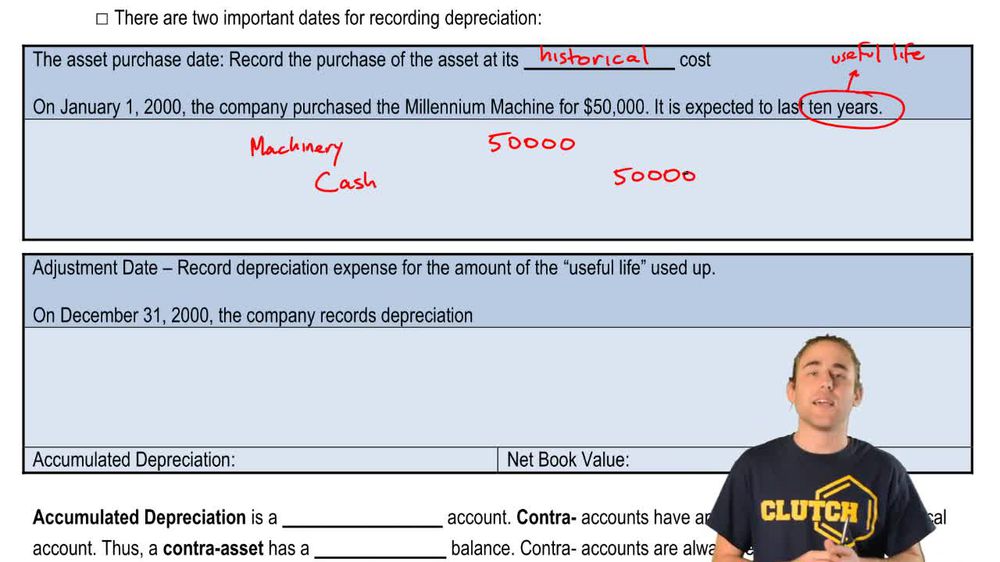
 08:50
08:50