Skip to main content
Financial Accounting
My Course
Learn
Exam Prep
AI Tutor
Study Guides
Flashcards
Explore
Try the app
My Course
Learn
Exam Prep
AI Tutor
Study Guides
Flashcards
Explore
Try the app
Back
Ratios: Debt to Asset Ratio definitions
You can tap to flip the card.
Debt to Assets Ratio
You can tap to flip the card.
👆
Debt to Assets Ratio
A solvency measure showing the proportion of a company's assets financed by liabilities, calculated as total liabilities divided by total assets.
Track progress
Control buttons has been changed to "navigation" mode.
1/13
Related flashcards
Related practice
Recommended videos
Ratios: Debt to Asset Ratio quiz
Ratios: Debt to Asset Ratio
15 Terms
Ratios: Debt to Asset Ratio
14. Financial Statement Analysis
10 problems
Topic
Ratios: Debt to Equity Ratio
14. Financial Statement Analysis
10 problems
Topic
14. Financial Statement Analysis
15 topics
15 problems
Chapter
Guided course
02:07
Ratios: Debt to Asset Ratio
1246
views
24
rank
Terms in this set (13)
Hide definitions
Debt to Assets Ratio
A solvency measure showing the proportion of a company's assets financed by liabilities, calculated as total liabilities divided by total assets.
Solvency Ratio
A financial metric used to assess a company's ability to meet its long-term obligations and overall financial stability.
Total Liabilities
The sum of all financial obligations a company owes to outside parties, including loans and accounts payable.
Total Assets
The complete value of everything a company owns, including cash, inventory, property, and equipment.
Equity
The residual interest in the assets of a company after deducting liabilities, representing ownership value.
Financial Risk
The potential for a company to face difficulties in meeting debt obligations, often increased by higher debt ratios.
Default
A situation where a company fails to meet its debt repayment obligations, potentially leading to legal or financial consequences.
Debt Payments
Regular payments a company must make to service its outstanding liabilities, including principal and interest.
Interest
The cost incurred by a company for borrowing funds, typically paid periodically to lenders.
Dividend
A distribution of a portion of a company's earnings to its shareholders, not a mandatory payment like debt interest.
Financial Structure
The composition of a company's funding sources, specifically the mix of debt and equity used to finance assets.
Liabilities
Obligations or debts a company must settle in the future, arising from past transactions or events.
Bank Loan
A sum of money borrowed from a financial institution, requiring repayment with interest over a specified period.
 BackBack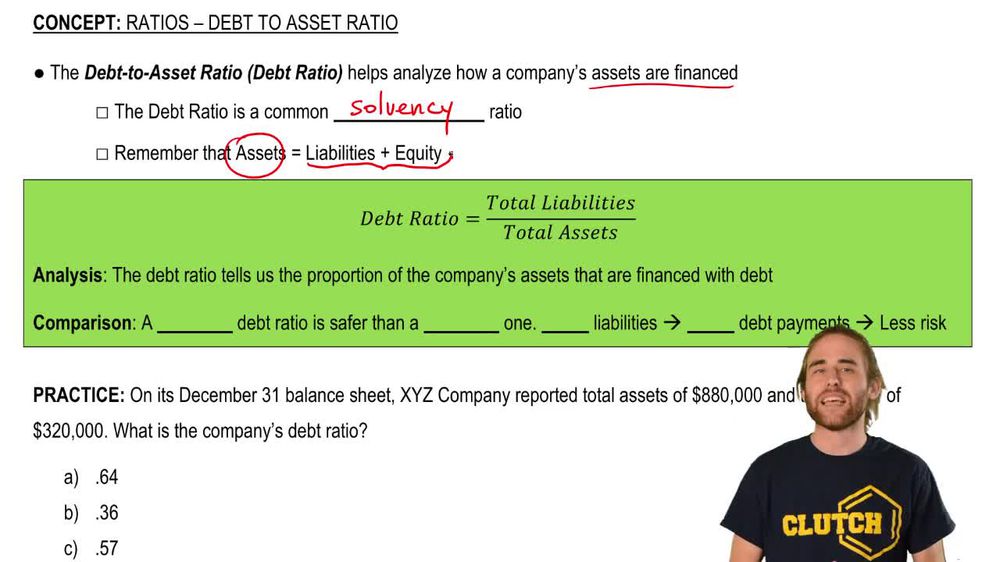
 02:07
02:07