What is the main purpose of combustion analysis in chemistry?
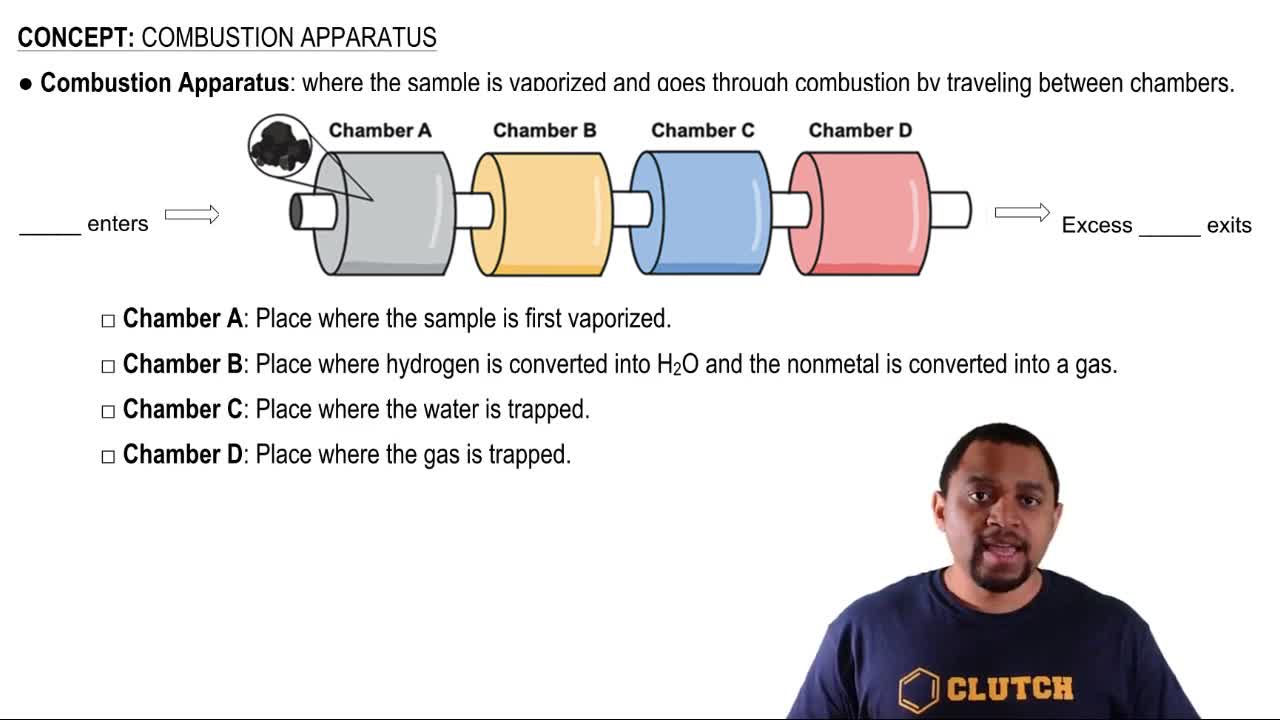
Combustion analysis is used to determine the empirical formula of a compound by analyzing the products of its combustion.
What essential reactant must be present in a combustion reaction within the apparatus?
Oxygen gas (O2) is an essential reactant for combustion reactions in the apparatus.
In which chamber of the combustion apparatus is the sample vaporized?
The sample is vaporized in chamber A of the combustion apparatus.
What happens to hydrogen in the sample during combustion analysis?
Hydrogen in the sample is converted into water during combustion analysis.
Which gas is formed if the sample contains carbon during combustion?
Carbon in the sample is converted to carbon dioxide (CO2) during combustion.
What gas is produced if the sample contains nitrogen?
Nitrogen in the sample is converted to nitrogen dioxide (NO2) during combustion.
If sulfur is present in the sample, which gas is formed during combustion?
Sulfur in the sample is converted to sulfur dioxide (SO2) during combustion.
What happens to halogens in the sample during combustion analysis?
Halogens in the sample are converted to their diatomic molecular form (X2) during combustion.
What is the function of chamber B in the combustion apparatus?
Chamber B is where hydrogen is converted to water and nonmetals are converted to their respective gases.
What is the purpose of chamber C in the combustion apparatus?
Chamber C is used to trap water produced during the combustion process.
What is typically collected after the sample passes through all chambers in the combustion apparatus?
Any excess oxygen that remains after the reaction is typically collected after the sample passes through all chambers.
Why might excess oxygen be present after a combustion reaction?
Excess oxygen may be present if the reaction occurs in an oxygen-rich environment.
What is the significance of understanding the function of each chamber in the combustion apparatus?
Understanding each chamber's function is crucial for interpreting results and solving analytical chemistry problems.
What happens to the sample as it moves from chamber A to chamber B?
The sample transitions from a vaporized state in chamber A to being converted into water and gases in chamber B.
How does combustion analysis help in determining the empirical formula of a compound?
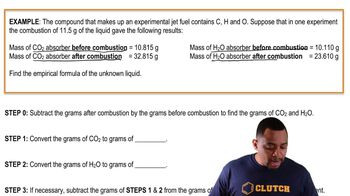
By measuring the amounts of water and gases produced, combustion analysis allows calculation of the compound's elemental composition and empirical formula.