 Back
BackIntroduction to Organic Chemistry: Structure, Nomenclature, and Functional Groups
Study Guide - Smart Notes
 Tailored notes based on your materials, expanded with key definitions, examples, and context.
Organic Chemistry: An Introduction
Definition and Importance
Organic chemistry is the branch of chemistry that studies the structure, properties, and reactions of carbon-based compounds, primarily composed of carbon and hydrogen. Organic compounds are essential to life and industry, forming the basis of living cells and many everyday products such as fuels, plastics, and pharmaceuticals.
Organic compounds: Molecules mainly containing carbon and hydrogen, often arranged in chains or rings (e.g., CH4, C2H6, C6H6).
Inorganic compounds: Compounds not primarily based on carbon-hydrogen frameworks (e.g., NaCl, CO2, HCl).
Historical context: The distinction between organic and inorganic compounds was originally based on their source (living vs. non-living), but this was disproved by the synthesis of urea from inorganic materials by Friedrich Wöhler.
Alkanes: Structure and Nomenclature
Definition and Types
Alkanes are the simplest organic compounds, consisting only of carbon and hydrogen atoms connected by single bonds. They are also known as saturated hydrocarbons because each carbon atom forms four single bonds.
Saturated hydrocarbons: Only single C–C bonds (alkanes).
Unsaturated hydrocarbons: Contain double or triple C–C bonds (alkenes, alkynes).
General formula for alkanes:
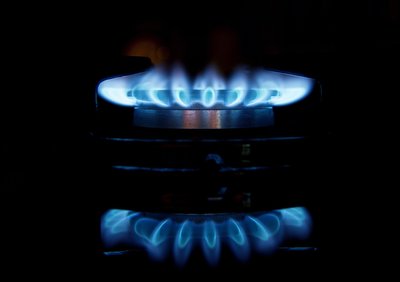
Example: Methane (CH4) is the simplest alkane and a major component of natural gas, used as a fuel for heating and cooking.
Naming Alkanes
The names of alkanes are derived from a prefix indicating the number of carbon atoms, followed by the suffix -ane. The table below summarizes the prefixes for the first ten alkanes:
# Carbons | Prefix | Name | Molecular Formula |
|---|---|---|---|
1 | Meth- | Methane | CH4 |
2 | Eth- | Ethane | C2H6 |
3 | Prop- | Propane | C3H8 |
4 | But- | Butane | C4H10 |
5 | Pent- | Pentane | C5H12 |
6 | Hex- | Hexane | C6H14 |
7 | Hept- | Heptane | C7H16 |
8 | Oct- | Octane | C8H18 |
9 | Non- | Nonane | C9H20 |
10 | Dec- | Decane | C10H22 |
Example: The molecular formula for pentane (n = 5) is C5H12.
Structural Formulas
Organic molecules can be represented in several ways:
Molecular formula: Shows the number and type of atoms (e.g., C3H8).
Expanded structural formula: Shows all atoms and bonds explicitly.
Condensed structural formula: Groups atoms to simplify the structure (e.g., CH3CH2CH3 for propane).
Skeletal formula: Shows only the carbon skeleton as lines; each vertex or end represents a carbon atom.
Alkanes with Substituents
Naming Substituted Alkanes
Substituents are atoms or groups of atoms that replace hydrogen atoms in the main carbon chain. The IUPAC naming rules for alkanes with substituents are:
Identify the longest continuous carbon chain (parent chain).
Number the chain from the end nearest a substituent.
Name and number the substituents, listing them alphabetically. Use prefixes (di-, tri-, tetra-) for multiples of the same substituent.
Example: 2-methylpropane (isobutane) has a methyl group on the second carbon of propane.
Cycloalkanes
Structure and Nomenclature
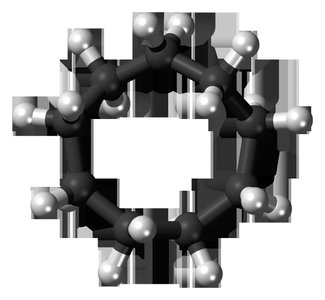
Cycloalkanes are saturated hydrocarbons with carbon atoms arranged in a ring. The general formula for cycloalkanes is .
Naming: Add the prefix "cyclo-" to the alkane name (e.g., cyclopentane, cyclohexane).
Functional Groups and Molecular Diversity
Overview of Functional Groups
Functional groups are specific groups of atoms within molecules that determine the characteristic chemical reactions of those molecules. Common functional groups include:
Functional Group | Structure | Example |
|---|---|---|
Alcohol | –OH | Ethanol (CH3CH2OH) |
Ether | R–O–R' | Diethyl ether (CH3CH2OCH2CH3) |
Aldehyde | –CHO | Formaldehyde (HCHO) |
Ketone | R–CO–R' | Acetone (CH3COCH3) |
Carboxylic Acid | –COOH | Acetic acid (CH3COOH) |
Ester | R–COO–R' | Ethyl acetate (CH3COOCH2CH3) |
Amine | –NH2, –NHR, –NR2 | Methylamine (CH3NH2) |
Amide | –CONH2 | Acetamide (CH3CONH2) |
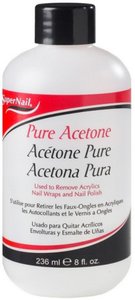
Example: Acetone is a common ketone used as nail polish remover.
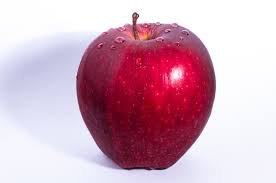
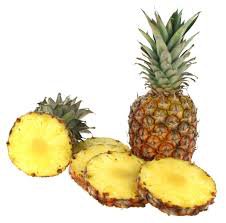
Example: Esters such as ethyl isovalerate and butyl butyrate are responsible for the flavors of apples and pineapples, respectively.
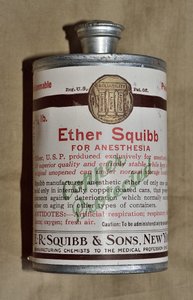
Example: Diethyl ether was historically used as a general anesthetic.
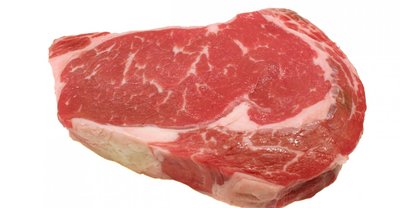
Example: Amines are responsible for the strong odor of decaying meat.
Example: Esters are also found in soaps, which are the salts of fatty acids.

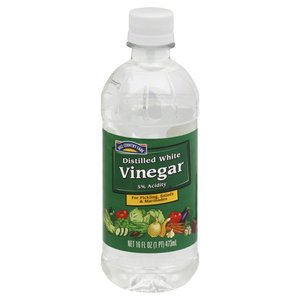
Example: Vinegar contains acetic acid, the simplest carboxylic acid.
Reactivity of Organic Compounds
Common Reactions
Combustion: Alkanes react with oxygen to produce carbon dioxide and water.
Halogenation: Alkanes react with halogens (e.g., Cl2) under UV light to form haloalkanes.
Hydrogenation: Alkenes and alkynes can be converted to alkanes by adding hydrogen in the presence of a catalyst.
Oxidation of alcohols: Primary alcohols can be oxidized to aldehydes and then to carboxylic acids; secondary alcohols to ketones.
Esterification: Carboxylic acids react with alcohols to form esters and water.
Aromatic Hydrocarbons
Benzene and Derivatives
Aromatic hydrocarbons contain one or more benzene rings, which are highly stable due to delocalized π electrons. Benzene derivatives are named by indicating the substituents and their positions on the ring. The terms ortho (o-), meta (m-), and para (p-) are used for disubstituted benzenes to indicate relative positions.
Ortho (o-): Substituents on adjacent carbons (1,2-).
Meta (m-): Substituents separated by one carbon (1,3-).
Para (p-): Substituents opposite each other (1,4-).
Alkenes and Alkynes
Structure and Nomenclature
Alkenes contain at least one carbon-carbon double bond, while alkynes contain at least one triple bond. The presence of multiple bonds introduces rigidity and the possibility of geometric (cis-trans) isomerism in alkenes.
General formula for alkenes:
General formula for alkynes:
Naming: Replace the -ane ending with -ene (alkenes) or -yne (alkynes), and indicate the position of the multiple bond with a number.
Naming Hydrocarbon Derivatives
IUPAC Rules for Functionalized Compounds
Alcohols: Replace -e with -ol (e.g., methanol, 2-propanol).
Aldehydes: Replace -e with -al (e.g., ethanal).
Ketones: Replace -e with -one (e.g., propanone).
Carboxylic acids: Replace -e with -oic acid (e.g., ethanoic acid).
Esters: Name the alkyl group from the alcohol and the acid part with -oate (e.g., methyl acetate).
Amines and amides: Use the suffix -amine or -amide, with prefixes for substituents as needed.
Summary Table: Common Functional Groups
Group | General Structure | Suffix/Prefix | Example |
|---|---|---|---|
Alkane | R–H | -ane | Methane |
Alkene | R–CH=CH–R' | -ene | Ethene |
Alkyne | R–C≡C–R' | -yne | Ethyne |
Alcohol | R–OH | -ol | Ethanol |
Aldehyde | R–CHO | -al | Ethanal |
Ketone | R–CO–R' | -one | Propanone |
Carboxylic Acid | R–COOH | -oic acid | Ethanoic acid |
Ester | R–COO–R' | -oate | Methyl acetate |
Amine | R–NH2 | -amine | Methylamine |
Amide | R–CONH2 | -amide | Acetamide |
Additional info: This guide covers the foundational concepts of organic chemistry, including the classification, structure, nomenclature, and reactivity of organic molecules, as well as the identification and importance of functional groups. It is suitable for general chemistry students preparing for exams or seeking a concise reference.
