 Back
BackTransition Metals and Coordination Chemistry: Structure, Bonding, and Properties
Study Guide - Smart Notes
 Tailored notes based on your materials, expanded with key definitions, examples, and context.
Transition Metals and Coordination Compounds
Electron Configurations of Transition Metals
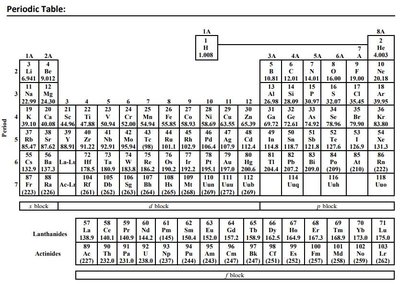
Transition metals are elements found in the d-block of the periodic table. Their electron configurations are essential for understanding their chemical behavior, especially in forming ions and complexes.
General Electron Configuration: For first-row transition metals, the configuration is typically [Ar]4s23dn.
Special Cases: For elements with 4 or 9 d-electrons (e.g., Cr, Cu), one electron is promoted from the s-orbital to the d-orbital for extra stability: Cr: [Ar]4s13d5, Cu: [Ar]4s13d10.
Formation of Ions: When transition metals form cations, electrons are removed first from the s-orbital, then from the d-orbital.
Example: Iron (Fe): Fe: [Ar]4s23d6 Fe2+: [Ar]3d6 Fe3+: [Ar]3d5
Coordination Compounds
Basic Terminology and Structure
Coordination compounds consist of a central metal atom or ion (usually a transition metal) surrounded by molecules or ions called ligands. These compounds can be neutral or charged (complex ions).
Ligands: Molecules or ions that donate a lone pair of electrons to the metal center (Lewis bases).
Counter Ions: Ions that balance the charge of the complex ion but are not directly bonded to the metal.
Coordination Number (CN): The number of ligand donor atoms directly bonded to the metal center.
Example: [Co(NH3)6]Cl3 is a coordination compound with a CN of 6.
![[Co(NH3)6]3+ octahedral complex](https://static.studychannel.pearsonprd.tech/study_guide_files/general-chemistry/sub_images/6d0ed1e8_image_2.png)
Types of Ligands
Ligands are classified by the number of donor atoms (teeth) they use to attach to the metal.
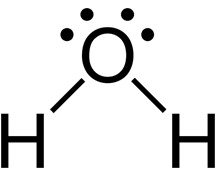
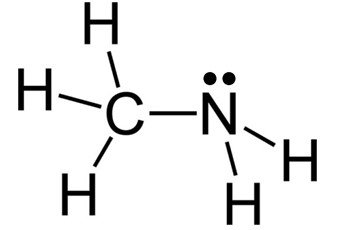
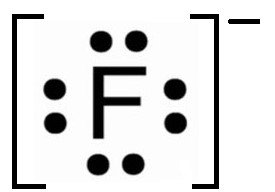
Unidentate: Attach at one site (e.g., H2O, NH3, F-, NO2-, CH3NH2).
Bidentate: Attach at two sites (e.g., ethylenediamine, en).
Polydentate: Attach at multiple sites (e.g., EDTA is hexadentate).
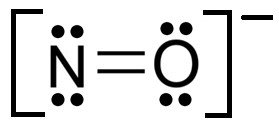
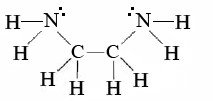
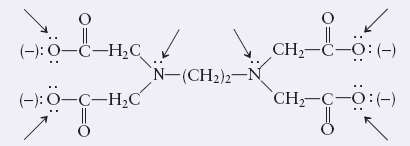
Coordination Number and Geometry
The coordination number determines the geometry of the complex:
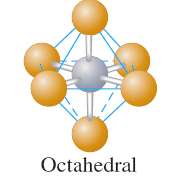
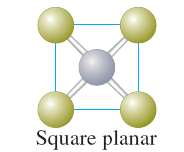
CN = 4: Can be tetrahedral or square planar (geometry must be specified).
CN = 6: Usually octahedral.
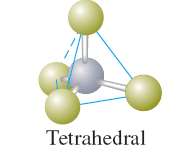
Naming Coordination Compounds
Nomenclature Rules
Naming coordination compounds follows specific rules to ensure clarity and consistency:
Cation before anion.
Ligands are named before the metal, in alphabetical order (excluding prefixes).
Prefixes: di-, tri-, tetra-, etc., indicate the number of each ligand. For ligands with prefixes in their names, use bis-, tris-, tetrakis-, etc.
Neutral ligands: Use common names (e.g., H2O = aqua, NH3 = ammine, CO = carbonyl, NO = nitrosyl).
Anionic ligands: Drop the ending and add "-o" (e.g., F- = fluoro, Br- = bromo, OH- = hydroxo).
Oxidation state of the metal is given in Roman numerals in parentheses.
If the complex ion is an anion, add "-ate" to the metal name (sometimes using the Latin name).
Ligand | Name |
|---|---|
H2O | aqua |
NH3 | ammine |
CO | carbonyl |
NO | nitrosyl |
F- | fluoro |
Br- | bromo |
OH- | hydroxo |
CN- | cyano |
SO42- | sulfato |
NO2- | nitrito |
Example: [Co(NH3)6]Cl3 is named hexaamminecobalt(III) chloride.
Isomerism in Coordination Compounds
Types of Isomers
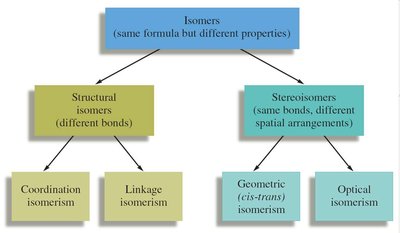
Isomers are compounds with the same formula but different arrangements of atoms or bonds. In coordination chemistry, isomerism is classified as follows:
Structural Isomers: Different bonds (coordination isomerism, linkage isomerism).
Stereoisomers: Same bonds, different spatial arrangements (geometric/cis-trans isomerism, optical isomerism).
Coordination Isomerism
Occurs when ligands are exchanged between two metal centers in a compound.
Example: [Co(NH3)6][CrF6] vs. [Cr(NH3)6][CoF6]
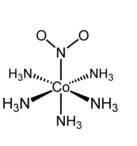
Linkage Isomerism
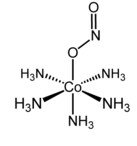
Occurs when a ligand can bind to the metal through different atoms (e.g., NO2- can bind through N or O).
Cis-Trans (Geometric) Isomerism
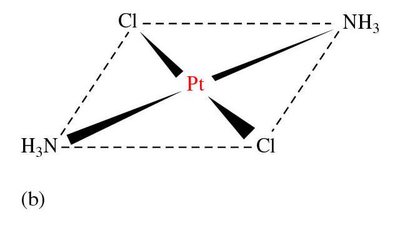
Occurs in square planar and octahedral complexes when identical ligands can be adjacent (cis) or opposite (trans).
Mer-Fac Isomerism (Octahedral Only)
"Mer" (meridional): Three identical ligands form a meridian.
"Fac" (facial): Three identical ligands occupy one face of the octahedron.
![mer isomer of [Co(NH3)3Cl3]](https://static.studychannel.pearsonprd.tech/study_guide_files/general-chemistry/sub_images/6d0ed1e8_image_26.png)
![fac isomer of [Co(NH3)3Cl3]](https://static.studychannel.pearsonprd.tech/study_guide_files/general-chemistry/sub_images/6d0ed1e8_image_27.png)
Crystal Field Theory (CFT)
Overview and Assumptions
Crystal Field Theory explains the electronic structure, color, and magnetism of coordination complexes by considering ligands as point charges that interact with the d-orbitals of the metal ion.
In the absence of ligands: All five d-orbitals are degenerate (equal in energy).
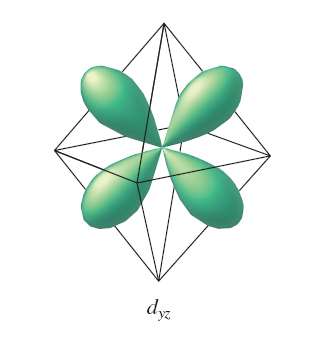
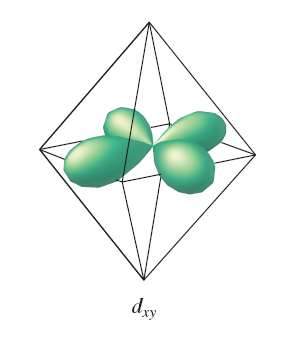
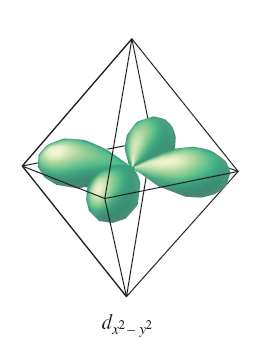
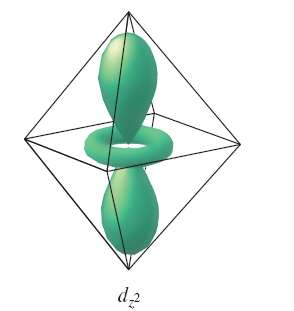
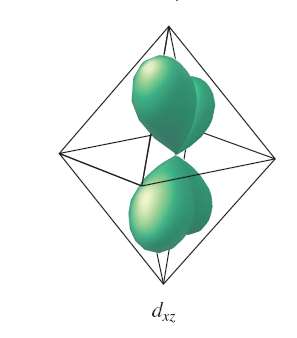
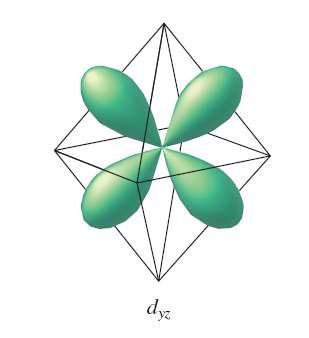
In an octahedral field: The d-orbitals split into two sets: higher energy (eg: dz2, dx2-y2) and lower energy (t2g: dxy, dyz, dxz).
Octahedral Complexes: d-Orbital Splitting
eg orbitals (dz2, dx2-y2): Point directly at ligands, experience greater repulsion, higher energy.
t2g orbitals (dxy, dyz, dxz): Point between ligands, lower energy.
Crystal field splitting energy (Δoct): The energy difference between these sets.
Color and the Spectrochemical Series
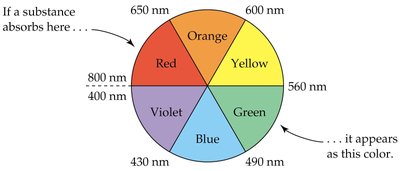
The color of a coordination complex depends on the energy gap (Δ) between split d-orbitals. When a photon is absorbed, an electron is promoted from a lower to a higher energy d-orbital. The observed color is the complementary color of the absorbed light.
Δ = Energy of absorbed photon = hc/λ
Spectrochemical Series: Ranks ligands by their field strength (ability to split d-orbitals): I- < Br- < Cl- < F- < OH- < H2O < NH3 < en < NO2- < CN-
Weak field ligands: Small Δ, absorb longer wavelengths (red/orange).
Strong field ligands: Large Δ, absorb shorter wavelengths (blue/violet).
Magnetism and Electron Spin
The arrangement of electrons in split d-orbitals determines whether a complex is paramagnetic (unpaired electrons) or diamagnetic (all electrons paired). Strong field ligands can cause pairing (low spin), while weak field ligands result in high spin configurations.
Diamagnetic: All electrons paired (e.g., [Co(CN)6]3- with strong field ligand CN-).
Paramagnetic: Unpaired electrons present (e.g., [CoBr6]3- with weak field ligand Br-).
Tetrahedral Complexes: d-Orbital Splitting
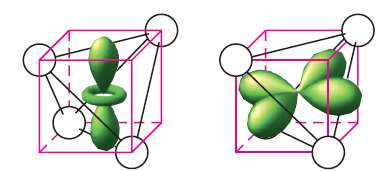
In tetrahedral complexes, the d-orbital splitting pattern is reversed and the splitting energy (Δtet) is smaller than in octahedral complexes. All tetrahedral complexes are high spin due to the small splitting.
Order of energy: dxy, dyz, dxz (higher); dz2, dx2-y2 (lower).
All tetrahedral complexes are weak field and high spin.
Summary Table: Key Concepts in Coordination Chemistry
Concept | Description |
|---|---|
Electron Configuration | Order of filling and removal for transition metals and ions |
Ligands | Lewis bases that donate electron pairs to metals |
Coordination Number | Number of ligand donor atoms attached to the metal |
Naming | Systematic rules for naming complexes and ligands |
Isomerism | Structural (coordination, linkage) and stereoisomerism (cis-trans, mer-fac, optical) |
Crystal Field Theory | Explains d-orbital splitting, color, and magnetism |
Spectrochemical Series | Ranks ligands by field strength |
Magnetism | Determined by electron pairing in d-orbitals |
