Back

Transition Metals and Coordination Chemistry: Structure, Bonding, and Properties

Study Guide - Learn with Videos

Curated lessons matched to your uploaded material – learn every topic step by step.

Electron Configurations of Transition Metals

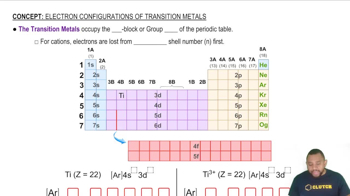
  • Transition Metals
    03:12
  • Electron Configurations Of Transition Metals Example
    00:53

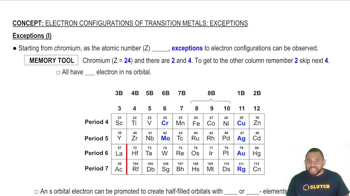
Electron Configurations of Transition Metals: Exceptions

  • Electron Configurations Of Transition Metals: Exceptions Example
    00:46
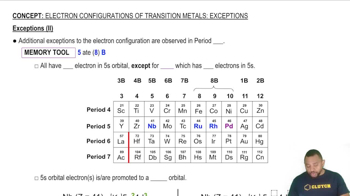
  • Exceptions (II)
    02:10
  • Exceptions (I)
    02:28

Ligands

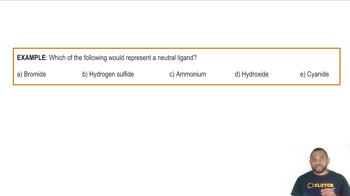
  • Ligands Example
    01:12
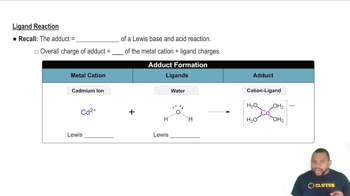
  • Ligand Reaction
    01:53
  • Ligands Example
    00:40

Complex Ions

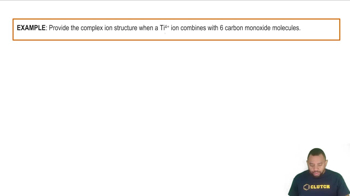
  • Complex Ions Example
    00:57
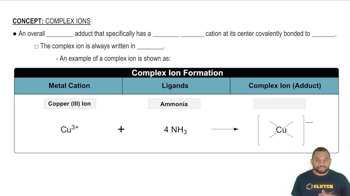
  • Complex Ion Formation
    02:09

Coordination Complexes

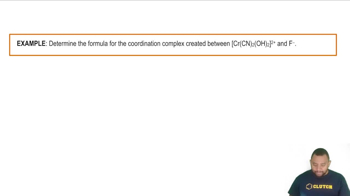
  • Coordination Complexes Example
    00:43
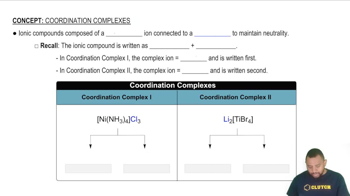
  • Coordination Complexes I and II
    02:28

Naming Coordination Compounds

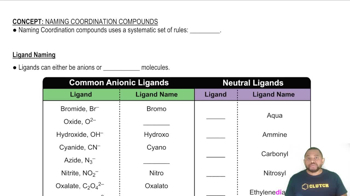
  • Ligand Naming
    02:03
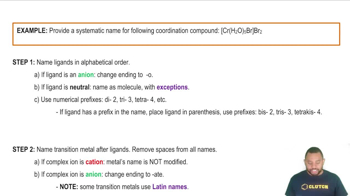
  • Naming Coordination Compounds Example
    04:11
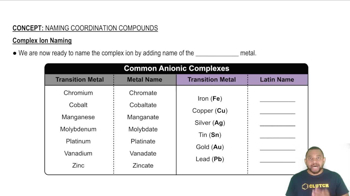
  • Complex Ion Naming
    01:28

Isomerism in Coordination Complexes

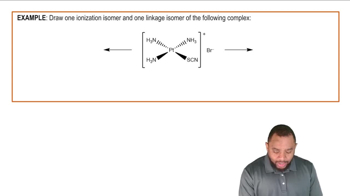
  • Isomerism in Coordination Complexes Example
    2:14
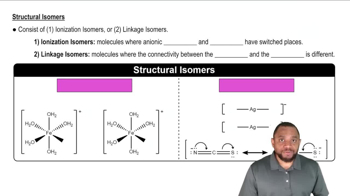
  • Structural Isomers
    3:22
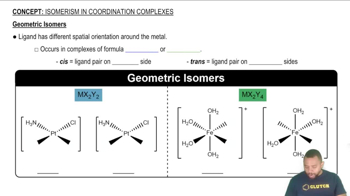
  • Geometric Isomers
    02:02

Crystal Field Theory: Octahedral Complexes

  • Example
    00:43
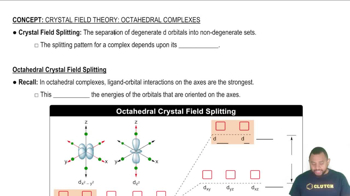
  • The crystal field splitting pattern for octahedral complexes has the d orbitals on or along the axes as having the higher energy.
    03:04

Crystal Field Theory: Tetrahedral Complexes

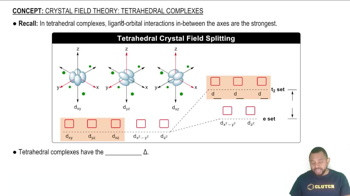
  • The crystal field splitting pattern for tetrahedral complexes has the d orbitals in between the axes as having the higher energy.
    01:38
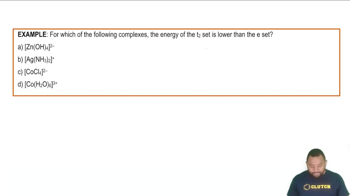
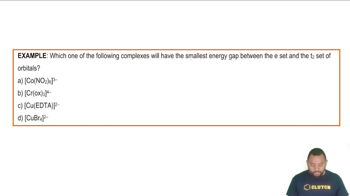
  • Example
    01:11

Crystal Field Theory Summary

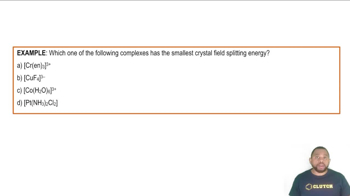
  • Example
    02:46
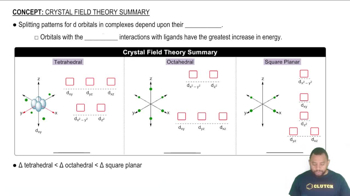
  • The greatest ligand-orbital interactions result in the greatest increase in energy.
    03:01

Magnetic Properties of Complex Ions

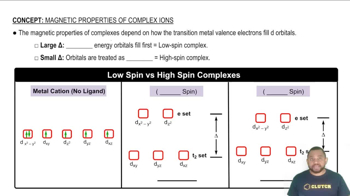
  • Low-Spin Complexes are associated with large Δ values and High-Spin Complexes are associated with small Δ values.
    04:23
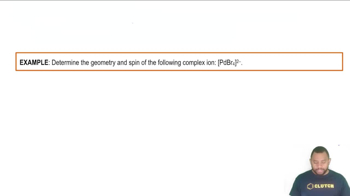
  • Finding tetrahedral and square planar geometries helps to determine the low vs high spin of complexes.
    01:43
  • Example
    02:14

Strong-Field vs Weak-Field Ligands

  • Example
    02:09
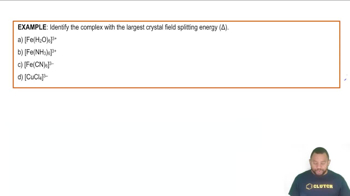
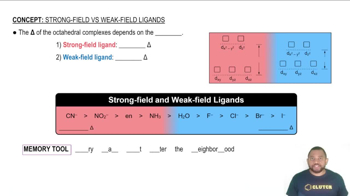
  • Strong-Field Ligands result in a large Δ and Weak-Field Ligands result in a small Δ.
    02:40