 Back
BackGenetics Final Exam Study Guide (Chapters 11–18)

 03:49
03:49
Terms in this set (25)
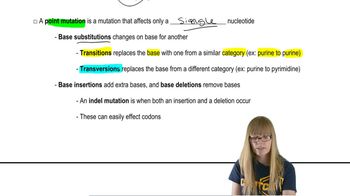
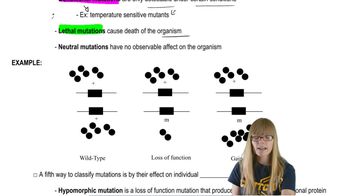
Mutations include point mutations, insertions, deletions, and chromosomal rearrangements, each arising from different DNA damage or replication errors.
Multiple DNA repair pathways correct damage, maintaining genome stability despite constant sources of DNA lesions.
Single-strand damage affects one DNA strand and is often repaired accurately; double-strand breaks are more severe and can cause chromosomal rearrangements if misrepaired.
Different repair mechanisms vary in accuracy and speed, balancing genome integrity with cellular context and resource availability.
Mutations can lead to disease or evolution; repair pathways influence mutation frequency and genome stability, impacting cancer risk and lethality.
Inducible systems activate gene expression in response to a signal; repressible systems turn off gene expression when a product is abundant.
Regulatory proteins bind specific DNA sequences to either activate or repress transcription based on environmental signals.
Operons coordinate expression of multiple genes under a single promoter, allowing efficient regulation of related functions.
Positive control involves activators enhancing transcription; negative control involves repressors blocking transcription.
Regulation occurs at chromatin structure, transcription, RNA processing, translation, and post-translational modifications.
Chromatin compaction limits DNA accessibility, reducing transcription; modifications like acetylation open chromatin to promote expression.
Cis-acting elements are DNA sequences near genes; trans-acting factors are proteins that bind these sequences to regulate expression.
Changes like DNA methylation alter gene expression without changing DNA sequence, affecting cell identity and development.
Mechanism that equalizes gene expression between sexes, such as X-chromosome inactivation creating cellular mosaics.
Starts with a phenotype and works to identify the responsible gene or mutation.
Starts with a gene and investigates the phenotypic effects of its alteration or disruption.
Model organisms enable experimental manipulation to infer gene function and biological mechanisms.
DNA fragments can be cut and joined; vectors allow replication and selection of recombinant molecules.
Genomic libraries contain all DNA sequences; cDNA libraries contain only expressed gene sequences without introns.
Gene duplication provides raw material for evolutionary innovation by creating gene copies that can acquire new functions.
Organelles like mitochondria are inherited primarily from the mother, affecting patterns of inheritance.
Presence of multiple organellar genome variants in a cell causes variability in phenotype and inheritance.
Organelles such as mitochondria and chloroplasts originated from free-living bacteria engulfed by ancestral eukaryotic cells.
Development depends on spatial and temporal regulation of gene expression to establish body plans and cell types.
Genes that define body axes and segment identity, guiding the formation of structures during embryogenesis.