Pearson+ LogoPearson+ Logo
Ch. 19 - The Genetics of Cancer
Klug - Essentials of Genetics 10th Edition
Klug10th EditionEssentials of GeneticsISBN: 9780135588789Not the one you use?Change textbook
Chapter 19, Problem 21

Radiotherapy (treatment with ionizing radiation) is one of the most effective current cancer treatments. It works by damaging DNA and other cellular components. In which ways could radiotherapy control or cure cancer, and why does radiotherapy often have significant side effects?

Verified step by step guidance
1
Understand that radiotherapy controls or cures cancer primarily by causing damage to the DNA of cancer cells, leading to cell death or preventing their ability to divide and proliferate.
Recognize that ionizing radiation induces DNA double-strand breaks and other types of damage, which, if unrepaired or misrepaired, trigger apoptosis (programmed cell death) or senescence in cancer cells.
Consider that radiotherapy targets rapidly dividing cells, which is a characteristic of many cancer cells, making them more susceptible to DNA damage compared to most normal cells.
Acknowledge that significant side effects occur because radiotherapy can also damage normal, healthy cells in the surrounding tissues, especially those that also divide rapidly, such as cells in the skin, gastrointestinal tract, and bone marrow.
Note that the extent of side effects depends on factors like radiation dose, treatment area, and individual patient sensitivity, which explains why side effects can vary widely among patients.

Verified video answer for a similar problem:

This video solution was recommended by our tutors as helpful for the problem above.
Video duration:
2m
Was this helpful?

Key Concepts

Here are the essential concepts you must grasp in order to answer the question correctly.

Mechanism of DNA Damage by Ionizing Radiation

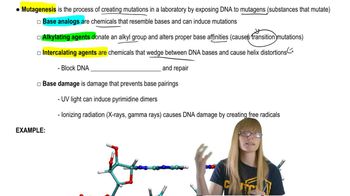
Ionizing radiation used in radiotherapy causes breaks in DNA strands, especially double-strand breaks, which can lead to cell death or malfunction. Cancer cells, which divide rapidly, are more susceptible to this damage, leading to their destruction or growth inhibition.
Recommended video:
Guided course
04:29
Induced Mutations

Selective Targeting of Cancer Cells

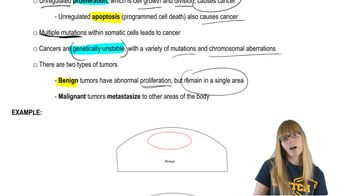
Radiotherapy aims to target cancer cells more than normal cells by exploiting differences like rapid division and impaired DNA repair in tumors. However, some normal cells near the tumor are also affected, which limits the dose and effectiveness.
Recommended video:
Guided course
09:46
Cancer Characteristics

Side Effects Due to Damage of Normal Cells

Radiotherapy can harm healthy tissues surrounding the tumor, causing side effects such as inflammation, fatigue, and tissue damage. These effects arise because normal cells also experience DNA and cellular damage, especially in rapidly dividing tissues like skin and mucosa.
Recommended video:
Guided course
03:38
Maternal Effect
Related Practice
Textbook Question

Of the two classes of genes associated with cancer, tumor-suppressor genes and oncogenes, mutations in which group can be considered gain-of-function mutations? In which group are the loss-of-function mutations? Explain.

580
views
Textbook Question

How do translocations such as the Philadelphia chromosome contribute to cancer?

770
views
Textbook Question

How do normal cells protect themselves from accumulating mutations in genes that could lead to cancer? How do cancer cells differ from normal cells in these processes?

406
views
Textbook Question

Genetic tests that detect mutations in the BRCA1 and BRCA2 tumor-suppressor genes are widely available. These tests reveal a number of mutations in these genes—mutations that have been linked to familial breast cancer. Assume that a young woman in a suspected breast cancer family takes the BRCA1 and BRCA2 genetic tests and receives negative results. That is, she does not test positive for the mutant alleles of BRCA1 or BRCA2. Can she consider herself free of risk for breast cancer?

1082
views
Textbook Question

As part of a cancer research project, you have discovered a gene that is mutated in many metastatic tumors. After determining the DNA sequence of this gene, you compare the sequence with those of other genes in the human genome sequence database. Your gene appears to code for an amino acid sequence that resembles sequences found in some serine proteases. Conjecture how your new gene might contribute to the development of highly invasive cancers.

557
views