Pearson+ LogoPearson+ Logo
Ch. 4 - Modification of Mendelian Ratios
Klug - Essentials of Genetics 10th Edition
Klug10th EditionEssentials of GeneticsISBN: 9780135588789Not the one you use?Change textbook
Chapter 4, Problem 16a

While vermilion is X-linked in Drosophila and causes the eye color to be bright red, brown is an autosomal recessive mutation that causes the eye to be brown. Flies carrying both mutations lose all pigmentation and are white-eyed. Predict the F₁ and F₂ results of the following crosses:
vermilion females x brown males

Verified step by step guidance
1
Identify the genotypes of the parental flies. Since vermilion is X-linked, vermilion females will have the vermilion allele on both X chromosomes (X^v X^v), and brown males will have the brown autosomal recessive genotype (bb) and a normal X chromosome (X^+ Y).
Determine the possible gametes produced by each parent. Vermilion females produce eggs with X^v chromosomes, and brown males produce sperm with either X^+ or Y chromosomes and autosomal alleles b for brown.
Predict the F₁ genotypes by combining the gametes. Since vermilion is X-linked, all female offspring will inherit one X^v from the mother and one X^+ from the father, making them carriers (X^v X^+), and all male offspring will inherit X^v from the mother and Y from the father (X^v Y). For the autosomal brown gene, all offspring will be heterozygous (Bb) because the mother is assumed to be wild type (BB or Bb) and the father is bb.
For the F₂ generation, perform a dihybrid cross using the F₁ genotypes: females X^v X^+ Bb crossed with males X^v Y Bb. Set up a Punnett square for both the X-linked vermilion gene and the autosomal brown gene to determine all possible genotype combinations.
Analyze the phenotypes of the F₂ offspring based on the genotypes: vermilion (X^v) causes bright red eyes in hemizygous males and homozygous females; brown (bb) causes brown eyes; flies with both vermilion and brown mutations (X^v and bb) have white eyes due to loss of pigmentation. Use this information to predict the ratios of eye color phenotypes in the F₂ generation.

Verified video answer for a similar problem:

This video solution was recommended by our tutors as helpful for the problem above.
Video duration:
3m
Was this helpful?

Key Concepts

Here are the essential concepts you must grasp in order to answer the question correctly.

X-linked Inheritance

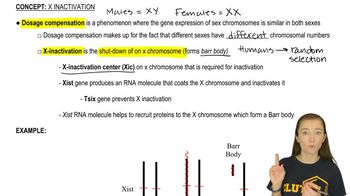
X-linked inheritance refers to genes located on the X chromosome. In Drosophila, males have one X and one Y chromosome, so a single recessive mutation on the X chromosome will express the trait in males. Females have two X chromosomes, so they can be carriers if heterozygous. This pattern affects the inheritance and expression of the vermilion eye color mutation.
Recommended video:
Guided course
09:30
X-Inactivation

Autosomal Recessive Inheritance

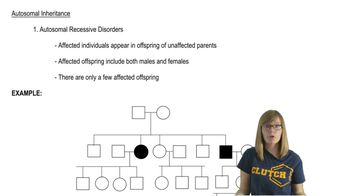
Autosomal recessive inheritance involves genes on non-sex chromosomes where two copies of the recessive allele are needed to express the trait. The brown eye color mutation is autosomal recessive, so flies must inherit two brown alleles to show brown eyes. Heterozygotes appear normal, affecting the phenotypic ratios in offspring.
Recommended video:
Guided course
09:08
Autosomal Pedigrees

Epistasis and Interaction of Multiple Genes

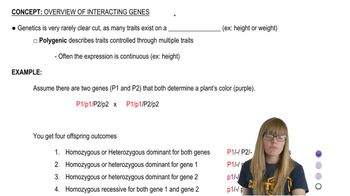
Epistasis occurs when one gene masks or modifies the expression of another gene. Here, the combination of vermilion (X-linked) and brown (autosomal recessive) mutations results in white eyes due to loss of pigmentation. Understanding how these genes interact is essential to predict phenotypes in F₁ and F₂ generations.
Recommended video:
Guided course
07:56
Interacting Genes Overview