Back

Balancing Redox Reactions (Simplified) definitions

Control buttons has been changed to "navigation" mode.
1/13
  • Redox Reaction

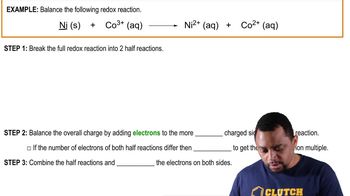
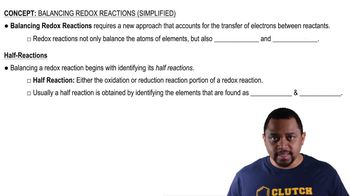
    A chemical process involving the transfer of electrons between two substances, affecting both atom count and overall charge.
  • Electron Transfer

    Movement of negatively charged particles from one reactant to another, central to oxidation and reduction events.
  • Half Reaction

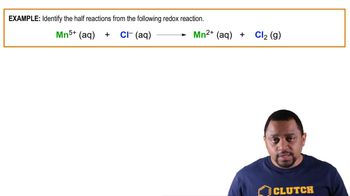
    A component of a larger process, representing either the electron loss or gain part of a redox event.
  • Oxidation

    The process within a redox event where a substance loses electrons, often increasing its positive charge.
  • Reduction

    The process within a redox event where a substance gains electrons, often decreasing its positive charge.
  • Reactant

    A starting material in a chemical process, participating in electron exchange during redox events.
  • Charge Balance

    Ensuring the total electrical charge is equal on both sides of a chemical equation, crucial in redox processes.
  • Atom Balance

    Making sure the number of each type of atom is the same on both sides of a chemical equation.
  • Oxygen

    An element commonly involved in redox events, often used to identify and balance half reactions.
  • Hydrogen

    An element frequently considered when identifying and balancing the components of redox events.
  • Overall Reaction

    The complete chemical equation resulting from the combination of oxidation and reduction components.
  • Step-by-Step Approach

    A systematic method used to identify and balance each part of a redox process for accuracy.
  • Element

    A pure substance consisting of one type of atom, whose identity is tracked during redox balancing.