Back

Multiple Bonds definitions

Control buttons has been changed to "navigation" mode.
1/12
  • Single Bond

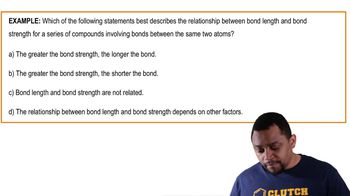
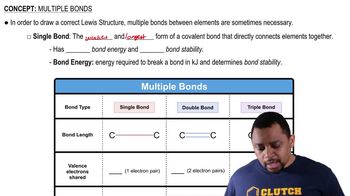
    A covalent connection involving one electron pair, characterized by maximum length, minimum strength, and the lowest energy and stability.
  • Double Bond

    A covalent connection involving two electron pairs, offering moderate length, strength, energy, and stability compared to other bond types.
  • Triple Bond

    A covalent connection involving three electron pairs, noted for being the shortest, strongest, and having the highest energy and stability.
  • Valence Electrons

    Outer shell electrons directly involved in forming chemical bonds, determining the number of bonds an atom can form.
  • Electron Pair

    A set of two electrons shared between atoms, forming the basis of covalent bonds and influencing bond type.
  • Bond Energy

    The amount of energy, measured in kilojoules, required to break a chemical bond, directly reflecting bond strength and stability.
  • Bond Strength

    A measure of how resistant a bond is to breaking, increasing with the number of electron pairs shared between atoms.
  • Bond Stability

    The tendency of a bond to remain intact, enhanced by higher bond energy and more shared electron pairs.
  • Bond Length

    The distance between the nuclei of bonded atoms, decreasing as the number of shared electron pairs increases.
  • Covalent Bond

    A chemical link formed by the sharing of electron pairs between atoms, fundamental to single, double, and triple bonds.
  • Kilojoule

    A unit of energy measurement used to quantify the energy required to break chemical bonds.
  • Lewis Structure

    A diagrammatic representation showing how valence electrons are arranged among atoms in a molecule.