Back

Periodic Table: Classifications definitions

Control buttons has been changed to "navigation" mode.
1/13
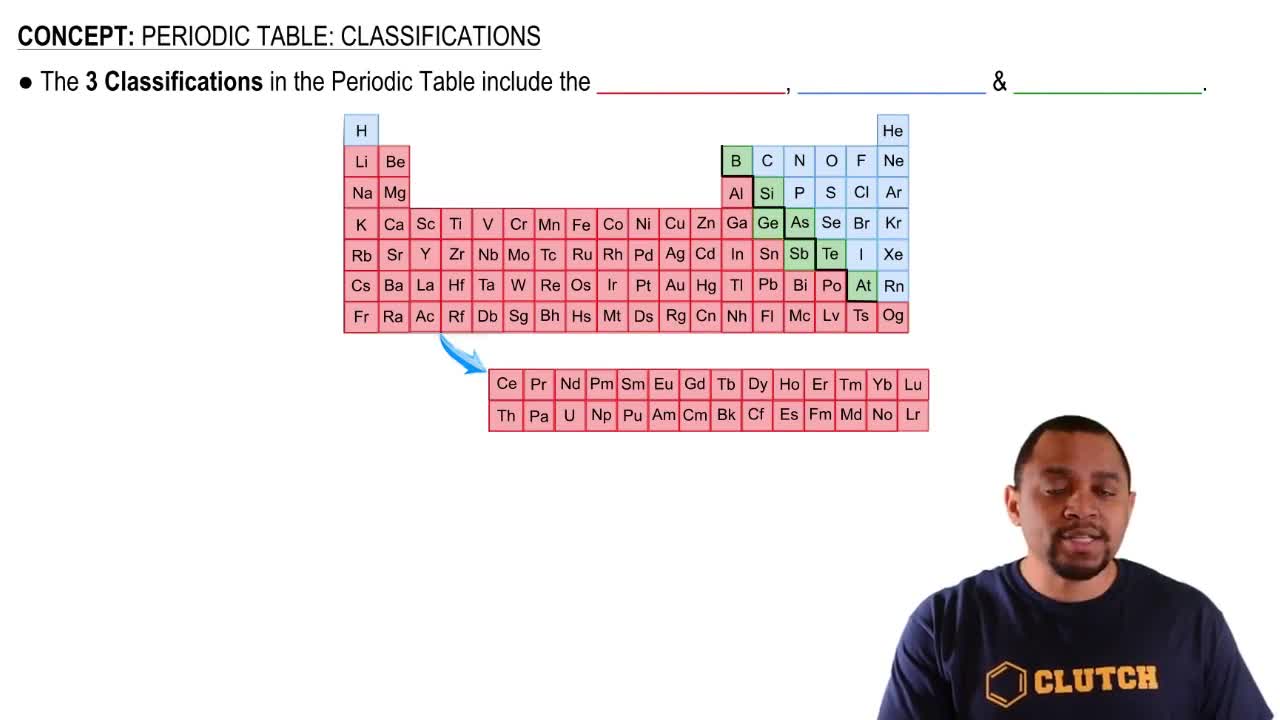
  • Metals

    Largest group on the periodic table, known for luster, conductivity, opacity, and malleability.
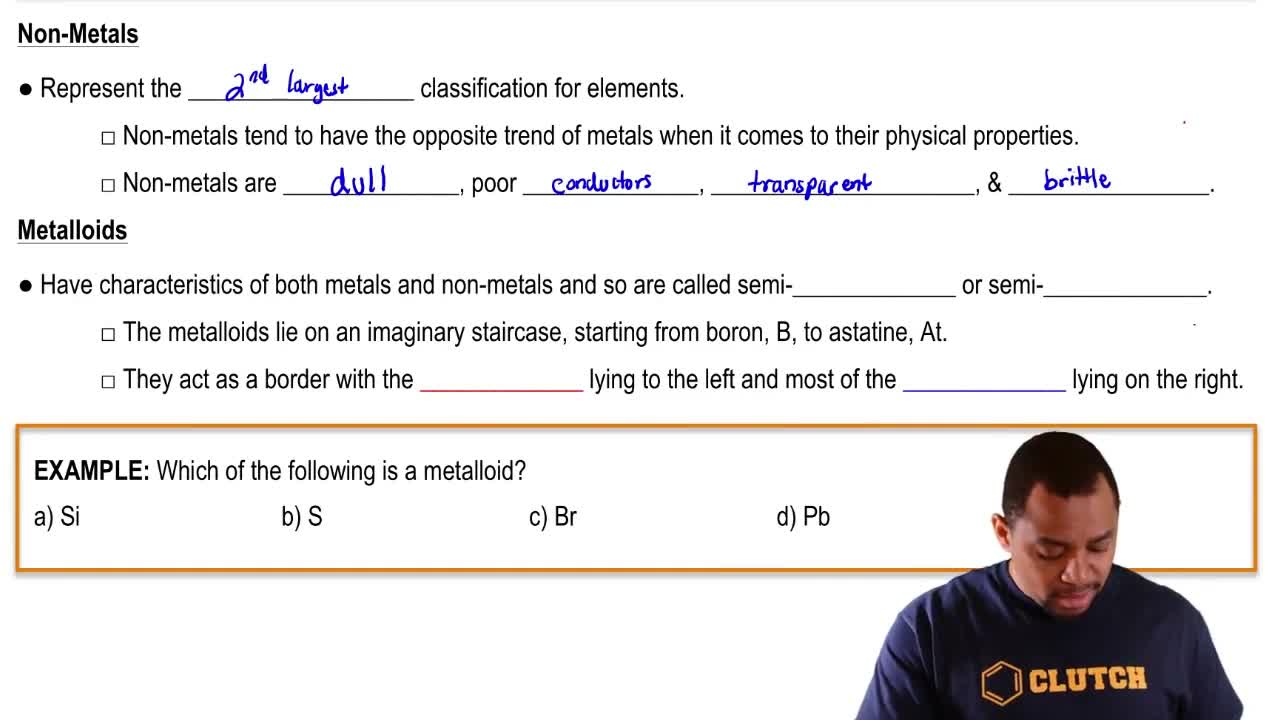
  • Nonmetals

    Elements with dullness, poor conductivity, potential transparency, and brittleness, mostly on the table's right.
  • Metalloids

    Elements with both metallic and nonmetallic traits, found along a staircase from boron to astatine.
  • Luster

    Physical property describing how shiny a substance appears, commonly seen in metals.
  • Conductivity

    Ability to allow electricity to flow, a defining trait of metals and some metalloids.
  • Opacity

    Characteristic of not allowing light to pass through, typical of metals.
  • Malleability

    Capacity to be hammered into thin sheets without breaking, a hallmark of metals.
  • Brittleness

    Tendency to break or crumble under force, often observed in nonmetals.
  • Staircase

    Imaginary boundary on the periodic table marking the position of metalloids.
  • Semiconductors

    Materials with electrical properties between metals and nonmetals, crucial in technology.
  • Lanthanides

    Series of elements typically shown as the first of two separated bottom rows for clarity.
  • Actinides

    Series of elements usually displayed as the second of two bottom rows, part of the main table.
  • Silicon

    A metalloid essential for microchips and electronics, giving Silicon Valley its name.