Back

Periodic Table: Group Names quiz

Control buttons has been changed to "navigation" mode.
1/15
  • What are the horizontal rows on the periodic table called?

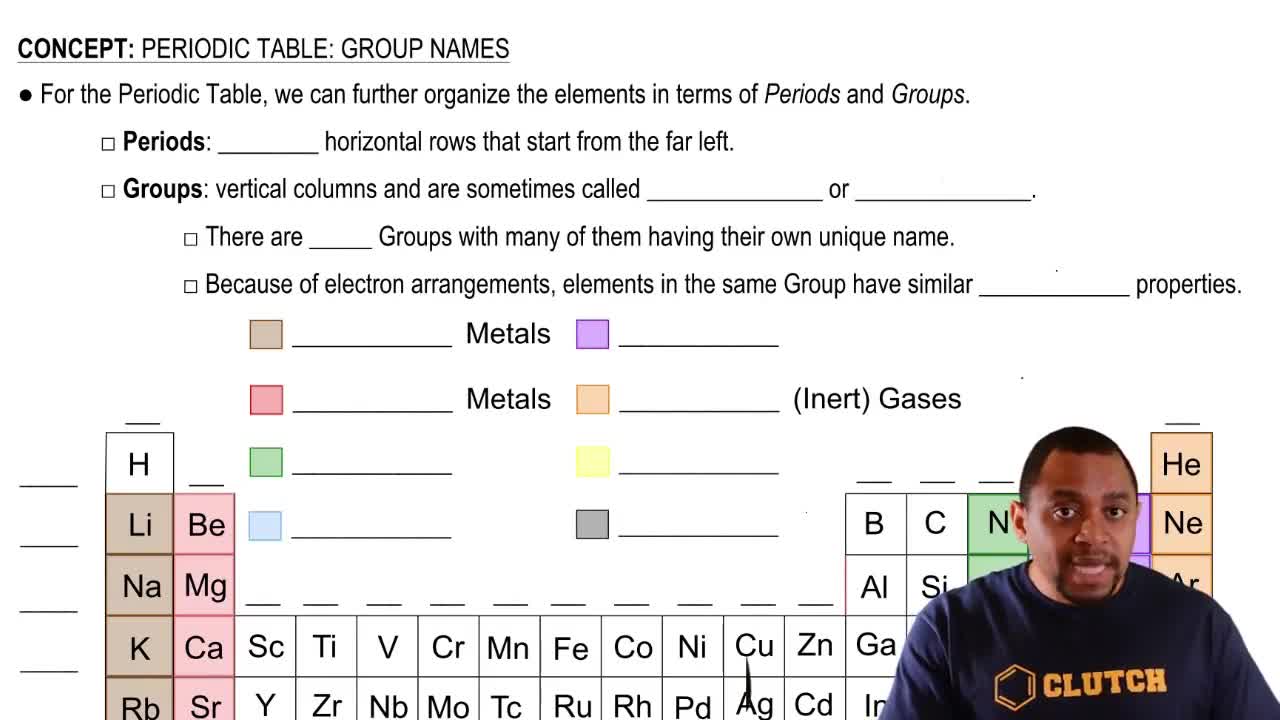
    The horizontal rows are called periods.
  • How many periods are currently on the periodic table?

    There are currently 7 periods on the periodic table.
  • What are the vertical columns on the periodic table called?

    The vertical columns are called groups, families, or series.
  • How many groups are there on the periodic table?

    There are 18 groups on the periodic table.
  • Why do elements in the same group have similar chemical properties?

    Elements in the same group have similar chemical properties because of their similar electron arrangements.
  • What is the group name for elements from lithium (Li) to francium (Fr)?

    These elements are called alkali metals.
  • What is the group name for elements from beryllium (Be) to radium (Ra)?

    These elements are called alkaline earth metals.
  • What is the special group name for elements from nitrogen (N) to moscovium (Mc)?

    These elements are called nyctogens.
  • What is the group name for elements from oxygen (O) to livermorium (Lv)?

    These elements are called chalcogens.
  • What is the group name for elements from fluorine (F) to tennessine (Ts)?

    These elements are called halogens.
  • What are the elements from helium (He) to oganesson (Og) collectively called?

    They are called noble gases or inert gases.
  • Why were noble gases once called inert gases?

    They were called inert gases because it was believed they were so stable that nothing would react with them.
  • What are the two rows placed separately at the bottom of the periodic table called?

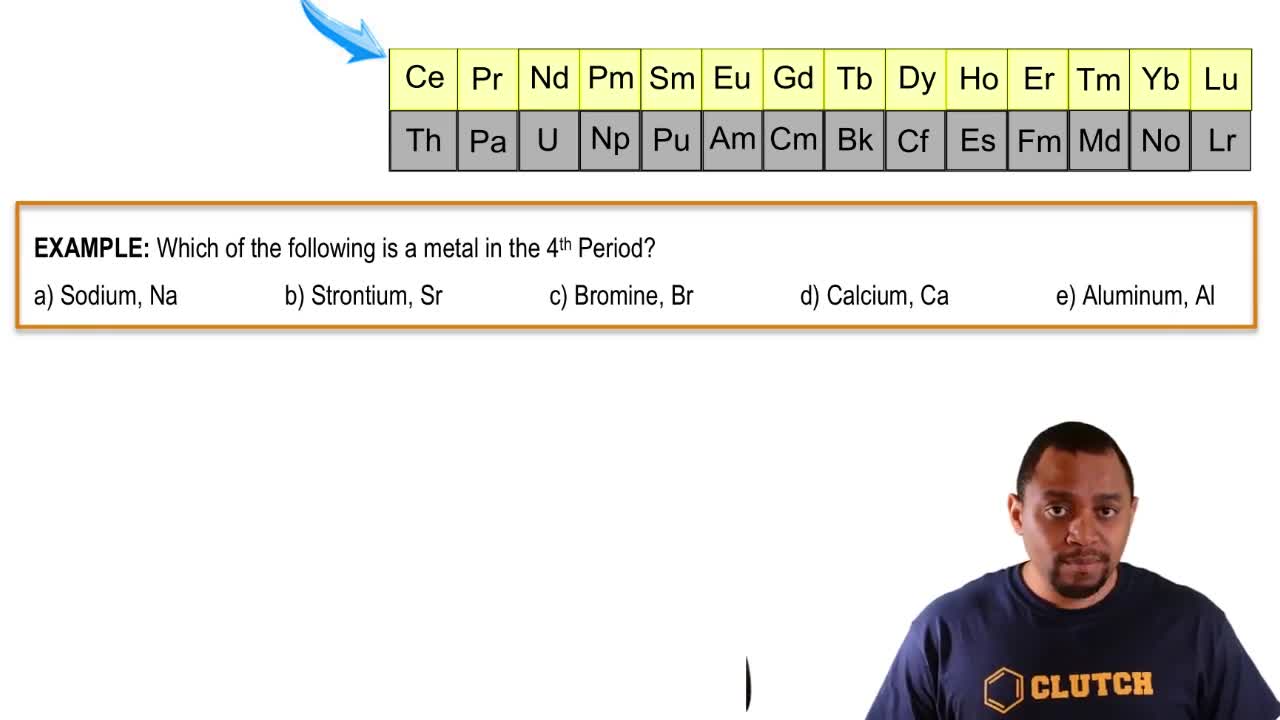
    They are called the lanthanides and actinides.
  • Why are the lanthanides and actinides placed at the bottom of the periodic table?

    They are placed at the bottom to make the periodic table more presentable.
  • Is the structure of the periodic table fixed or can it change over time?

    The structure is not fixed; it can change as new elements are discovered and synthesized.