Back

Periodic Table: Element Symbols definitions

Control buttons has been changed to "navigation" mode.
1/14
  • Periodic Table

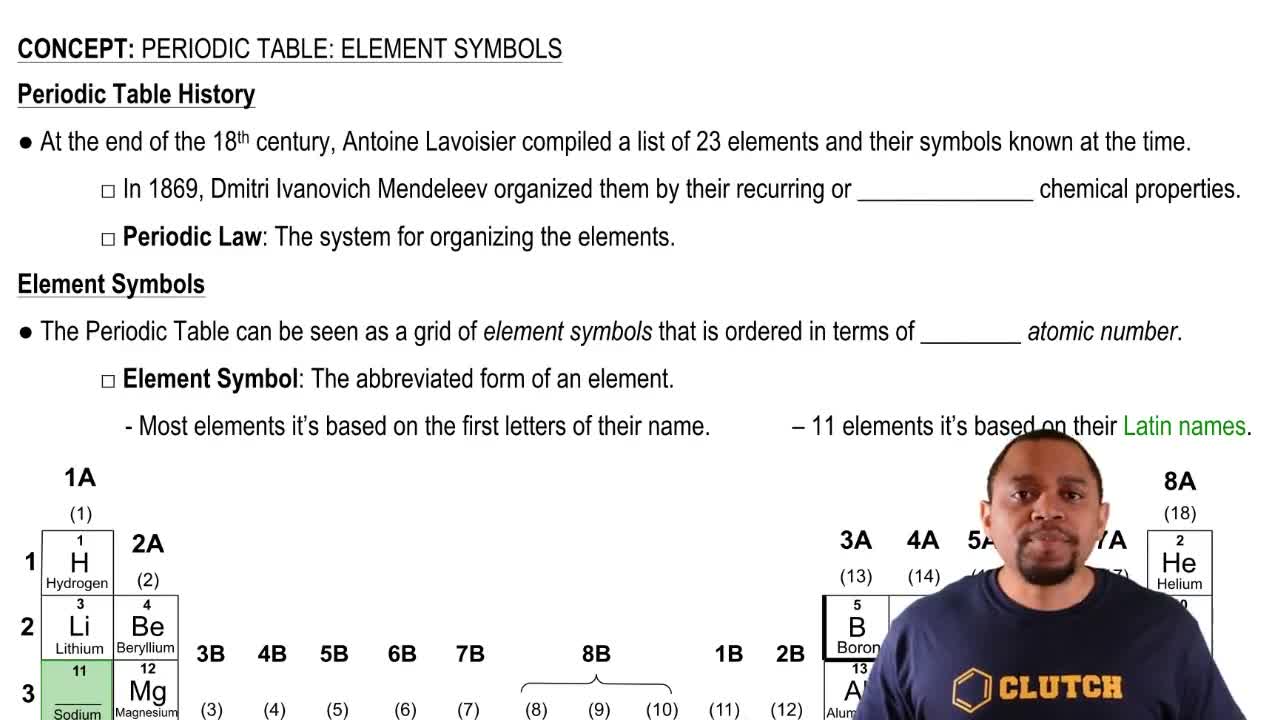
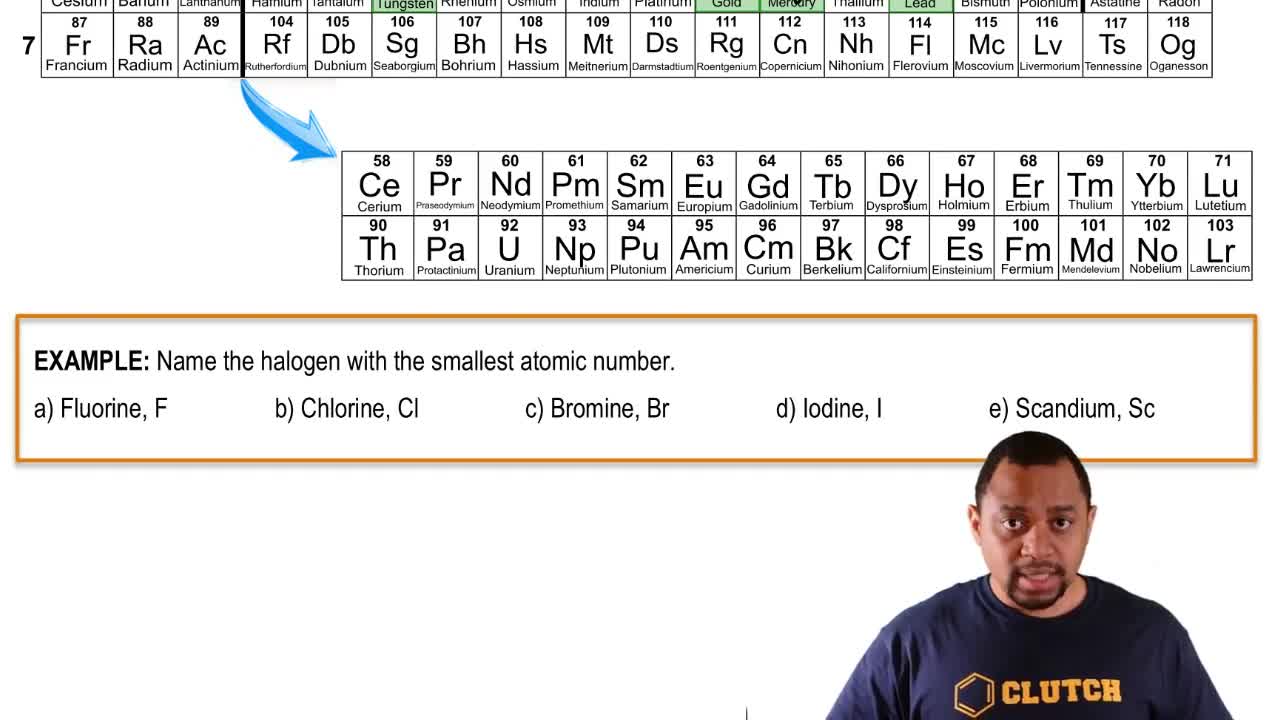
    A grid organizing all known elements by increasing atomic number, revealing recurring chemical properties in columns.
  • Element Symbol

    A one- or two-letter abbreviation representing an element, often derived from its name or Latin origin.
  • Atomic Number

    A unique value for each element indicating the number of protons in its nucleus, symbolized as Z.
  • Group

    A vertical column in the periodic table where elements share similar chemical properties.
  • Chemical Property

    A characteristic that determines how an element behaves or reacts with other substances.
  • Latin Name

    An older, often historical, designation from which some element symbols are derived, differing from modern names.
  • Antoine Lavasseur

    A scientist who compiled an early list of 23 elements and their symbols at the end of the 18th century.
  • Mendeleev

    A chemist who organized elements by recurring properties and introduced the periodic law in 1869.
  • Periodic Law

    A principle stating that elemental properties recur periodically when arranged by increasing atomic number.
  • Proton

    A positively charged particle in an atom's nucleus, whose count defines the atomic number.
  • Symbol Derivation

    The process by which an element's symbol is chosen, typically from its name or Latin root.
  • Undiscovered Element

    A predicted substance not yet found, whose existence was anticipated by gaps in the periodic table.
  • Column

    A vertical arrangement in the periodic table, also called a group, indicating similar chemical behavior.
  • Row

    A horizontal sequence in the periodic table, also known as a period, showing elements with increasing atomic number.