Back

Structural Formula definitions

Control buttons has been changed to "navigation" mode.
1/13
  • Molecular Formula

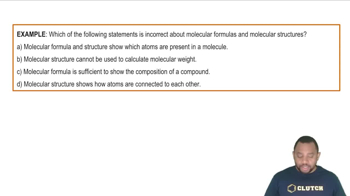
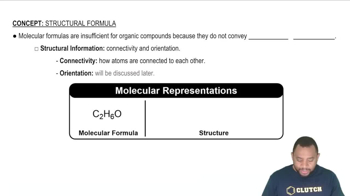
    Indicates the number of each type of atom in a compound but lacks details about atom connectivity or spatial arrangement.
  • Structural Formula

    Depicts how atoms are connected or bonded in a compound, omitting non-bonding electrons for clarity.
  • Connectivity

    Describes the specific way atoms are linked to each other within a molecule, revealing the compound's framework.
  • Orientation

    Refers to the spatial arrangement of atoms in a molecule, influencing properties like isomerism.
  • Lewis Structure

    Illustrates both bonding between atoms and the presence of lone pairs or non-bonding electrons.
  • Lone Pair

    Represents non-bonding electrons on an atom, typically shown in Lewis structures but omitted in structural formulas.
  • Non-bonding Electrons

    Electrons not involved in bonding, often visualized as lone pairs in Lewis structures.
  • Isomer

    Molecule sharing a molecular formula with others but differing in atom connectivity or arrangement.
  • Bond

    Connection formed between two atoms, depicted in both structural and Lewis representations.
  • Organic Compound

    Molecule primarily composed of carbon and hydrogen, often requiring structural formulas for clarity.
  • Ambiguity

    Uncertainty arising from insufficient structural information, leading to multiple possible molecular arrangements.
  • C2H6O

    Example molecular formula that can represent more than one structure due to lack of connectivity details.
  • Lewis Dot Structure

    Diagram emphasizing both bonds and lone pairs, providing a fuller picture of electron distribution.