Skip to main content
Introduction to Chemistry
My Course
Learn
Exam Prep
AI Tutor
Study Guides
Flashcards
Explore
Try the app
My Course
Learn
Exam Prep
AI Tutor
Study Guides
Flashcards
Explore
Try the app
Back
Physical Properties definitions
You can tap to flip the card.
Physical Property
You can tap to flip the card.
👆
Physical Property
A measurable attribute describing a substance's state, observable without altering its chemical structure.
Track progress
Control buttons has been changed to "navigation" mode.
1/12
Related flashcards
Related practice
Recommended videos
Physical Properties quiz #1
Physical Properties
10 Terms
Physical Properties
3. Matter and Energy
5 problems
Topic
Temperature (Simplified)
3. Matter and Energy
5 problems
Topic
3. Matter and Energy - Part 1 of 2
12 topics
34 problems
Chapter
3. Matter and Energy - Part 2 of 2
1 topic
3 problems
Chapter
Guided course
02:54
Physical Properties Concept
12064
views
148
rank
Guided course
01:41
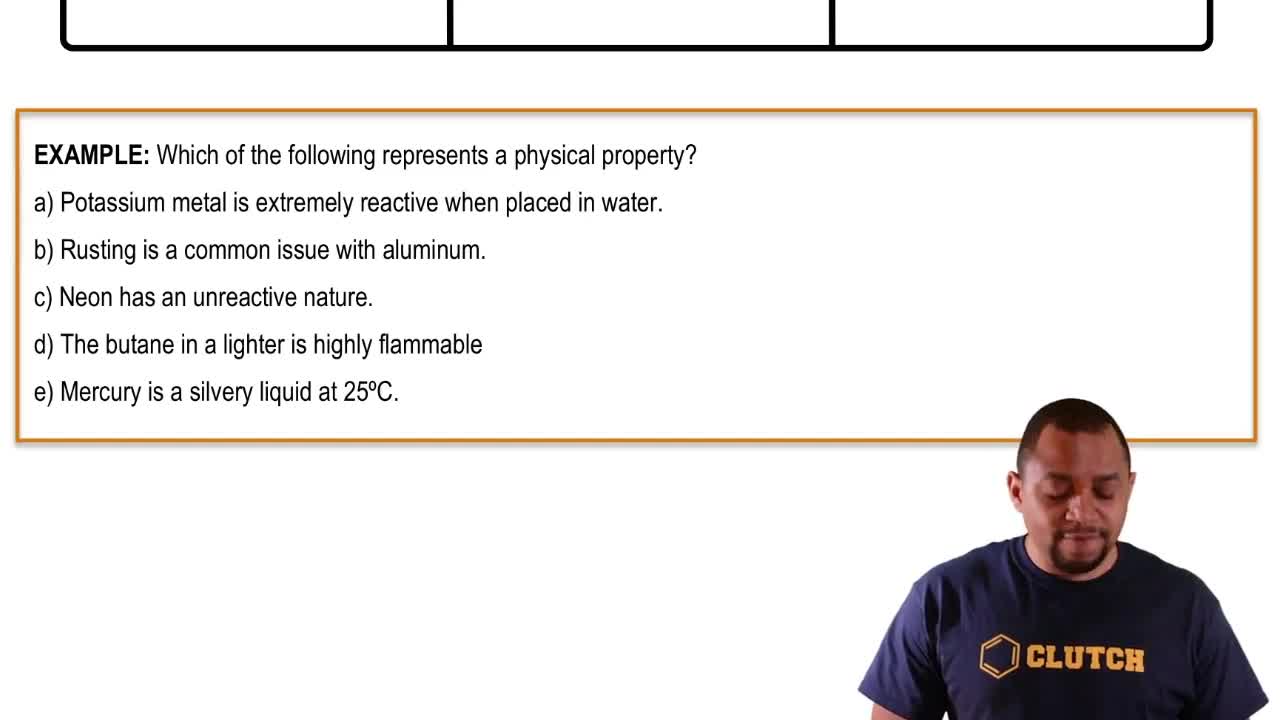
Physical Properties Example
11057
views
133
rank
1
comments
Terms in this set (12)
Hide definitions
Physical Property
A measurable attribute describing a substance's state, observable without altering its chemical structure.
Color
A visual attribute perceived by the eyes, indicating how a substance reflects or emits light.
Density
A ratio of mass to volume, determining whether an object sinks or floats in a liquid.
Mass
A measure of the amount of matter present in a sample, often linked to heaviness.
Volume
The amount of three-dimensional space occupied by a substance or object.
Boiling Point
The specific temperature at which a liquid changes into a gas under standard conditions.
Freezing Point
The temperature at which a liquid transitions into a solid, unique for each substance.
Melting Point
The temperature at broadly defined conditions where a solid becomes a liquid.
Hardness
A material's resistance to deformation or penetration, exemplified by substances like diamond.
Softness
A material's tendency to be easily deformed or broken, opposite of hardness.
State
A physical condition of matter, such as solid, liquid, or gas, determined by temperature and pressure.
Observation
The process of using senses to identify measurable attributes without altering a substance's composition.
 BackBack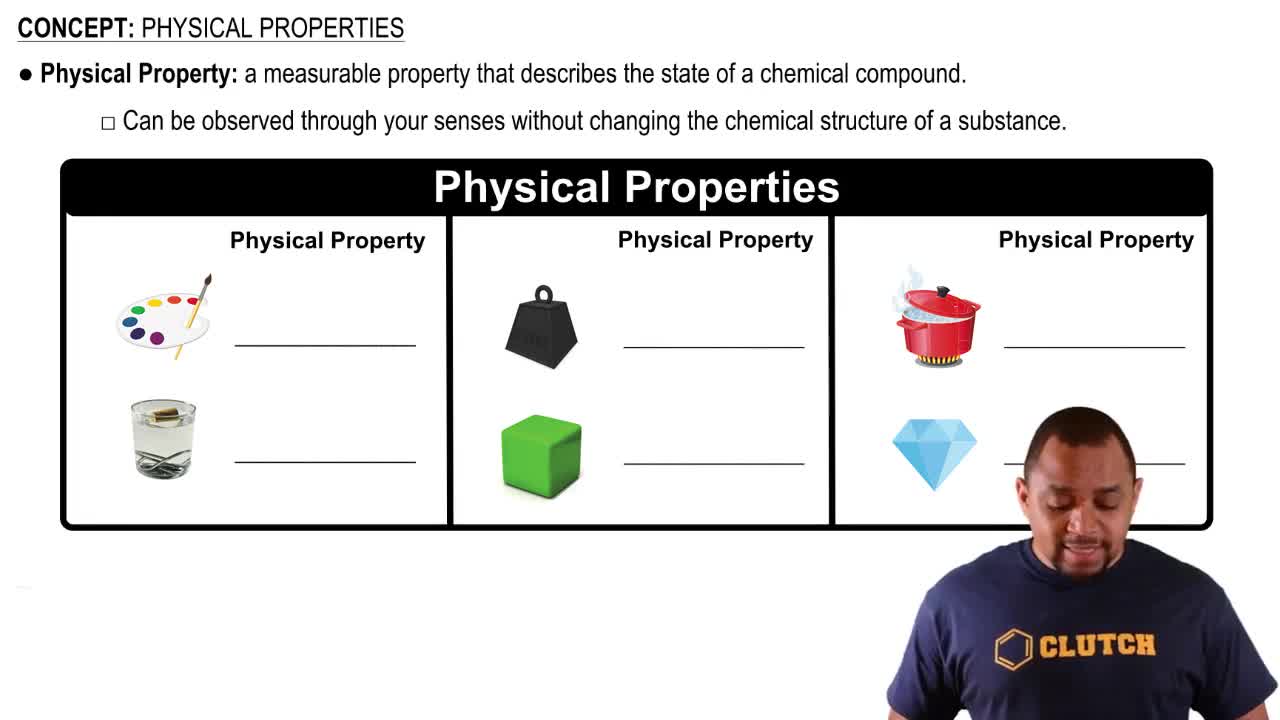
 02:54
02:54