Ch. 14 The Autonomic Nervous System and Homeostasis
Amerman- Human Anatomy & Physiology 3e
Amerman3rd EditionHuman Anatomy & PhysiologyISBN: 9780138247201, 9780138247928, 9780138201814Non è quello che usi tu?Cambia libro di testo
Capitolo 14, Problema L2.3

Describe all the changes initiated by the parasympathetic nervous system that will take place when you finish the race. How will these changes maintain homeostasis?

Guida verificata passo dopo passo
1
The parasympathetic nervous system, often referred to as the 'rest and digest' system, is activated after the race to counteract the effects of the sympathetic nervous system ('fight or flight'). Its primary role is to restore the body to a state of homeostasis. Begin by identifying the major organs and systems affected by parasympathetic activation, such as the heart, lungs, digestive system, and glands.
The parasympathetic nervous system decreases heart rate and blood pressure by reducing the activity of the sinoatrial (SA) node in the heart. This helps conserve energy and allows the cardiovascular system to return to a resting state. Explain how this reduction in heart rate contributes to homeostasis by preventing overexertion of the heart.
Respiratory rate is reduced as the parasympathetic system decreases the activity of the respiratory centers in the brainstem. This slows breathing and allows oxygen and carbon dioxide levels in the blood to stabilize. Discuss how this adjustment ensures proper gas exchange and prevents hyperventilation, maintaining homeostasis.
The parasympathetic system stimulates the digestive system by increasing peristalsis (wave-like muscle contractions) and secretion of digestive enzymes. This allows the body to process nutrients effectively after the race. Highlight how this supports homeostasis by replenishing energy stores and repairing tissues.
Sweat gland activity decreases as the parasympathetic system reduces the stimulation of sweat production. This prevents excessive fluid and electrolyte loss, helping to maintain hydration and electrolyte balance. Explain how this contributes to overall homeostasis by stabilizing internal conditions after physical exertion.

Risposta video verificata per un problema simile:

Questa soluzione video è stata consigliata dai nostri tutor come utile per risolvere questo problema.

Concetti chiave

Ecco i concetti essenziali che devi comprendere per rispondere correttamente alla domanda.

Parasympathetic Nervous System

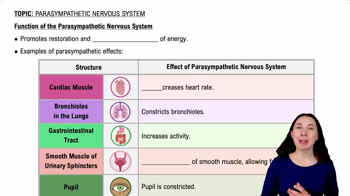
The parasympathetic nervous system (PNS) is a component of the autonomic nervous system responsible for promoting 'rest and digest' functions. It counteracts the 'fight or flight' response of the sympathetic nervous system, facilitating bodily processes such as decreased heart rate, increased digestive activity, and energy conservation. After intense physical activity, the PNS helps restore the body to a state of calm.
Video consigliato:
1:56
Function of the Parasympathetic Nervous System

Homeostasis

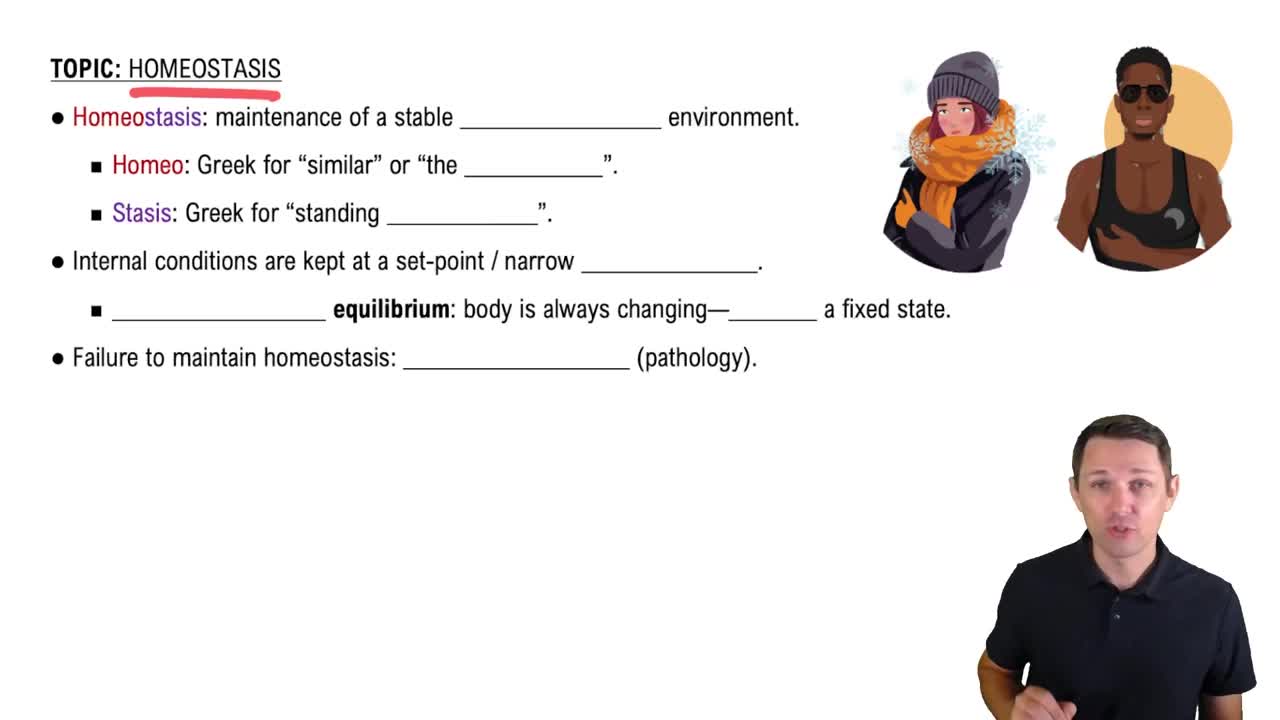
Homeostasis refers to the body's ability to maintain a stable internal environment despite external changes. This involves regulating various physiological parameters, such as temperature, pH, and electrolyte balance. The PNS plays a crucial role in homeostasis by initiating processes that counterbalance the effects of stress and physical exertion, ensuring that the body returns to its optimal functioning state.
Video consigliato:
01:59
Introduction to Homeostasis

Physiological Changes Post-Exercise

After finishing a race, several physiological changes occur due to the activation of the PNS. These include a reduction in heart rate, bronchoconstriction, increased salivation, and enhanced digestive activity. These changes are essential for recovery, allowing the body to replenish energy stores, repair tissues, and restore normal function, thereby supporting overall homeostasis.
Video consigliato:
Percorso guidato
04:26
Post-Translational Modification