
Ch. 15 Sensory Pathways and the Somatic Nervous System
Martini - Fundamentals of Anatomy & Physiology 11th Edition
Martini, Nath, Bartholomew11th EditionFundamentals of Anatomy & PhysiologyISBN: 9780136874089Non è quello che usi tu?Cambia libro di testo
Capitolo 15, Problema 11

What are the two primary functional roles of the cerebellum?

Guida verificata passo dopo passo
1
Step 1: Understand that the cerebellum is a major structure of the brain located at the back of the skull, beneath the occipital lobes and behind the brainstem.
Step 2: Recognize that the cerebellum primarily functions in coordinating voluntary movements, ensuring smooth and balanced muscular activity.
Step 3: Identify that another key role of the cerebellum is maintaining posture and balance by processing sensory input related to body position.
Step 4: Summarize that the two primary functional roles of the cerebellum are (1) coordination of voluntary movements and (2) maintenance of posture and balance.
Step 5: Note that these functions are essential for motor control but the cerebellum does not initiate movement; instead, it fine-tunes and regulates motor commands from other brain areas.

Risposta video verificata per un problema simile:

Questa soluzione video è stata consigliata dai nostri tutor come utile per risolvere questo problema.
Durata del video:
2m

Concetti chiave

Ecco i concetti essenziali che devi comprendere per rispondere correttamente alla domanda.

Motor Coordination

The cerebellum plays a crucial role in coordinating voluntary movements by integrating sensory input and fine-tuning motor activity. It ensures smooth, balanced, and precise muscle actions, preventing jerky or uncoordinated movements.
Video consigliato:
4:31
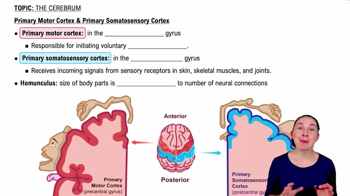
Primary Motor Cortex & Primary Somatosensory Cortex

Balance and Posture

The cerebellum helps maintain balance and posture by processing information from the inner ear and proprioceptive sensors. It adjusts muscle tone and body position to keep the body stable during movement and at rest.
Video consigliato:
Percorso guidato
07:59
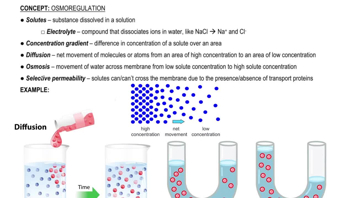
Osmosis and Osmolarity

Motor Learning

Beyond immediate movement control, the cerebellum is involved in motor learning, helping the brain adapt and improve motor skills through practice. This includes tasks like riding a bike or playing an instrument, where repeated actions become more efficient.
Video consigliato:
4:31
Primary Motor Cortex & Primary Somatosensory Cortex