Ch. 16 The Autonomic Nervous System and Higher-Order Functions
Martini - Fundamentals of Anatomy & Physiology 11th Edition
Martini, Nath, Bartholomew11th EditionFundamentals of Anatomy & PhysiologyISBN: 9780136874089Non è quello che usi tu?Cambia libro di testo
Capitolo 16, Problema 7

Which four ganglia serve as origins for postganglionic fibers involved in control of visceral structures in the head?

Guida verificata passo dopo passo
1
Step 1: Understand the role of ganglia in the autonomic nervous system. Ganglia are clusters of neuron cell bodies where preganglionic fibers synapse with postganglionic neurons. In the head, specific ganglia serve as relay points for postganglionic fibers controlling visceral structures.
Step 2: Recall that the autonomic nervous system is divided into sympathetic and parasympathetic divisions, each with distinct ganglia. The question focuses on ganglia that give rise to postganglionic fibers controlling visceral structures in the head, which are primarily parasympathetic ganglia.
Step 3: Identify the four main parasympathetic ganglia in the head: the ciliary ganglion, pterygopalatine ganglion, submandibular ganglion, and otic ganglion. Each of these ganglia is associated with specific cranial nerves and target organs.
Step 4: Review the functions and connections of each ganglion: the ciliary ganglion controls the eye muscles; the pterygopalatine ganglion controls lacrimal glands and nasal mucosa; the submandibular ganglion controls salivary glands; and the otic ganglion controls the parotid salivary gland.
Step 5: Summarize that these four ganglia serve as origins for postganglionic fibers that innervate various visceral structures in the head, completing the pathway from preganglionic neurons to target tissues.

Risposta video verificata per un problema simile:

Questa soluzione video è stata consigliata dai nostri tutor come utile per risolvere questo problema.

Concetti chiave

Ecco i concetti essenziali che devi comprendere per rispondere correttamente alla domanda.

Autonomic Nervous System (ANS) Ganglia

Ganglia in the ANS are clusters of nerve cell bodies where preganglionic neurons synapse with postganglionic neurons. These ganglia serve as relay points for transmitting nerve signals to target organs, especially in controlling involuntary functions like those of visceral structures.
Video consigliato:
1:50
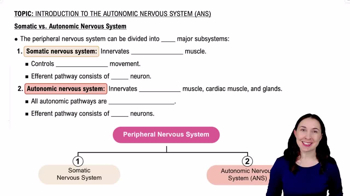
Somatic vs. Autonomic Nervous System

Postganglionic Fibers

Postganglionic fibers are nerve fibers that extend from autonomic ganglia to the target organs. They carry signals that regulate functions such as gland secretion, blood vessel constriction, and muscle control in visceral structures, particularly in the head region.
Video consigliato:
03:00
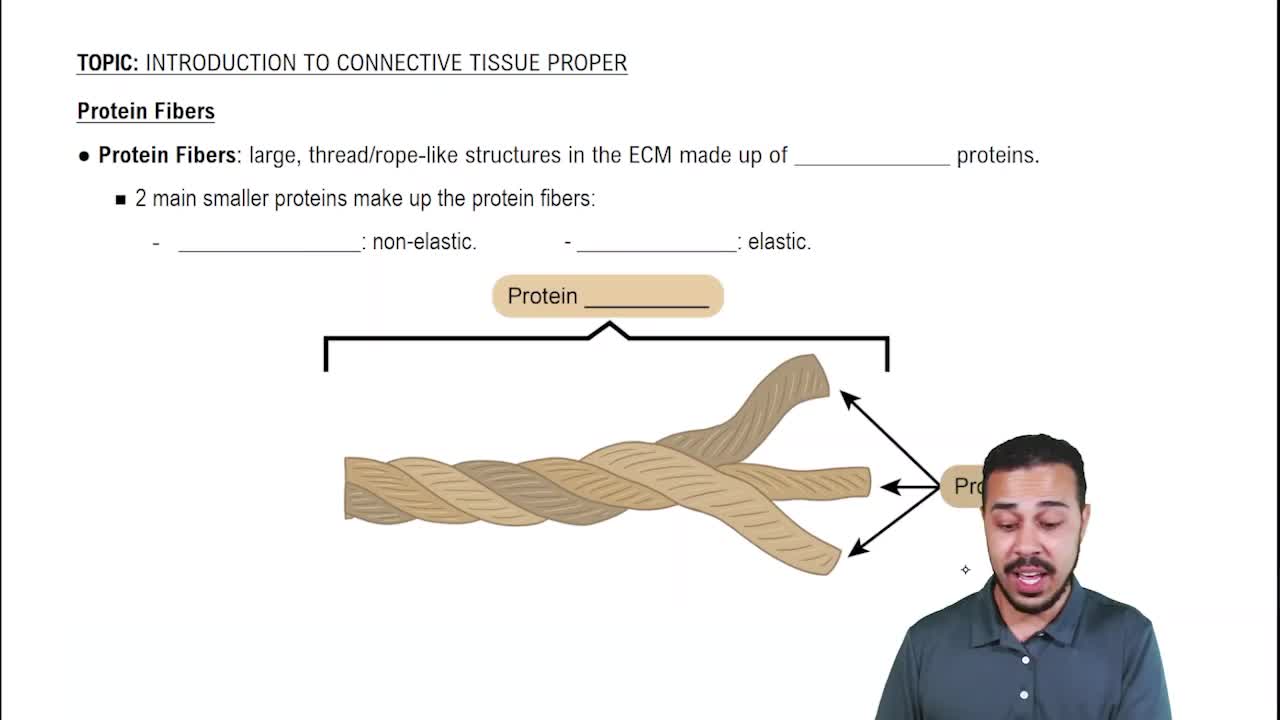
Protein Fibers

Cranial Autonomic Ganglia in the Head

The four main cranial ganglia serving as origins for postganglionic fibers controlling head viscera are the ciliary, pterygopalatine, submandibular, and otic ganglia. Each is associated with specific cranial nerves and controls different visceral functions like pupil constriction, lacrimation, salivation, and blood flow.
Video consigliato:
04:19
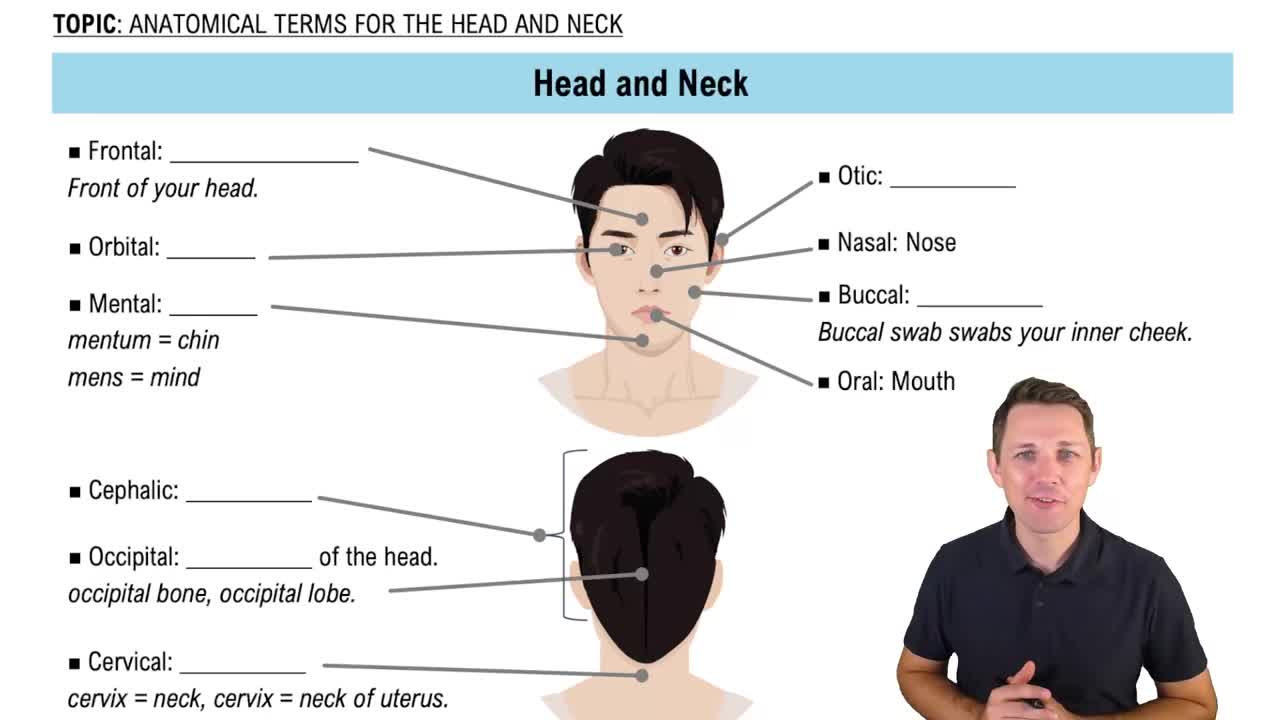
The Head and Neck