Ch. 6 - Chromosome Mutations: Variation in Number and Arrangement
Klug - Essentials of Genetics 10th Edition
Klug10th EditionEssentials of GeneticsISBN: 9780135588789Non è quello che usi tu?Cambia libro di testo
Capitolo 6, Problema 1a

How do we know that the extra chromosome causing Down syndrome is usually maternal in origin?

Guida verificata passo dopo passo
1
Understand that Down syndrome is caused by trisomy 21, meaning there is an extra copy of chromosome 21 in the affected individual.
Recognize that to determine the origin of the extra chromosome, scientists analyze genetic markers called polymorphisms or short tandem repeats (STRs) on chromosome 21 from the child and both parents.
Collect DNA samples from the child with Down syndrome and both parents, then perform genotyping to identify which alleles (versions of a gene) are present on chromosome 21 in each individual.
Compare the child's alleles on chromosome 21 to those of the parents to see whether the extra chromosome 21 came from the mother or the father by identifying which parent's alleles are duplicated.
Review population studies that show a higher frequency of maternal nondisjunction events (errors in chromosome separation during meiosis) leading to the extra chromosome 21, thus concluding that the extra chromosome is usually maternal in origin.

Risposta video verificata per un problema simile:

Questa soluzione video è stata consigliata dai nostri tutor come utile per risolvere questo problema.
Durata del video:
1m

Concetti chiave

Ecco i concetti essenziali che devi comprendere per rispondere correttamente alla domanda.

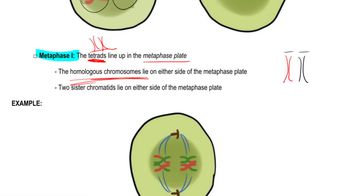
Nondisjunction during Meiosis

Nondisjunction is the failure of chromosome pairs to separate properly during meiosis, leading to gametes with an abnormal number of chromosomes. In Down syndrome, nondisjunction typically results in an extra copy of chromosome 21. Studying when and how nondisjunction occurs helps determine the parental origin of the extra chromosome.
Video consigliato:

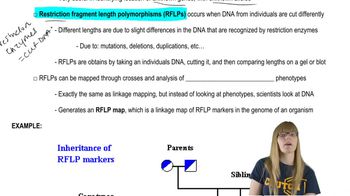
Parental Origin Analysis Using Genetic Markers

Genetic markers such as microsatellites or single nucleotide polymorphisms (SNPs) are used to trace the origin of chromosomes. By comparing the child's chromosome 21 markers with those of the mother and father, researchers can identify whether the extra chromosome came from the mother or father, revealing that most cases are maternal in origin.
Video consigliato:
Percorso guidato
07:11
Mapping with Markers

Maternal Age Effect

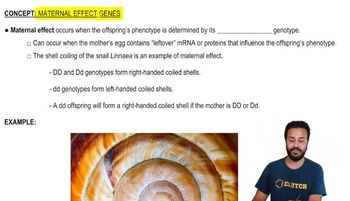
The risk of nondisjunction increases with maternal age, which correlates with the higher incidence of Down syndrome in children born to older mothers. This age-related increase supports the conclusion that the extra chromosome 21 usually originates from errors in the mother’s egg cells during meiosis.
Video consigliato:
Percorso guidato
03:38
Maternal Effect