Ch. 6 - Genetic Analysis and Mapping in Bacteria and Bacteriophages
Sanders - Genetic Analysis: An Integrated Approach 3rd Edition
Sanders3rd EditionGenetic Analysis: An Integrated ApproachISBN: 9780135564172Non è quello che usi tu?Cambia libro di testo
Capitolo 6, Problema 6

Describe the difference between the bacteriophage lytic cycle and lysogenic cycle.

Guida verificata passo dopo passo
1
Understand that bacteriophages are viruses that infect bacteria, and they can follow two distinct life cycles: the lytic cycle and the lysogenic cycle.
In the lytic cycle, the bacteriophage attaches to the bacterial cell, injects its genetic material, and uses the host's cellular machinery to replicate its DNA and produce new viral particles. This process ultimately leads to the lysis (bursting) of the bacterial cell, releasing the new phages.
In the lysogenic cycle, the bacteriophage integrates its genetic material into the bacterial host's genome, forming a prophage. The viral DNA remains dormant and is replicated along with the host's DNA during cell division, without causing immediate harm to the host.
Recognize that environmental factors, such as stress or UV radiation, can trigger the prophage in the lysogenic cycle to exit the host genome and enter the lytic cycle, leading to active replication and cell lysis.
Summarize the key difference: the lytic cycle results in the destruction of the host cell and immediate production of new viruses, while the lysogenic cycle involves integration of viral DNA into the host genome and a dormant phase before potentially transitioning to the lytic cycle.

Risposta video verificata per un problema simile:

Questa soluzione video è stata consigliata dai nostri tutor come utile per risolvere questo problema.
Durata del video:
2m

Concetti chiave

Ecco i concetti essenziali che devi comprendere per rispondere correttamente alla domanda.

Bacteriophage Structure and Function

Bacteriophages, or phages, are viruses that specifically infect bacteria. They consist of genetic material (DNA or RNA) encased in a protein coat. Understanding their structure is crucial for comprehending how they interact with bacterial cells during the lytic and lysogenic cycles.
Video consigliato:
Percorso guidato
06:04
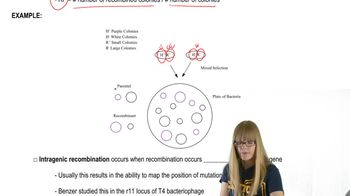
Mapping Bacteriophages

Lytic Cycle

The lytic cycle is a viral reproductive process where the bacteriophage infects a bacterial cell, hijacks its machinery to replicate its own genetic material, and ultimately causes the cell to burst (lyse), releasing new phage particles. This cycle results in the immediate destruction of the host cell.
Video consigliato:
Percorso guidato
08:04
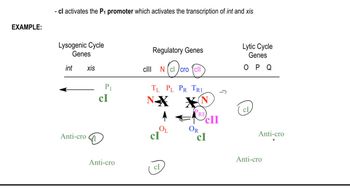
Decision Between Lytic and Lysogenic Cycles

Lysogenic Cycle

In contrast, the lysogenic cycle involves the integration of the phage's genetic material into the bacterial genome, forming a prophage. This allows the phage to replicate along with the bacterial DNA without killing the host. The lysogenic cycle can switch to the lytic cycle under certain conditions, leading to cell lysis.
Video consigliato:
Percorso guidato
08:04
Decision Between Lytic and Lysogenic Cycles