Ch.12 Alcohols, Thiols, Ethers, Aldehydes, and Ketones
Timberlake - Chemistry: An Introduction to General, Organic, and Biological Chemistry 13th Edition
Timberlake13th EditionChemistry: An Introduction to General, Organic, and Biological ChemistryISBN: 9780134421353Non è quello che usi tu?Cambia libro di testo
Capitolo 12, Problema 12a

Are each of the following soluble, slightly soluble, or insoluble in water? Explain.
a. CH3—CH2—CH2—OH

Guida verificata passo dopo passo
1
Step 1: Recognize the chemical structure provided, CH₃—CH₂—CH₂—OH, as 1-propanol, which is an alcohol. Alcohols contain a hydroxyl (-OH) group attached to a carbon chain.
Step 2: Recall the general solubility rule for alcohols: alcohols with shorter carbon chains are typically soluble in water due to the ability of the hydroxyl group to form hydrogen bonds with water molecules.
Step 3: Consider the length of the carbon chain in 1-propanol. It has three carbon atoms, which is relatively short. The hydroxyl group dominates the solubility behavior, making it likely soluble in water.
Step 4: Explain the role of hydrogen bonding: The hydroxyl group (-OH) can interact with water molecules through hydrogen bonding, which increases solubility. However, as the carbon chain length increases, the hydrophobic nature of the chain can reduce solubility.
Step 5: Conclude that 1-propanol is soluble in water due to its short carbon chain and the presence of the hydroxyl group capable of forming hydrogen bonds with water.

Risposta video verificata per un problema simile:

Questa soluzione video è stata consigliata dai nostri tutor come utile per risolvere questo problema.

Concetti chiave

Ecco i concetti essenziali che devi comprendere per rispondere correttamente alla domanda.

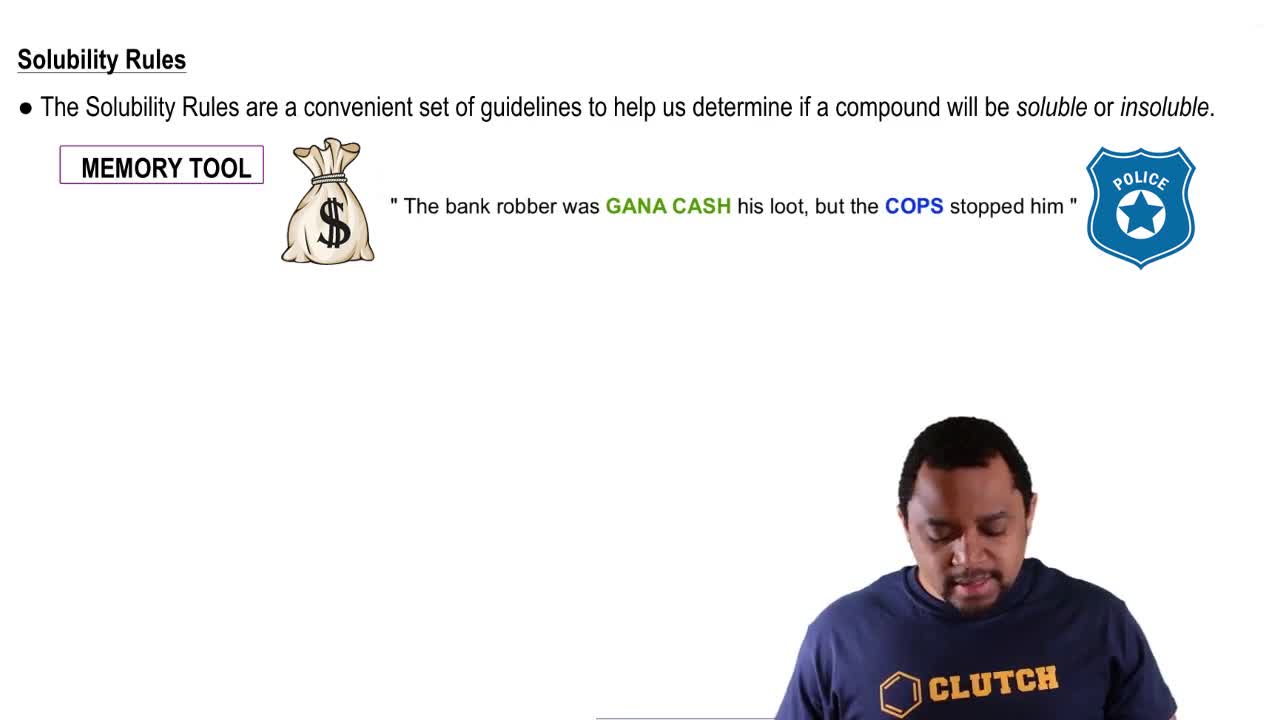
Solubility

Solubility refers to the ability of a substance to dissolve in a solvent, typically water. It is influenced by factors such as temperature, pressure, and the chemical nature of the solute and solvent. Substances can be classified as soluble, slightly soluble, or insoluble based on how much of the solute can dissolve in a given amount of solvent.
Video consigliato:
Percorso guidato
00:28
Solubility Rules

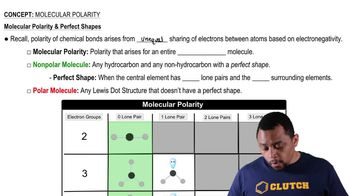
Polarity

Polarity is a key concept in chemistry that describes the distribution of electrical charge over the atoms in a molecule. Polar molecules, which have a significant difference in electronegativity between atoms, tend to dissolve well in polar solvents like water. In contrast, nonpolar molecules do not interact favorably with polar solvents, affecting their solubility.
Video consigliato:
Percorso guidato
01:34
Molecular Polarity (Simplified) Concept 1

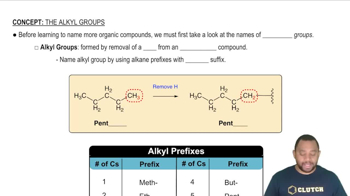
Hydroxyl Group

The hydroxyl group (-OH) is a functional group consisting of an oxygen atom bonded to a hydrogen atom. It is characteristic of alcohols and contributes to the polarity of the molecule, enhancing its ability to form hydrogen bonds with water. The presence of a hydroxyl group typically increases a compound's solubility in water.
Video consigliato:
Percorso guidato
2:26
Alkyl Groups Concept 1