Ch. 6 - Microbial Nutrition and Growth
Bauman - Microbiology with Diseases by Taxonomy 6th Edition
Bauman6th EditionMicrobiology with Diseases by TaxonomyISBN: 9780134832302Non è quello che usi tu?Cambia libro di testo
Capitolo 6, Problema 4

The most reactive of the four toxic forms of oxygen is:
a. The hydroxyl radical
b. The peroxide anion
c. The superoxide radical
d. Singlet oxygen

Guida verificata passo dopo passo
1
Step 1: Understand that the question is asking about the most reactive form among the four toxic oxygen species listed: hydroxyl radical, peroxide anion, superoxide radical, and singlet oxygen.
Step 2: Recall that reactive oxygen species (ROS) vary in their reactivity and potential to cause cellular damage. The hydroxyl radical (•OH) is known for its extremely high reactivity due to its unpaired electron and ability to react with almost any biomolecule.
Step 3: Compare the reactivity of each species: the peroxide anion (O2^2-) is less reactive, superoxide radical (O2•-) is moderately reactive, singlet oxygen (an excited form of oxygen) is reactive but generally less so than hydroxyl radical.
Step 4: Recognize that the hydroxyl radical is the most reactive because it can initiate rapid and indiscriminate damage to DNA, proteins, and lipids, making it the most toxic form of oxygen species.
Step 5: Conclude that among the options, the hydroxyl radical is the most reactive toxic form of oxygen.

Risposta video verificata per un problema simile:

Questa soluzione video è stata consigliata dai nostri tutor come utile per risolvere questo problema.
Durata del video:
1m

Concetti chiave

Ecco i concetti essenziali che devi comprendere per rispondere correttamente alla domanda.

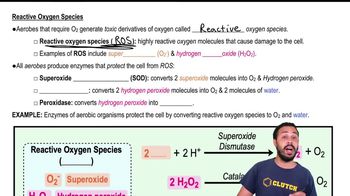
Reactive Oxygen Species (ROS)

Reactive Oxygen Species are highly reactive molecules containing oxygen that can damage cellular components. They include free radicals like superoxide and hydroxyl radicals, as well as non-radical species like peroxide and singlet oxygen. Understanding their reactivity helps explain their biological effects.
Video consigliato:
04:43
Reactive Oxygen Species

Hydroxyl Radical

The hydroxyl radical (•OH) is an extremely reactive ROS formed by the reduction of hydrogen peroxide. It can damage DNA, proteins, and lipids rapidly due to its high reactivity and short lifespan, making it the most reactive among common toxic oxygen species.
Video consigliato:
02:36
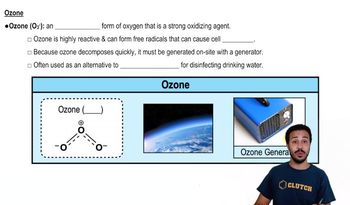
Ozone

Superoxide Radical and Other ROS

The superoxide radical (O2•−) is a less reactive ROS produced during cellular respiration. Peroxide anion (O2^2−) and singlet oxygen are also reactive but generally less damaging than hydroxyl radicals. Differentiating their reactivity levels is key to understanding oxidative stress.
Video consigliato:
02:15
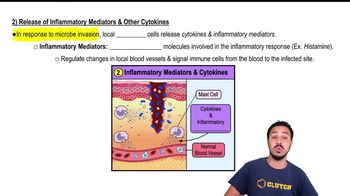
2) Release of Inflammatory Mediators & Other Cytokines