Indietro
 Bruice 8th EditionCh. 9 - Substitution and Elimination Reactions of Alkyl Halides
Problema 41
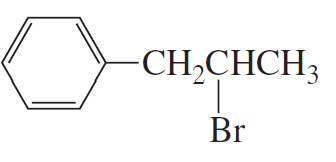
How does the ratio of substitution product to elimination product formed from the reaction of propyl bromide with CH3O− in methanol change if the nucleophile is changed to CH3S−?
Problema 42
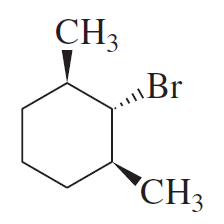
Explain why only a substitution product and no elimination product is obtained when the following compound reacts with sodium methoxide:
Problema 43a,b
a. Explain why 1-bromo-2,2-dimethylpropane has difficulty undergoing both SN2 and SN1 reactions.
b. Can it undergo E2 and E1 reactions?
Problema 44
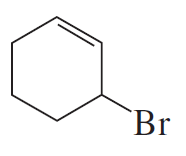
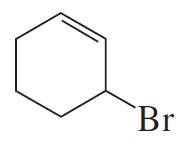
a. Assuming that the two compounds shown below have the same stability, which one would you expect to be more reactive in an SN1 reaction?
b. Draw the products that each would form when the solvent is ethanol.
Problema 45a
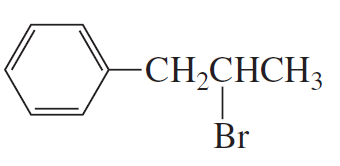
What products will be obtained from the E2 reaction of the following alkyl halides?
a.
Problema 45b
What products will be obtained from the E2 reaction of the following alkyl halides?
b.
Problema 45c
What products will be obtained from the E2 reaction of the following alkyl halides?
c.
Problema 46a
What products will be obtained from the E1 reaction of the alkyl halides in [PROBLEM 9-45]?
a.
Problema 46b
What products will be obtained from the E1 reaction of the alkyl halides in [PROBLEM 9-45]?
b.
Problema 46c
What products will be obtained from the E1 reaction of the alkyl halides in [PROBLEM 9-45]?
c.
Problema 47a
Draw the elimination products that are formed when 3-bromo-3-methyl-1-butene reacts with
a. CH3O−.
Problema 47b
Draw the elimination products that are formed when 3-bromo-3-methyl-1-butene reacts with
b. CH3OH
Problema 48
Which compound is more reactive in an SN1 reaction? In each case, you can assume that both alkyl halides have the same stability.
a.
b.
Problema 50
Why is a cumulated diene not formed in the reaction shown above?
Problema 52
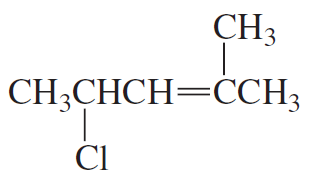
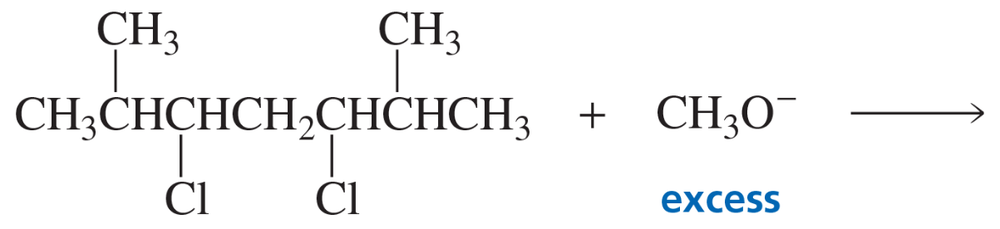
What product is obtained when the following compound undergoes two successive elimination reactions?
Problema 53a
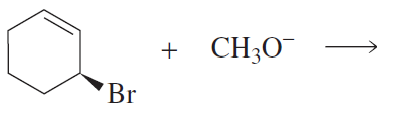
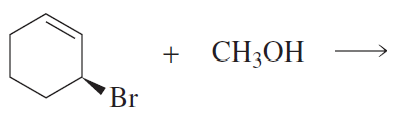
What products are formed from the following reactions?
a.
Problema 53b
What products are formed from the following reactions?
b.
Problema 54
Amines are good nucleophiles, even though they are neutral. How would the rate of an SN2 reaction between an amine and an alkyl halide be affected if the polarity of the solvent is increased?
Problema 55a
How will the rate of each of the following SN2 reactions change if it is carried out in a more polar solvent?
a.
Problema 55b
How will the rate of each of the following SN2 reactions change if it is carried out in a more polar solvent?
b.
Problema 55c
How will the rate of each of the following SN2 reactions change if it is carried out in a more polar solvent?
c.
Problema 56a,b,c
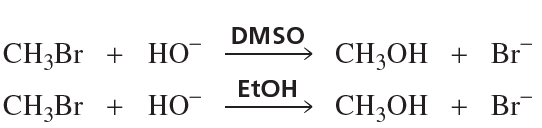
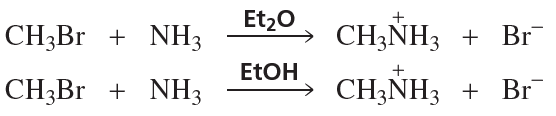
Which reaction in each of the following pairs takes place more rapidly? (EtOH is ethyl alcohol; Et2O is diethyl ether.)
a.
b.
c.
Problema 56d,e
Which reaction in each of the following pairs takes place more rapidly? (EtOH is ethyl alcohol; Et2O is diethyl ether.)
d.
e.
Problema 58
Would you expect acetate ion (CH3CO2−) to be a better nucleophile in an SN2 reaction with an alkyl halide carried out in methanol or in dimethyl sulfoxide?
Problema 59
Under which of the following reaction conditions will (R)-1-chloro-1-phenylethane form the most (R)-1-phenyl-1-ethanol: in water or in 1.0 M HO−?
Problema 61a,b
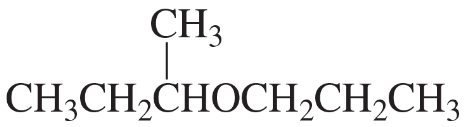
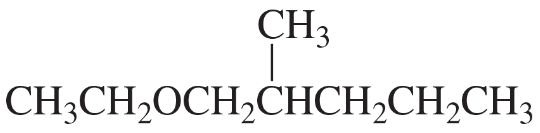
What is the best way to prepare the following ethers using an alkyl halide and an alkoxide ion?
a.
b.
Problema 61c,d
What is the best way to prepare the following ethers using an alkyl halide and an alkoxide ion?
c.
d.
Problema 62
Identify the three products formed when 2-bromo-2-methylpropane is dissolved in a mixture of 80% ethanol and 20% water.
Problema 63b
What products (including stereoisomers, if applicable) are formed from the reaction of 3-bromo-3-methylpentane:
b. with H2O?
Problema 64a,b
After a proton is removed from the OH group, which compound in each pair forms a cyclic ether more rapidly?
a.
b.