Ch. 4 - Acids and Bases/Electron Flow
Mullins - Organic Chemistry: A Learner Centered Approach 1st Edition
Mullins1st EditionOrganic Chemistry: A Learner Centered ApproachISBN: 9780137566471Non è quello che usi tu?Cambia libro di testo
Capitolo 3, Problema 20b(i,ii,iii)

In the following reactions,
(i) identify the acid and base,
(ii) identify the most electron-rich atom in the base,
(iii) identify the most acidic hydrogen in the acid,
(b) Chemical reaction showing a base and an acid with arrows indicating equilibrium.

Guida verificata passo dopo passo
1
Step 1: Identify the acid and base in the reaction. Ethylamide contains a nitrogen atom with a lone pair of electrons, making it a potential base. Propan-2-ol contains an -OH group, which can donate a proton (H⁺), making it the acid in this reaction.
Step 2: Determine the most electron-rich atom in the base. In ethylamide, the nitrogen atom is the most electron-rich due to its lone pair of electrons, which makes it capable of accepting a proton.
Step 3: Identify the most acidic hydrogen in the acid. In propan-2-ol, the hydrogen atom attached to the oxygen in the -OH group is the most acidic because the oxygen atom is electronegative and stabilizes the negative charge formed after losing the proton.
Step 4: Analyze the reaction mechanism. The nitrogen atom in ethylamide (base) will use its lone pair to attack the acidic hydrogen of propan-2-ol (acid), leading to the formation of a conjugate acid and conjugate base.
Step 5: Consider the equilibrium. The reaction will establish an equilibrium between the acid-base pairs, and the position of equilibrium will depend on the relative strengths of the acid and base involved.

Risposta video verificata per un problema simile:

Questa soluzione video è stata consigliata dai nostri tutor come utile per risolvere questo problema.
Durata del video:
2m

Concetti chiave

Ecco i concetti essenziali che devi comprendere per rispondere correttamente alla domanda.

Acids and Bases

In organic chemistry, acids are substances that can donate a proton (H+), while bases are substances that can accept a proton. This concept is fundamental for understanding acid-base reactions, where the transfer of protons occurs between the acid and the base, leading to the formation of conjugate acid-base pairs.
Video consigliato:
02:49
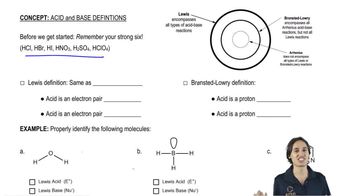
The Lewis definition of acids and bases.

Electron-Rich Atoms

Electron-rich atoms are typically those with lone pairs of electrons or negative charges, making them more likely to donate electrons in a reaction. In the context of bases, identifying the most electron-rich atom helps in understanding its reactivity and ability to accept protons during acid-base interactions.
Video consigliato:
01:44
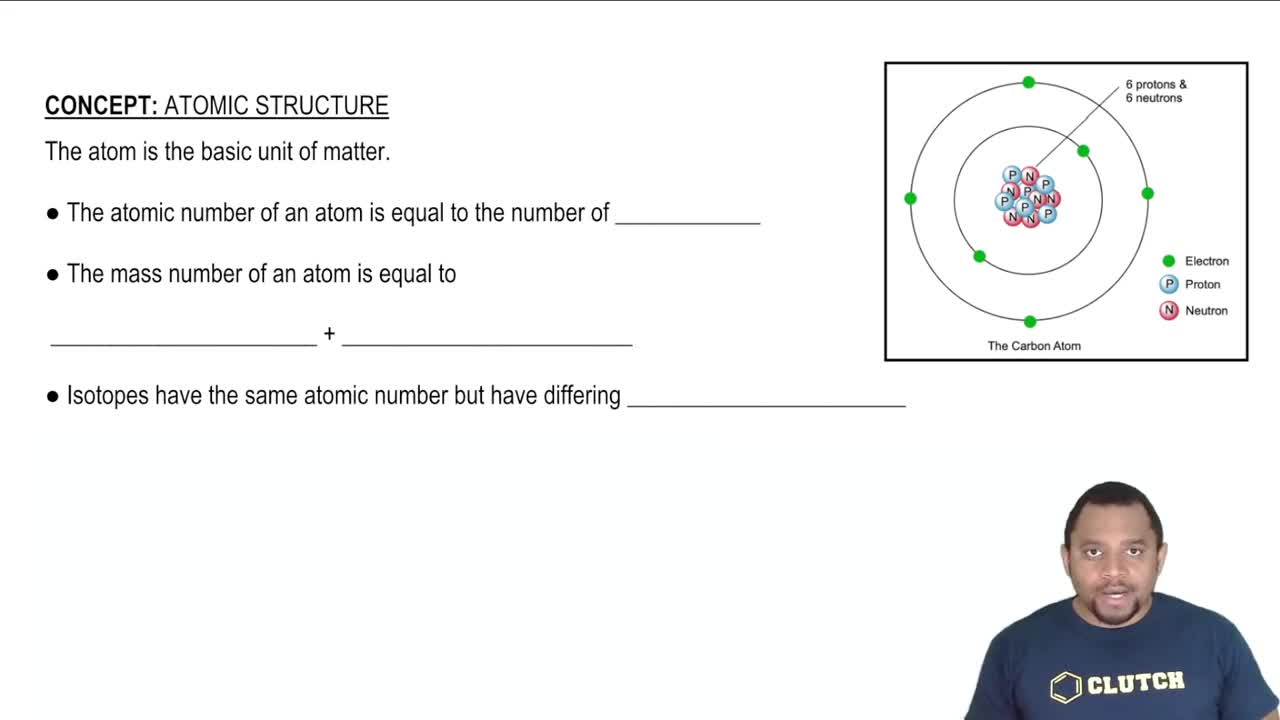
The difference between atomic numbers and atomic mass.

Acidic Hydrogens

Acidic hydrogens are those that can be easily removed as protons in an acid-base reaction. They are usually attached to electronegative atoms, such as oxygen or nitrogen, which stabilize the resulting negative charge after deprotonation. Identifying the most acidic hydrogen is crucial for predicting the outcome of the reaction.
Video consigliato:
00:48
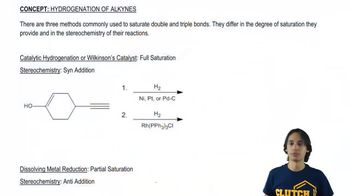
The definition of hydrogenation.
Pratica correlata
Domanda del libro di testo

In the following reactions,

(i) identify the acid and base,

(ii) identify the most electron-rich atom in the base,

(iii) identify the most acidic hydrogen in the acid,

(c)

1209
views

Domanda del libro di testo

In the following reactions,

(iv) provide an arrow-pushing mechanism of the proton transfer that will occur, and

(v) predict the product of the reactions. [You'll need to provide the lone pairs here.]

(b)

1324
views
Domanda del libro di testo

In the following reactions,

(iv) provide an arrow-pushing mechanism of the proton transfer that will occur, and

(v) predict the product of the reactions. [You'll need to provide the lone pairs here.]

(c)

1275
views
Domanda del libro di testo

In the following reactions,

(i) identify the acid and base,

(ii) identify the most electron-rich atom in the base,

(iii) identify the most acidic hydrogen in the acid,

(iv) provide an arrow-pushing mechanism of the proton transfer that will occur, and

(v) predict the product of the reactions. [You'll need to provide the lone pairs here.]

(d) H2O + HCl ⇌

638
views
Domanda del libro di testo

In the following reactions,

(iv) provide an arrow-pushing mechanism of the proton transfer that will occur, and

(v) predict the product of the reactions. [You'll need to provide the lone pairs here.]

(a)

1083
views
Domanda del libro di testo

In the following reactions,

(i) identify the acid and base,

(ii) identify the most electron-rich atom in the base,

(iii) identify the most acidic hydrogen in the acid,

(a)

823
views