뒤로
뒤로
문제 25
Draw a perspective formula for each of the following:
a. (S)-2-chlorobutane
b. (R)-1,2-dibromobutane
문제 27
Convert the Fischer projection to a perspective formula.
문제 28a
a. Is (R)-lactic acid dextrorotatory or levorotatory?
b. Is (R)-sodium lactate dextrorotatory or levorotatory?
문제 30a,b
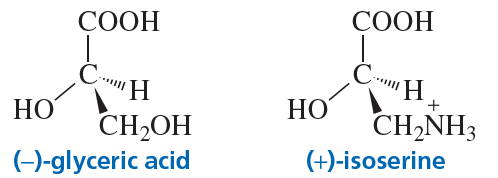
What is the configuration of the following compounds? (Use the given structures to answer the question.)
a. ()-glyceric acid
b. ()-isoserine
문제 30c
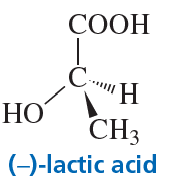
What is the configuration of the following compounds? (Use the given structures to answer the question.)
c. ()-lactic acid
문제 32
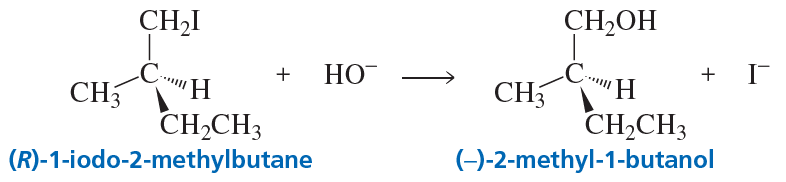
The reaction of (R)-1-iodo-2-methylbutane with hydroxide ion forms an alcohol without breaking any bonds to the asymmetric center. The alcohol rotates the plane of polarization of plane-polarized light counterclockwise. What is the configuration of (+)-2-methyl-1-butanol?
문제 33
The observed rotation of 2.0 g of a compound in 50 mL of solution in a polarimeter tube 20 cm long is +138°. What is the specific rotation of the compound?
문제 35c
(+)-Mandelic acid has a specific rotation of +158. What would be the observed specific rotation of each of the following mixtures?
c. 75% (-)-mandelic acid and 25% (+)-mandelic acid
문제 36
Naproxen, a nonsteroidal anti-inflammatory drug that is the active ingredient in Aleve (p. 115), has a specific rotation of +66. One commercial preparation results in a mixture with a 97% enantiomeric excess.
a. Does naproxen have the R or the S configuration?
b. What percent of each enantiomer is obtained from the commercial preparation?
문제 38
The following compound has only one asymmetric center. Why then does it have four stereoisomers?
문제 39
a. Stereoisomers with two asymmetric centers are called ___ if the configuration of both asymmetric centers in one stereoisomer is the opposite of the configuration of the symmetric centers in the other stereoisomer.
b. Stereoisomers with two asymmetric centers are called ___ if the configuration of both asymmetric centers in one stereoisomer is the same as the configuration of the asymmetric centers in the other stereoisomer.
c. Stereoisomers with two asymmetric centers are called ___ if one of the asymmetric centers has the same configuration in both stereoisomers and the other asymmetric center has the opposite configuration in the two stereoisomers.
문제 40
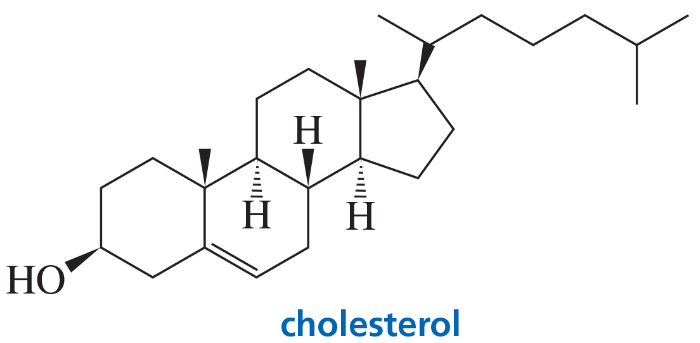
The stereoisomer of cholesterol found in nature is shown here.
a. How many asymmetric centers does cholesterol have?
b. What is the maximum number of stereoisomers that cholesterol can have?
문제 41a
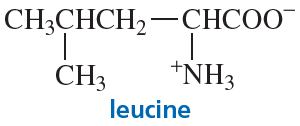
Draw the stereoisomers of the following amino acids. Indicate pairs of enantiomers and pairs of diastereomers.
a.
문제 42
1-Bromo-2-methylcyclopentane has four pairs of diastereomers. Draw the four pairs.
문제 44b
Draw all possible stereoisomers for each of the following:
b. 2-bromo-4-chlorohexane
문제 45
Draw the stereoisomers of 2-methylcyclohexanol.
문제 46
Of all the possible cyclooctanes that have one chloro substituent and one methyl substituent, which ones do not have any asymmetric centers?
문제 47c,d
Draw a diastereomer for each of the following:
c.
d.
문제 48
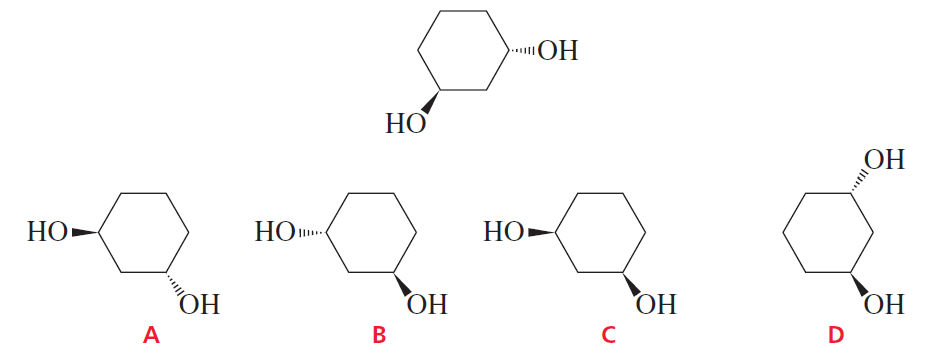
Indicate whether each of the structures in the second row is an enantiomer of, is a diastereomer of, or is identical to the structure in the top row.
문제 49a,b
Which of the following compounds has a stereoisomer that is a meso compound?
a. 2,4-dibromohexane
b. 2,4-dibromopentane
문제 49c,d
Which of the following compounds has a stereoisomer that is a meso compound?
c. 2,4-dimethylpentane
d. 1,3-dichlorocyclohexane
문제 49e,f
Which of the following compounds has a stereoisomer that is a meso compound?
e. 1,4-dichlorocyclohexane
f. 1,2-dichlorocyclobutane
문제 51e,f
Draw all the stereoisomers for each of the following:
e. 3,4-dichlorohexane
f. 1,2-dichlorocyclobutane
문제 51g,h
Draw all the stereoisomers for each of the following:
g. 1,3-dichlorocyclohexane
h. 1,4-dichlorocyclohexane
문제 52a
Draw the four stereoisomers of 1,3-dichloro-2-pentanol using
a. Fischer projections.
문제 52b
Draw the four stereoisomers of 1,3-dichloro-2-pentanol using
b. perspective formulas.
문제 53
Name the isomers you drew in Problem 52.
문제 54
Chloramphenicol is a broad-spectrum antibiotic that is particularly useful against typhoid fever. What is the configuration of each of its asymmetric centers?
문제 55a,b
Draw a perspective formula for each of the following:
a. (S)-3-chloro-1-pentanol
b. (2R,3R)-2,3-dibromopentane
문제 55c,d
Draw a perspective formula for each of the following:
c. (2S,3R)-3-methyl-2-pentanol
d. (R)-1,2-dibromobutane