뒤로
뒤로
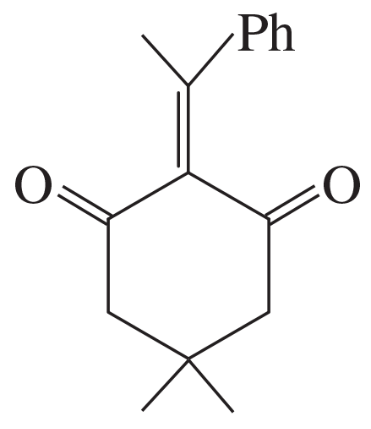
문제 75a
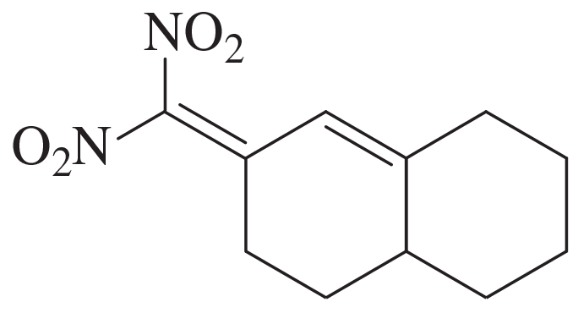
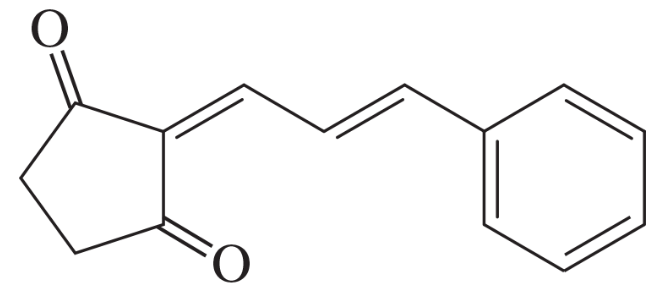
The Knoevenagel condensation is a special case of the aldol condensation in which an active methylene compound reacts with an aldehyde or ketone, in the presence of a secondary amine as a basic catalyst, to produce a new C=C. Show the starting materials that made each of these by a Knoevenagel condensation.
(a)
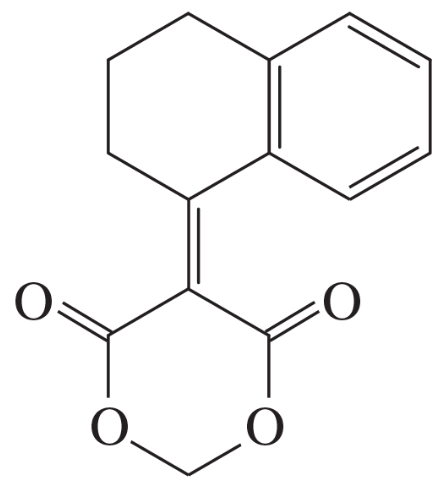
문제 75b
The Knoevenagel condensation is a special case of the aldol condensation in which an active methylene compound reacts with an aldehyde or ketone, in the presence of a secondary amine as a basic catalyst, to produce a new C=C. Show the starting materials that made each of these by a Knoevenagel condensation.
(b)
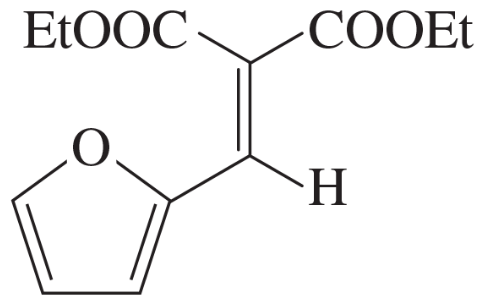
문제 75c
The Knoevenagel condensation is a special case of the aldol condensation in which an active methylene compound reacts with an aldehyde or ketone, in the presence of a secondary amine as a basic catalyst, to produce a new C=C. Show the starting materials that made each of these by a Knoevenagel condensation.
(c)
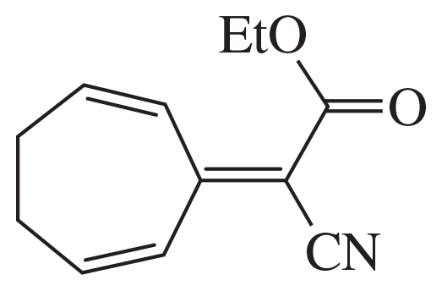
문제 75d
The Knoevenagel condensation is a special case of the aldol condensation in which an active methylene compound reacts with an aldehyde or ketone, in the presence of a secondary amine as a basic catalyst, to produce a new C=C. Show the starting materials that made each of these by a Knoevenagel condensation.
(d)
문제 75e
The Knoevenagel condensation is a special case of the aldol condensation in which an active methylene compound reacts with an aldehyde or ketone, in the presence of a secondary amine as a basic catalyst, to produce a new C=C. Show the starting materials that made each of these by a Knoevenagel condensation.
(e)
문제 75f
The Knoevenagel condensation is a special case of the aldol condensation in which an active methylene compound reacts with an aldehyde or ketone, in the presence of a secondary amine as a basic catalyst, to produce a new C=C. Show the starting materials that made each of these by a Knoevenagel condensation.
(f)
문제 76
Predict the products from this sequence of reactions.
문제 77a
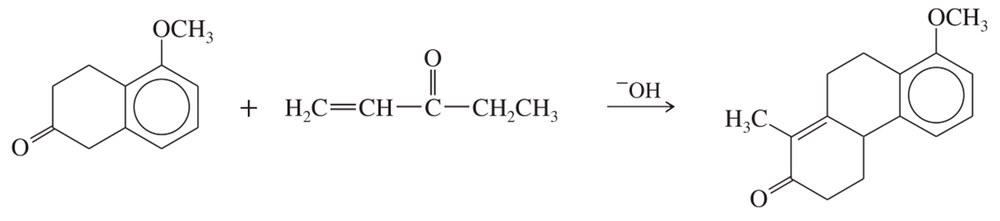
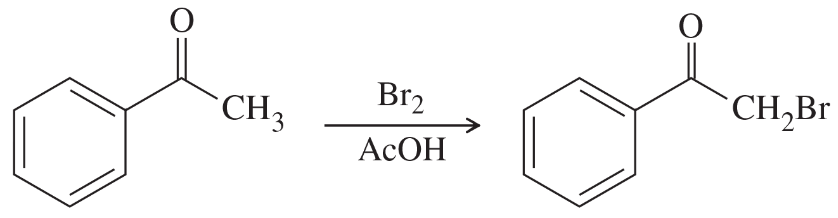
Propose mechanisms for the following reactions.
(a)
문제 77b
Propose mechanisms for the following reactions.
(b)
문제 77c
Propose mechanisms for the following reactions.
(c)
문제 77d
Propose mechanisms for the following reactions.
(d)
문제 77e
Propose mechanisms for the following reactions.
(e)
문제 78a,b
Write equations showing the expected products of the following enamine alkylation and acylation reactions. Then give the final products expected after hydrolysis of the iminium salts.
(a) pyrrolidine enamine of pentan-3-one + allyl chloride
(b) pyrrolidine enamine of acetophenone + butanoyl chloride
문제 78c
Write equations showing the expected products of the following enamine alkylation and acylation reactions. Then give the final products expected after hydrolysis of the iminium salts.
(c) piperidine enamine of cyclopentanone + methyl iodide
문제 78d
Write equations showing the expected products of the following enamine alkylation and acylation reactions. Then give the final products expected after hydrolysis of the iminium salts.
(d) piperidine enamine of cyclopentanone + methyl vinyl ketone
문제 79a
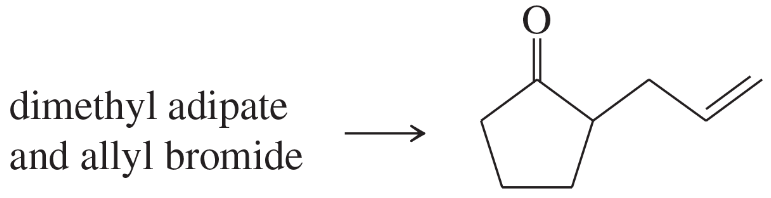
Show how you would accomplish the following multistep conversions. You may use any additional reagents you need.
(a)
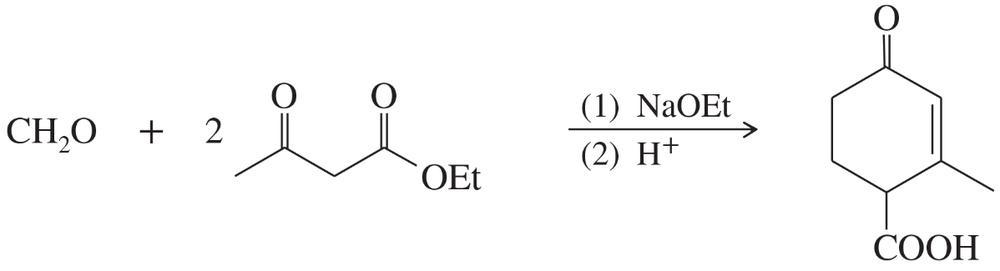
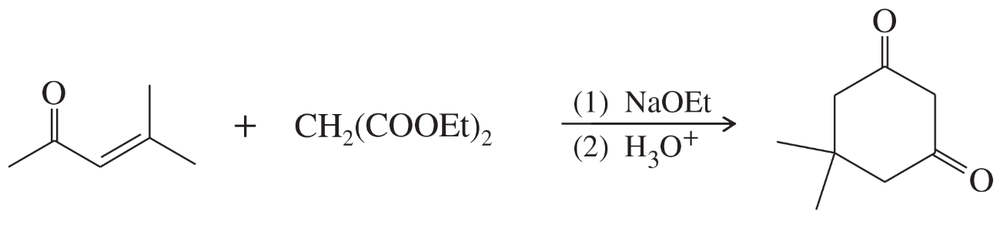
문제 80a
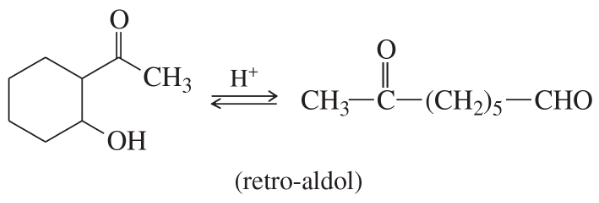
Many of the condensations we have studied are reversible. The reverse reactions are often given the prefix retro-, the Latin word meaning “backward.” Propose mechanisms to account for the following reactions.
(a)
문제 80b
Many of the condensations we have studied are reversible. The reverse reactions are often given the prefix retro-, the Latin word meaning “backward.” Propose mechanisms to account for the following reactions.
(b)
문제 80c
Many of the condensations we have studied are reversible. The reverse reactions are often given the prefix retro-, the Latin word meaning “backward.” Propose mechanisms to account for the following reactions.
(c)
문제 81
(A true story.) Chemistry lab students added an excess of ethylmagnesium bromide to methyl furoate, expecting the Grignard reagent to add twice and form the tertiary alcohol. After water workup, they found that the product was a mixture of two compounds. One was the expected product having two ethyl groups, but the unexpected product had added three ethyl groups. Propose a mechanism to explain the formation of the unexpected product.
문제 82a
Propose a mechanism for the following reaction.
문제 82b
Show the structure of the compound that results from hydrolysis and decarboxylation of the product.
문제 84
Biochemists studying the structure of collagen (a fibrous protein in connective tissue) found cross-links containing α,β-unsaturated aldehydes between protein chains. Show the structures of the side chains that react to form these cross-links, and propose a mechanism for their formation in a weakly acidic solution.
문제 85a
Show reaction sequences (not detailed mechanisms) that explain these transformations:
(a)
문제 85b
Show reaction sequences (not detailed mechanisms) that explain these transformations:
(b)