Ch. 10 Blood
Marieb - Essentials of Human Anatomy & Physiology 13th Edition
Marieb13th EditionEssentials of Human Anatomy & PhysiologyISBN: 9780135624340당신이 사용하는 게 아니라요?교과서 변경
10장, 문제 17

How can liver dysfunction cause bleeding disorders?

검증된 단계별 안내
1
Understand the liver's role in producing clotting factors: The liver synthesizes most of the clotting factors required for blood coagulation, such as fibrinogen, prothrombin, and factors V, VII, IX, and X. These proteins are essential for the clotting cascade, which prevents excessive bleeding.
Recognize the impact of liver dysfunction on clotting factor production: When the liver is damaged or diseased (e.g., cirrhosis, hepatitis), its ability to produce these clotting factors is impaired, leading to a deficiency in the proteins necessary for proper blood clot formation.
Consider the role of vitamin K: The liver requires vitamin K to activate certain clotting factors (e.g., factors II, VII, IX, and X). Liver dysfunction can interfere with vitamin K metabolism, further reducing the activation of these clotting factors and exacerbating bleeding disorders.
Examine the liver's role in clearing anticoagulants: The liver also helps remove anticoagulant substances (e.g., fibrin degradation products) from the bloodstream. Liver dysfunction can lead to an accumulation of these substances, which can inhibit clot formation and contribute to bleeding disorders.
Connect the clinical manifestations: Bleeding disorders caused by liver dysfunction may present as easy bruising, prolonged bleeding after injury, or spontaneous bleeding. Understanding these symptoms helps link liver dysfunction to its effects on coagulation.

비슷한 문제에 대한 검증된 영상 답변:

이 영상 해법은 위 문제에 도움이 된다고 튜터들이 추천한 것입니다.
영상 길이:
1m
도움이 되었나요?

주요 개념

질문에 올바르게 답하기 위해 반드시 이해해야 하는 핵심 개념들은 다음과 같습니다.

Liver Function

The liver plays a crucial role in various metabolic processes, including the synthesis of proteins essential for blood clotting, such as fibrinogen and prothrombin. When liver function is compromised due to conditions like cirrhosis or hepatitis, the production of these clotting factors is diminished, leading to an increased risk of bleeding.
추천 영상:
가이드 코스
2:59
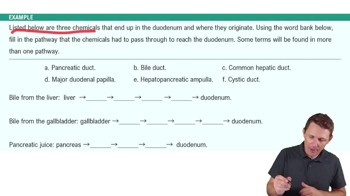
Duct System of the Liver, Gallbladder, and Pancreas Example 1

Coagulation Cascade

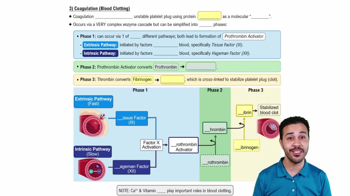
The coagulation cascade is a complex series of events involving various proteins and enzymes that lead to blood clot formation. The liver produces many of the key components involved in this cascade. Dysfunction in the liver can disrupt this process, resulting in impaired clotting and a higher likelihood of bleeding disorders.
추천 영상:
10:05
Coagulation (Blood Clotting)

Vitamin K Metabolism

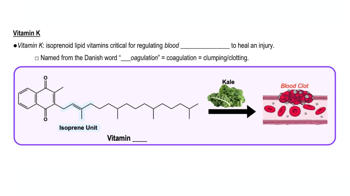
Vitamin K is essential for the synthesis of several clotting factors produced in the liver. Liver dysfunction can impair the absorption and metabolism of vitamin K, leading to a deficiency that further exacerbates bleeding tendencies. This is particularly significant in patients with liver disease, as they may not only produce fewer clotting factors but also have inadequate vitamin K levels.
추천 영상:
01:38
Vitamin K