Ch. 11 Cardiovascular System
Marieb - Essentials of Human Anatomy & Physiology 13th Edition
Marieb13th EditionEssentials of Human Anatomy & PhysiologyISBN: 9780135624340당신이 사용하는 게 아니라요?교과서 변경
11장, 문제 19

More than one choice may apply.
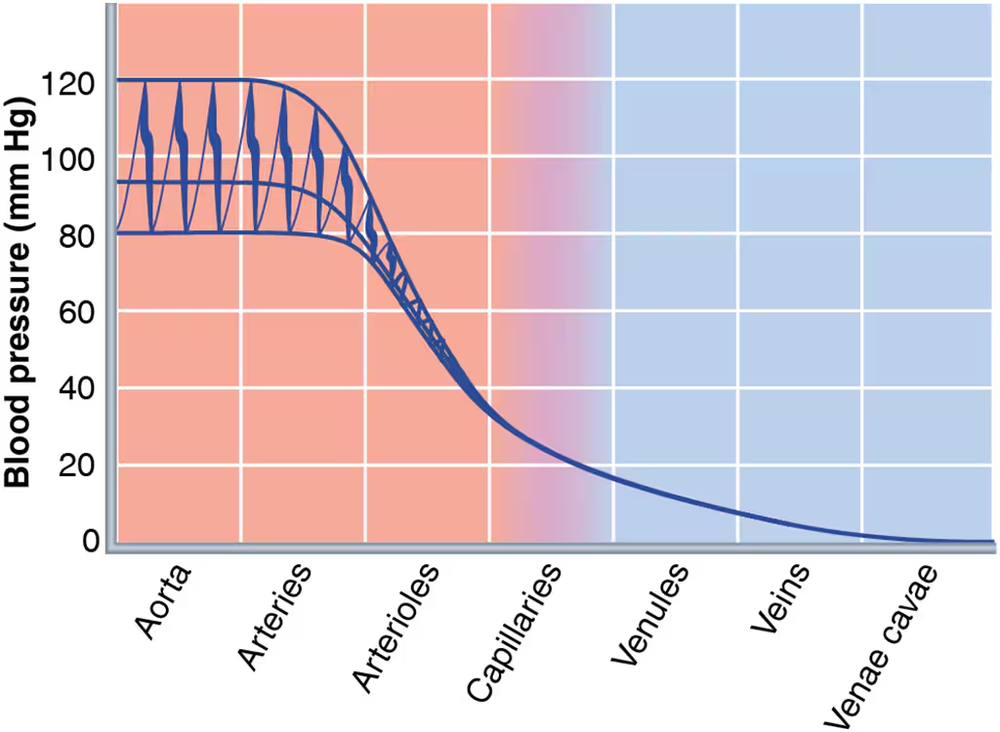
Using the figure, determine which vessels have the most resistance.


Graph showing blood pressure changes across different blood vessels, highlighting resistance levels in arteries, arterioles, and capillaries.
a. Arteries
b. Veins
c. Capillaries
d. Arterioles
e. Venules

검증된 단계별 안내
1
Examine the concept of resistance in blood vessels: Resistance is primarily influenced by the diameter of the vessel, the length of the vessel, and the viscosity of the blood. Smaller diameters result in higher resistance due to increased friction between the blood and the vessel walls.
Understand the role of each vessel type: Arteries are large vessels with relatively low resistance. Veins are also large and have low resistance. Capillaries are small but numerous, which reduces their overall resistance. Arterioles, on the other hand, are small vessels with adjustable diameters, making them the primary site of resistance in the circulatory system. Venules are small but have less resistance compared to arterioles.
Focus on arterioles: Arterioles are often referred to as resistance vessels because they can constrict or dilate to regulate blood flow and pressure. Their small diameter and ability to change size make them the vessels with the most resistance.
Consider capillaries: While capillaries are very small, their resistance is mitigated by their vast number and the fact that blood flow slows down significantly in these vessels to allow for exchange of gases and nutrients.
Conclude based on the figure and physiological principles: The vessels with the most resistance are the arterioles, as they play a key role in regulating blood flow and pressure through their ability to constrict and dilate.

비슷한 문제에 대한 검증된 영상 답변:

이 영상 해법은 위 문제에 도움이 된다고 튜터들이 추천한 것입니다.
영상 길이:
2m
도움이 되었나요?

주요 개념

질문에 올바르게 답하기 위해 반드시 이해해야 하는 핵심 개념들은 다음과 같습니다.

Vascular Resistance

Vascular resistance refers to the opposition to blood flow within the circulatory system, primarily influenced by the diameter of blood vessels. Smaller diameter vessels, such as arterioles and capillaries, typically exhibit higher resistance due to their narrow lumen, which restricts blood flow more than larger vessels like arteries and veins.
추천 영상:
가이드 코스
6:55
Vascular Layer

Blood Vessel Types

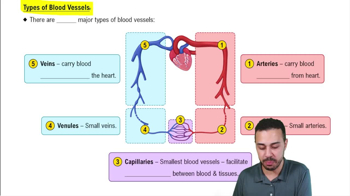
The circulatory system comprises different types of blood vessels: arteries carry blood away from the heart, veins return blood to the heart, and capillaries facilitate exchange between blood and tissues. Each type has distinct structural characteristics that affect their resistance, with arterioles being the primary regulators of blood flow and pressure.
추천 영상:
5:34
Types of Blood Vessels

Ohm's Law in Circulation

Ohm's Law, which states that resistance equals voltage divided by current, can be applied to the circulatory system to understand blood flow. In this context, blood pressure is analogous to voltage, blood flow to current, and vascular resistance to resistance. This relationship helps in determining which vessels contribute most to overall resistance in the circulatory system.
추천 영상:
02:52
Second Law of Thermodynamics