Ch. 2 Basic Chemistry
Marieb - Essentials of Human Anatomy & Physiology 13th Edition
Marieb13th EditionEssentials of Human Anatomy & PhysiologyISBN: 9780135624340당신이 사용하는 게 아니라요?교과서 변경
2장, 문제 18

What are hydrogen bonds, and how are they important in the body?

검증된 단계별 안내
1
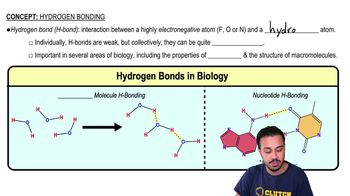
Hydrogen bonds are weak interactions that occur between a hydrogen atom covalently bonded to an electronegative atom (such as oxygen or nitrogen) and another electronegative atom nearby. These bonds are not as strong as covalent or ionic bonds but are crucial for molecular interactions.
In the body, hydrogen bonds play a key role in stabilizing the structure of biomolecules, such as DNA and proteins. For example, in DNA, hydrogen bonds between complementary base pairs (adenine-thymine and cytosine-guanine) help maintain the double helix structure.
Hydrogen bonds are also essential in protein folding. They help stabilize secondary structures like alpha helices and beta sheets, which are critical for the protein's function.
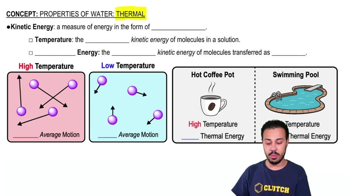
Hydrogen bonds contribute to the unique properties of water, such as its high heat capacity and surface tension. These properties are vital for maintaining homeostasis and facilitating biochemical reactions in the body.
In cellular processes, hydrogen bonds enable enzyme-substrate interactions and receptor-ligand binding, ensuring proper biochemical signaling and metabolic activity.

비슷한 문제에 대한 검증된 영상 답변:

이 영상 해법은 위 문제에 도움이 된다고 튜터들이 추천한 것입니다.
영상 길이:
1m
도움이 되었나요?

주요 개념

질문에 올바르게 답하기 위해 반드시 이해해야 하는 핵심 개념들은 다음과 같습니다.

Hydrogen Bonds

Hydrogen bonds are weak attractions that occur between a hydrogen atom covalently bonded to an electronegative atom and another electronegative atom. These bonds are crucial in determining the structure and properties of water, proteins, and nucleic acids, influencing how molecules interact and function within biological systems.
추천 영상:
05:03
Hydrogen Bonding

Role in Water Properties

Hydrogen bonds significantly contribute to the unique properties of water, such as its high surface tension, specific heat, and solvent capabilities. These properties are vital for maintaining homeostasis in living organisms, facilitating biochemical reactions, and supporting cellular structures.
추천 영상:
04:07
Properties of Water- Thermal

Biological Importance

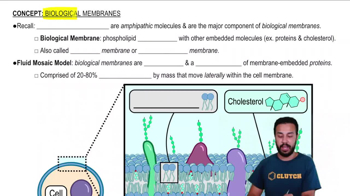
In biological systems, hydrogen bonds play a critical role in stabilizing the three-dimensional structures of proteins and nucleic acids. They are essential for processes like DNA replication and protein folding, ensuring that biological molecules maintain their functional shapes and perform their roles effectively.
추천 영상:
06:49
Biological Membranes