뒤로
뒤로
문제 1
The primary components of the ECF are:
(a) Lymph and cerebrospinal fluid
(b) Plasma and serous fluids
(c) Interstitial fluid and plasma
(d) All of these
문제 2
The principal anions in the ICF are:
(a) Phosphate and proteins (Pr⁻)
(b) Phosphate and bicarbonate
(c) Sodium and chloride
(d) Sodium and potassium
문제 3
Osmoreceptors in the hypothalamus monitor the osmotic concentration of the ECF and secrete _______ in response to higher osmotic concentrations.
(a) BNP
(b) ANP
(c) aldosterone
(d) ADH
문제 4
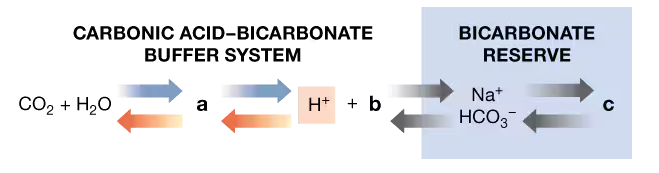
Write the missing names and molecular formulas for the following reactions between the carbonic acid–bicarbonate buffer system and the bicarbonate reserve.
a. ___
b. ___
c. ___
문제 5
Calcium homeostasis primarily reflects:
(a) A balance between absorption in the gut and excretion by the kidneys
(b) Careful regulation of the blood calcium level by the kidneys
(c) An interplay between parathyroid hormone and aldosterone,
(d) An interplay among reserves in the bones, the rate of absorption, and the rate of excretion
(e) Hormonal control of calcium reserves in the bones
문제 6
The most important factor affecting the pH of body tissues is the concentration of:
(a) Lactic acid
(b) Ketone bodies,
(c) Metabolic acids
(d) Carbon dioxide
(e) Hydrochloric acid
문제 7
Changes in the pH of body fluids are compensated for by all of the following except:
(a) An increase in urine output
(b) The carbonic acid–bicarbonate buffer system
(c) The phosphate buffer system
(d) Changes in the rate and depth of breathing
(e) Protein buffers
문제 8
Respiratory acidosis develops when the blood pH is:
(a) Increased due to a decreased blood P𝒸ₒ₂ level
(b) Decreased due to an increased blood P𝒸ₒ₂ level
(c) Increased due to an increased blood P𝒸ₒ₂ level
(d) Decreased due to a decreased blood P𝒸ₒ₂ level
문제 9
Metabolic alkalosis occurs when:
(a) Bicarbonate ion concentrations become elevated
(b) A severe bicarbonate loss occurs
(c) The kidneys fail to excrete hydrogen ions
(d) Ketone bodies are generated in abnormally large quantities
문제 10
Identify four hormones that mediate major physiological adjustments affecting fluid and electrolyte balance. What are the primary effects of each hormone?
문제 11
Drinking a solution hypotonic to the ECF causes the ECF to:
(a) Increase in volume and become hypertonic to the ICF
(b) Decrease in volume and become hypertonic to the ICF
(c) Decrease in volume and become hypotonic to the ICF
(d) Increase in volume and become hypotonic to the ICF
문제 12
The osmotic concentration of the ECF decreases if an individual gains water without a corresponding:
(a) Gain of electrolytes
(b) Loss of water
(c) Fluid shift from the ECF to the ICF
(d) All of these
문제 13
When the pH of body fluids begins to decrease, free amino acids and proteins will
(a) Release a hydrogen from the carboxyl group
(b) Release a hydrogen from the amino group
(c) Release a hydrogen at the carboxyl group
(d) Bind a hydrogen at the amino group
문제 14
In a protein buffer system, if the pH increases:
(a) The protein acquires a hydrogen ion from carbonic acid
(b) Hydrogen ions are buffered by hemoglobin molecules
(c) A hydrogen ion is released and a carboxylate ion is formed
(d) A chloride shift occurs
문제 16
What are fluid shifts? What is their function, and what factors can cause them?
문제 17
Why should a person with a fever drink plenty of fluids?
문제 18
Define and give an example of:
(a) A volatile acid
(b) A fixed acid, and
(c) A metabolic acid
Which represents the greatest threat to acid-base balance? Why?
문제 18b
Define and give an example of:
(b) A fixed acid, and
Which represents the greatest threat to acid-base balance? Why?
문제 18c
Define and give an example of:
(c) A metabolic acid.
Which represents the greatest threat to acid-base balance? Why?
문제 19
What are the three major buffer systems in body fluids? How does each system work?
문제 20
How do respiratory and renal mechanisms support the buffer systems?
문제 21
Differentiate between respiratory compensation and renal compensation.
문제 22
Distinguish between respiratory and metabolic disorders that disturb acid-base balance.
문제 23
What is the difference between metabolic acidosis and respiratory acidosis? What can cause these conditions?
문제 24
The most recent advice from medical and nutritional experts is to monitor one’s intake of salt so that it does not exceed the amount needed to maintain a constant ECF volume. What effect does excessive salt ingestion have on blood pressure?
문제 25
Exercise physiologists recommend that adequate amounts of fluid be ingested before, during, and after exercise. Why is fluid replacement during extensive sweating important?
문제 26
After falling into an abandoned stone quarry filled with water and nearly drowning, a young boy is rescued. In assessing his condition, rescuers find that his body fluids have high PCO₂ and lactate levels and low PO₂ levels. Identify the underlying problem and recommend the necessary treatment to restore homeostatic conditions.
문제 27
Dan has been lost in the desert for 2 days with very little water. As a result of this exposure, you would expect to observe which of the following?
(a) Increased ADH levels
(b) Decreased blood osmolarity
(c) Normal urine production
(d) Increased blood volume
(e) Cells enlarged with fluid
문제 28
Mary, a nursing student, has been caring for burn patients. She notices that they consistently show elevated levels of potassium in their urine and wonders why. What would you tell her?
문제 29
While visiting a foreign country, Milly inadvertently drinks some water, even though she had been advised not to. She contracts an intestinal disease that causes severe diarrhea. How would you expect her condition to affect her blood pH, urine pH, and pattern of ventilation?