Ch. 27 Fluids & Electrolytes
Martini - Fundamentals of Anatomy & Physiology 11th Edition
Martini, Nath, Bartholomew11th EditionFundamentals of Anatomy & PhysiologyISBN: 9780136874089당신이 사용하는 게 아니라요?교과서 변경
26장, 문제 28

Mary, a nursing student, has been caring for burn patients. She notices that they consistently show elevated levels of potassium in their urine and wonders why. What would you tell her?

검증된 단계별 안내
1
Step 1: Understand that potassium levels in urine are influenced by kidney function and the body's regulation of electrolytes, especially after injury or stress such as burns.
Step 2: Recognize that burn injuries cause extensive tissue damage, leading to the release of intracellular potassium into the bloodstream, which initially raises blood potassium levels (hyperkalemia).
Step 3: Know that the kidneys respond to elevated blood potassium by increasing potassium excretion in the urine to maintain electrolyte balance and prevent dangerous hyperkalemia.
Step 4: Explain that the elevated potassium in urine is a compensatory mechanism by the kidneys to remove excess potassium released from damaged cells.
Step 5: Summarize that the elevated urinary potassium in burn patients is due to the body's effort to restore normal potassium levels after cellular injury and potassium release.

비슷한 문제에 대한 검증된 영상 답변:

이 영상 해법은 위 문제에 도움이 된다고 튜터들이 추천한 것입니다.
도움이 되었나요?

주요 개념

질문에 올바르게 답하기 위해 반드시 이해해야 하는 핵심 개념들은 다음과 같습니다.

Potassium Regulation in the Body

Potassium is a vital electrolyte regulated mainly by the kidneys to maintain proper cellular function and fluid balance. The kidneys filter potassium from the blood and adjust its excretion in urine based on the body's needs, preventing dangerous imbalances.
추천 영상:
03:40
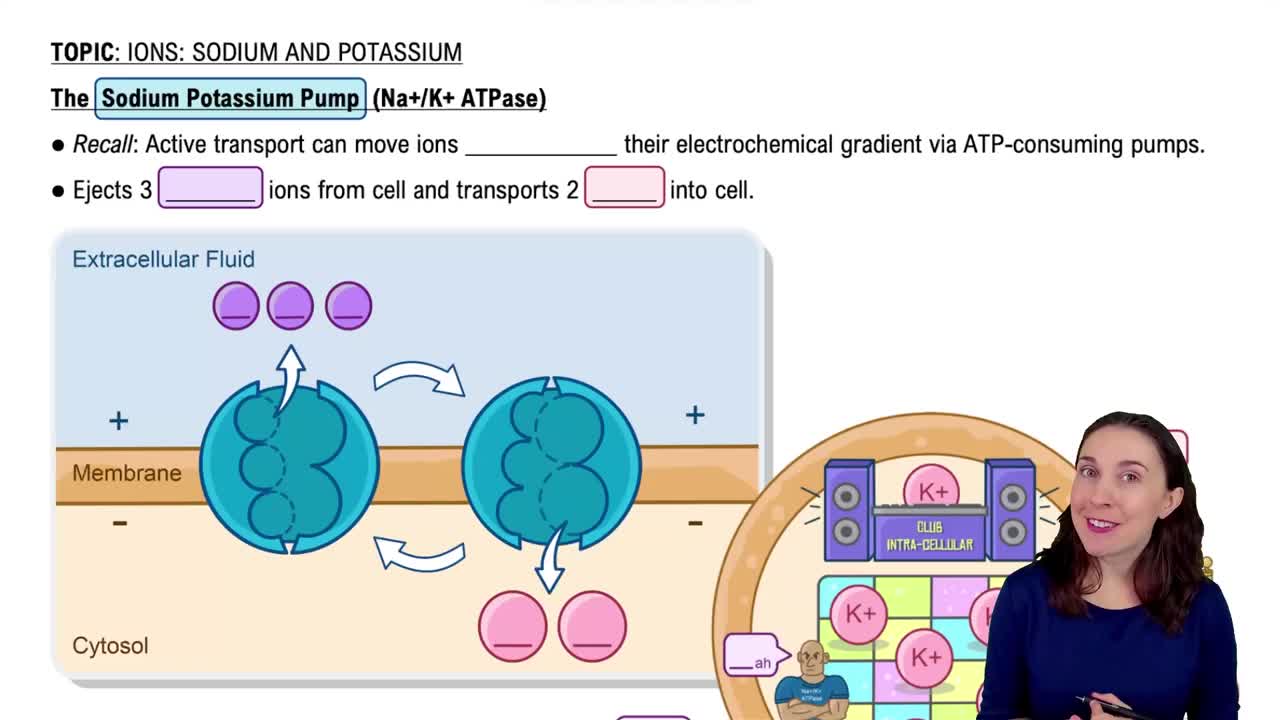
The Sodium Potassium Pump

Effects of Burns on Electrolyte Balance

Severe burns cause cell damage and fluid shifts, leading to the release of intracellular potassium into the bloodstream. This can initially cause high blood potassium levels, but the body compensates by increasing potassium excretion through the urine to restore balance.
추천 영상:
가이드 코스
1:32
Effects of the Complement System

Renal Response to Hyperkalemia

When blood potassium levels rise (hyperkalemia), the kidneys respond by enhancing potassium secretion in the distal tubules, increasing urinary potassium excretion. This mechanism helps prevent toxic effects of elevated potassium on heart and muscle function.
추천 영상:
가이드 코스
9:59
Steps of the Interferon Response
관련 실천
교과서 질문

Exercise physiologists recommend that adequate amounts of fluid be ingested before, during, and after exercise. Why is fluid replacement during extensive sweating important?

52
views

교과서 질문

Yuka is dehydrated, so her physician prescribes intravenous fluids. The attending nurse becomes distracted and erroneously gives Yuka a hypertonic glucose solution instead of normal saline. What effect will this mistake have on Yuka’s plasma ADH levels and urine volume?

52
views
교과서 질문

Dan has been lost in the desert for 2 days with very little water. As a result of this exposure, you would expect to observe which of the following? 

(a) Increased ADH levels

(b) Decreased blood osmolarity

(c) Normal urine production

(d) Increased blood volume

(e) Cells enlarged with fluid

65
views
교과서 질문

After falling into an abandoned stone quarry filled with water and nearly drowning, a young boy is rescued. In assessing his condition, rescuers find that his body fluids have high PCO₂ and lactate levels and low PO₂ levels. Identify the underlying problem and recommend the necessary treatment to restore homeostatic conditions.

72
views
교과서 질문

While visiting a foreign country, Milly inadvertently drinks some water, even though she had been advised not to. She contracts an intestinal disease that causes severe diarrhea. How would you expect her condition to affect her blood pH, urine pH, and pattern of ventilation?

43
views
교과서 질문

Refer to the diagnostic flowchart in Spotlight Figure 27–18. Use information from the blood test results in the accompanying table to categorize the suspected acid-base disorders of the patients represented in the table.

45
views