Ch. 19 Blood
Martini - Fundamentals of Anatomy and Physiology 12th Edition
Martini, Nath, Bartholomew12th EditionFundamentals of Anatomy and PhysiologyISBN: 9780137854011당신이 사용하는 게 아니라요?교과서 변경
19장, 문제 23

How do red blood cells differ from white blood cells in both form and function?

검증된 단계별 안내
1
Step 1: Understand the basic definitions of red blood cells (RBCs) and white blood cells (WBCs). RBCs, also called erythrocytes, primarily transport oxygen, while WBCs, or leukocytes, are involved in immune defense.
Step 2: Compare the form (structure) of RBCs and WBCs. Note that RBCs are biconcave discs without a nucleus, which increases their surface area for gas exchange. In contrast, WBCs have a nucleus and vary in shape depending on the type (e.g., lymphocytes, neutrophils).
Step 3: Examine the function of RBCs. They contain hemoglobin, a protein that binds oxygen and carbon dioxide, facilitating gas transport throughout the body.
Step 4: Examine the function of WBCs. They protect the body against pathogens by identifying, attacking, and removing foreign invaders and damaged cells through various immune responses.
Step 5: Summarize the differences by highlighting that RBCs are specialized for oxygen transport with a simple, flexible shape, whereas WBCs are diverse in form and specialized for immune defense.

비슷한 문제에 대한 검증된 영상 답변:

이 영상 해법은 위 문제에 도움이 된다고 튜터들이 추천한 것입니다.
도움이 되었나요?

주요 개념

질문에 올바르게 답하기 위해 반드시 이해해야 하는 핵심 개념들은 다음과 같습니다.

Structure of Red Blood Cells

Red blood cells (RBCs) are biconcave, disc-shaped cells without a nucleus, which increases their surface area for oxygen transport. Their flexible shape allows them to navigate through narrow blood vessels efficiently.
추천 영상:
14:36
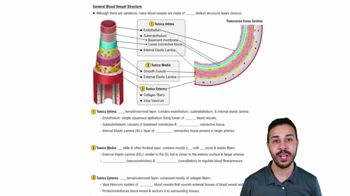
General Blood Vessel Structure

Structure of White Blood Cells

White blood cells (WBCs) are larger than RBCs and have a nucleus. They come in various types with different shapes and structures, enabling them to perform diverse immune functions such as identifying and attacking pathogens.
추천 영상:
14:36
General Blood Vessel Structure

Functions of Red and White Blood Cells

RBCs primarily transport oxygen from the lungs to body tissues and carry carbon dioxide back for exhalation. In contrast, WBCs are key players in the immune system, defending the body against infections and foreign invaders.
추천 영상:
05:33
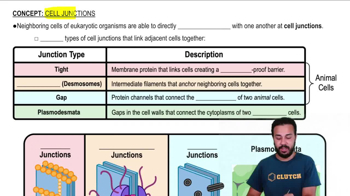
Cell Junctions