While playing on her swing set, 10-year-old Sally falls and breaks her right leg. At the emergency room, the doctor tells her parents that the proximal end of the tibia where the epiphysis meets the diaphysis is fractured. The fracture is properly set and eventually heals. During a routine physical when she is 18, Sally learns that her right leg is 2 cm shorter than her left, probably because of her accident. What might account for this difference?
Ch. 6 Bones and Bone Structure

Martini, Nath, Bartholomew12th EditionFundamentals of Anatomy and PhysiologyISBN: 9780137854011당신이 사용하는 게 아니라요?교과서 변경
6장, 문제 29
Frank does not enter puberty until he is 16. What effect would you predict this will have on his stature?
(a) Frank will probably be taller than if he had started puberty earlier.
(b) Frank will probably be shorter than if he had started puberty earlier.
(c) Frank will probably be a dwarf.
(d) Frank will have bones that are heavier than normal.
e) The late onset of puberty will have no effect on Frank's stature.
검증된 단계별 안내1
Understand that puberty triggers a growth spurt due to increased secretion of growth hormone and sex hormones like testosterone, which stimulate bone growth and maturation.
Recognize that the timing of puberty affects the duration of the growth period: a later onset means the growth plates (epiphyseal plates) in long bones remain open longer, allowing for extended growth.
Consider that although puberty causes bones to mature and eventually stop growing, a delayed puberty generally results in a longer period of pre-pubertal growth, potentially leading to increased final height.
Evaluate the options by linking the biological process: since Frank enters puberty late, he likely has a longer growth phase before the growth plates close, which usually results in being taller than if puberty started earlier.
Conclude that the most reasonable prediction is that Frank will probably be taller than if he had started puberty earlier, corresponding to option (a).

비슷한 문제에 대한 검증된 영상 답변:
이 영상 해법은 위 문제에 도움이 된다고 튜터들이 추천한 것입니다.
영상 길이:
3m도움이 되었나요?
주요 개념
질문에 올바르게 답하기 위해 반드시 이해해야 하는 핵심 개념들은 다음과 같습니다.
Puberty and Growth Spurts
Puberty triggers hormonal changes that stimulate rapid growth, known as the growth spurt. This period typically results in a significant increase in height over a short time. The timing of puberty affects when this growth spurt occurs but not necessarily the final adult height.
추천 영상:
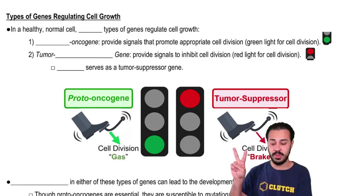
Types of Genes Regulating Cell Growth
Epiphyseal Plate Closure
The epiphyseal plates are growth areas in long bones that allow for height increase. During puberty, sex hormones cause these plates to harden and close, ending further bone lengthening. A later puberty onset delays this closure, potentially allowing for a longer growth period.
추천 영상:
가이드 코스
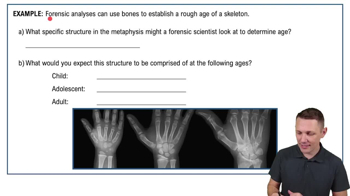
Gross Anatomy of Bones - Structure of a Long Bone Example 1
Impact of Puberty Timing on Final Stature
Delayed puberty often results in a longer growth phase before epiphyseal plate closure, which can lead to taller adult stature compared to early puberty. However, genetics and nutrition also influence final height, so puberty timing is one of several factors.
추천 영상:
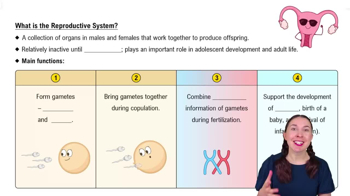
What is the Reproductive System?
관련 실천
교과서 질문
511
views
교과서 질문
In physical anthropology, cultural conclusions can be inferred from a thorough examination of the skeletons of ancient peoples. What sorts of clues might bones provide as to the lifestyles of those individuals?
36
views
교과서 질문
Which of the following conditions would you possibly observe in a child who is suffering from rickets?
(a) Abnormally short limbs
(b) Abnormally long limbs
(c) Oversized facial bones
(d) Bowed legs
(e) Weak, brittle bones
486
views
교과서 질문
The process of bone growth at the epiphyseal cartilage is similar to:
(a) Intramembranous ossification
(b) Endochondral ossification
(c) The process of osteopenia
(d) The process of healing a fracture
(e) The process of calcification
722
views
