Ch. 6 - Genetic Analysis and Mapping in Bacteria and Bacteriophages
Klug - Concepts of Genetics 12th Edition
Klug12th EditionConcepts of GeneticsISBN: 9780135564776당신이 사용하는 게 아니라요?교과서 변경
6장, 문제 10

Describe the role of heteroduplex formation during transformation.

검증된 단계별 안내
1
Understand the concept of transformation: Transformation is the process by which a cell takes up foreign DNA from its environment and incorporates it into its own genome. This is a key mechanism of horizontal gene transfer in bacteria.
Define heteroduplex formation: A heteroduplex is a DNA molecule formed when two single strands of DNA from different sources anneal to each other. This occurs during transformation when the foreign DNA aligns with the recipient's DNA.
Explain the alignment process: During transformation, the foreign DNA enters the recipient cell and aligns with a homologous region of the recipient's DNA. This alignment is facilitated by complementary base pairing.
Describe the role of heteroduplex formation: The heteroduplex forms when the foreign DNA strand pairs with the recipient's DNA strand. This pairing allows for the integration of the foreign DNA into the recipient's genome, potentially introducing new genetic traits.
Highlight the importance of mismatch repair: After the heteroduplex forms, the cell's mismatch repair system may recognize and correct any base-pair mismatches between the foreign and recipient DNA strands. This ensures the stability and functionality of the integrated DNA.

비슷한 문제에 대한 검증된 영상 답변:

이 영상 해법은 위 문제에 도움이 된다고 튜터들이 추천한 것입니다.
영상 길이:
1m

주요 개념

질문에 올바르게 답하기 위해 반드시 이해해야 하는 핵심 개념들은 다음과 같습니다.

Heteroduplex Formation

Heteroduplex formation occurs when two strands of DNA from different sources pair together, creating a hybrid molecule. This process is crucial during genetic transformation, as it allows for the incorporation of foreign DNA into a host organism's genome. The resulting heteroduplex can lead to genetic variation and the expression of new traits in the transformed organism.
추천 영상:
가이드 코스
04:06
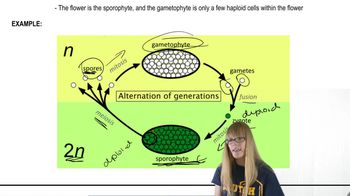
Formation of Plant Gametes

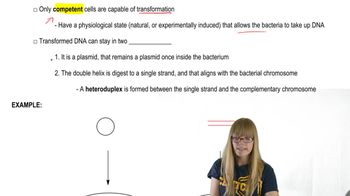
Transformation

Transformation is a process by which a cell takes up foreign DNA from its environment and incorporates it into its own genome. This mechanism is a key method of horizontal gene transfer in bacteria, enabling them to acquire new genetic traits, such as antibiotic resistance. Understanding transformation is essential for studying genetic engineering and biotechnology applications.
추천 영상:

Genetic Recombination

Genetic recombination refers to the process by which genetic material is rearranged during cell division or through mechanisms like transformation. In the context of heteroduplex formation, recombination allows for the exchange of genetic information between the host DNA and the incoming foreign DNA, leading to genetic diversity. This process is fundamental in evolution and the adaptation of organisms to changing environments.
추천 영상:
가이드 코스
03:37
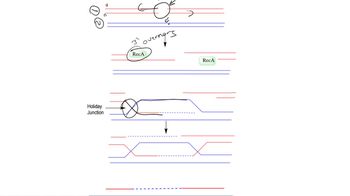
Recombination after Double Strand Breaks