The inheritance of certain mutations of BRCA1 can make it much more likely that a woman will develop breast or ovarian cancer in her lifetime. Can you say with certainty that a woman inheriting a mutation of BRCA1 will definitely develop breast or ovarian cancer in her lifetime? Why or why not?
Ch. 14 - Analysis of Gene Function via Forward Genetics and Reverse Genetics

모든 교과서
Sanders 3rd Edition
Ch. 14 - Analysis of Gene Function via Forward Genetics and Reverse Genetics
문제 8
Sanders 3rd Edition
Ch. 14 - Analysis of Gene Function via Forward Genetics and Reverse Genetics
문제 814장, 문제 8
Describe how CRISPR–Cas has been modified to create a genome-editing tool.
검증된 단계별 안내1
Understand the natural function of CRISPR–Cas: CRISPR–Cas is a bacterial immune system that uses RNA-guided Cas proteins to target and cut foreign DNA, such as that from viruses, based on sequence complementarity.
Identify the key components of CRISPR–Cas: The system has two main components—(1) the guide RNA (gRNA), which is designed to match the target DNA sequence, and (2) the Cas9 protein, which acts as molecular scissors to cut the DNA at the target site.
Explain how scientists modified CRISPR–Cas: Researchers adapted the system by engineering the guide RNA to target specific DNA sequences of interest in the genome, allowing precise targeting of genes for editing.
Describe the genome-editing process: Once the Cas9 protein cuts the DNA at the target site, the cell's natural DNA repair mechanisms are used to introduce changes. Non-homologous end joining (NHEJ) can create insertions or deletions, while homology-directed repair (HDR) can introduce specific sequences if a repair template is provided.
Highlight the versatility of CRISPR–Cas: The system has been further modified to include 'dead' Cas9 (dCas9) for gene regulation, base editors for single-nucleotide changes, and prime editing for more precise edits, making it a powerful and versatile genome-editing tool.

비슷한 문제에 대한 검증된 영상 답변:
이 영상 해법은 위 문제에 도움이 된다고 튜터들이 추천한 것입니다.
영상 길이:
3m도움이 되었나요?
주요 개념
질문에 올바르게 답하기 위해 반드시 이해해야 하는 핵심 개념들은 다음과 같습니다.
CRISPR-Cas System
The CRISPR-Cas system is a natural defense mechanism found in bacteria that protects against viral infections. It consists of CRISPR sequences, which store segments of viral DNA, and Cas proteins that can cut DNA. This system has been harnessed for genome editing by allowing precise modifications to DNA in various organisms.
추천 영상:
가이드 코스
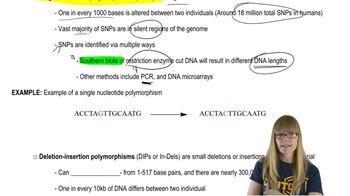
Genomic Variation
Genome Editing
Genome editing refers to the techniques used to alter the genetic material of an organism. CRISPR-Cas9 is one of the most prominent tools for genome editing, enabling researchers to add, delete, or modify specific DNA sequences. This technology has vast applications in medicine, agriculture, and biological research.
추천 영상:
가이드 코스
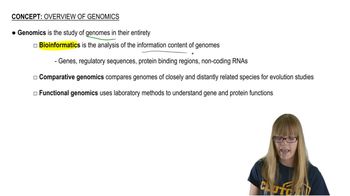
Genomics Overview
Modifications of CRISPR-Cas
Modifications to the CRISPR-Cas system have enhanced its specificity and efficiency for genome editing. These include the development of Cas9 variants with altered cutting properties, the use of guide RNA to improve targeting accuracy, and the creation of CRISPR systems that can edit RNA instead of DNA. Such advancements have broadened the potential applications of CRISPR technology.
추천 영상:
가이드 코스
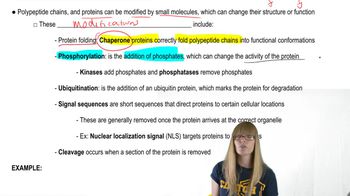
Post Translational Modifications
관련 실천
교과서 질문
452
views
교과서 질문
Based on what you read in this chapter, Can a tumor arise from a single mutated cell? Are all the cells in a tumor identical?
493
views
교과서 질문
Do you think it is important that participation in community-based genetic screening be entirely voluntary? Why or why not?
481
views
교과서 질문
Why do most cancers require the mutation of multiple genes?
375
views
교과서 질문
Diagram the mechanism by which CRISPR–Cas functions in the immune system of bacteria and archaea.
668
views
교과서 질문
The inheritance of certain mutations of BRCA1 can make it much more likely that a woman will develop breast or ovarian cancer in her lifetime. In addition to inheriting a BRCA1 mutation, what else must happen for a woman to develop breast or ovarian cancer?
387
views