Ch. 7 - DNA Structure and Replication
Sanders - Genetic Analysis: An Integrated Approach 3rd Edition
Sanders3rd EditionGenetic Analysis: An Integrated ApproachISBN: 9780135564172당신이 사용하는 게 아니라요?교과서 변경
7장, 문제 10

DNA polymerase III is the main DNA-synthesizing enzyme in bacteria. Describe how it carries out its role of elongating a strand of DNA.

검증된 단계별 안내
1
DNA polymerase III begins its role by binding to the primer, which is a short RNA sequence synthesized by primase. This primer provides a free 3'-OH group necessary for DNA polymerase III to initiate DNA synthesis.
The enzyme elongates the DNA strand by adding nucleotides complementary to the template strand. It follows the base-pairing rules: adenine (A) pairs with thymine (T), and cytosine (C) pairs with guanine (G).
DNA polymerase III synthesizes the new strand in the 5' to 3' direction, meaning it adds nucleotides to the 3'-OH end of the growing strand. This directionality is crucial for proper DNA replication.
The enzyme has high processivity, meaning it can add thousands of nucleotides without dissociating from the DNA template. This is facilitated by the sliding clamp protein, which holds DNA polymerase III tightly to the DNA strand.
DNA polymerase III also has proofreading activity through its 3' to 5' exonuclease function. If an incorrect nucleotide is incorporated, the enzyme can remove it and replace it with the correct one, ensuring high fidelity during DNA replication.

비슷한 문제에 대한 검증된 영상 답변:

이 영상 해법은 위 문제에 도움이 된다고 튜터들이 추천한 것입니다.
영상 길이:
2m
도움이 되었나요?

주요 개념

질문에 올바르게 답하기 위해 반드시 이해해야 하는 핵심 개념들은 다음과 같습니다.

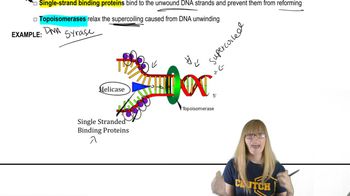
DNA Replication

DNA replication is the biological process by which a cell duplicates its DNA, ensuring that each daughter cell receives an identical copy. This process involves unwinding the double helix and synthesizing new strands complementary to the original templates. DNA polymerase III plays a crucial role in this process by adding nucleotides to the growing DNA strand.
추천 영상:
가이드 코스
11:59
Steps to DNA Replication

DNA Polymerase III Function

DNA polymerase III is a multi-subunit enzyme responsible for synthesizing new DNA strands during replication. It adds nucleotides in a 5' to 3' direction, using the existing template strand as a guide. This enzyme also has proofreading capabilities, allowing it to correct errors during DNA synthesis, which is vital for maintaining genetic fidelity.
추천 영상:
가이드 코스
08:26
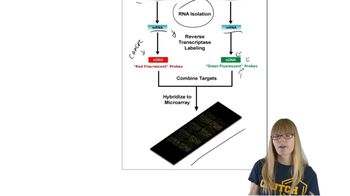
Functional Genomics

Leading and Lagging Strands

During DNA replication, the two strands of the double helix are replicated differently. The leading strand is synthesized continuously in the direction of the replication fork, while the lagging strand is synthesized in short segments called Okazaki fragments, which are later joined together. DNA polymerase III is involved in synthesizing both strands, but its activity differs based on the strand being replicated.
추천 영상:
가이드 코스
03:03
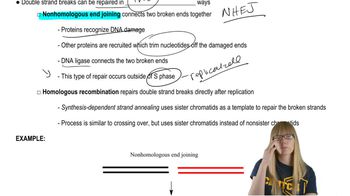
Double Strand Breaks