뒤로
뒤로
문제 28a
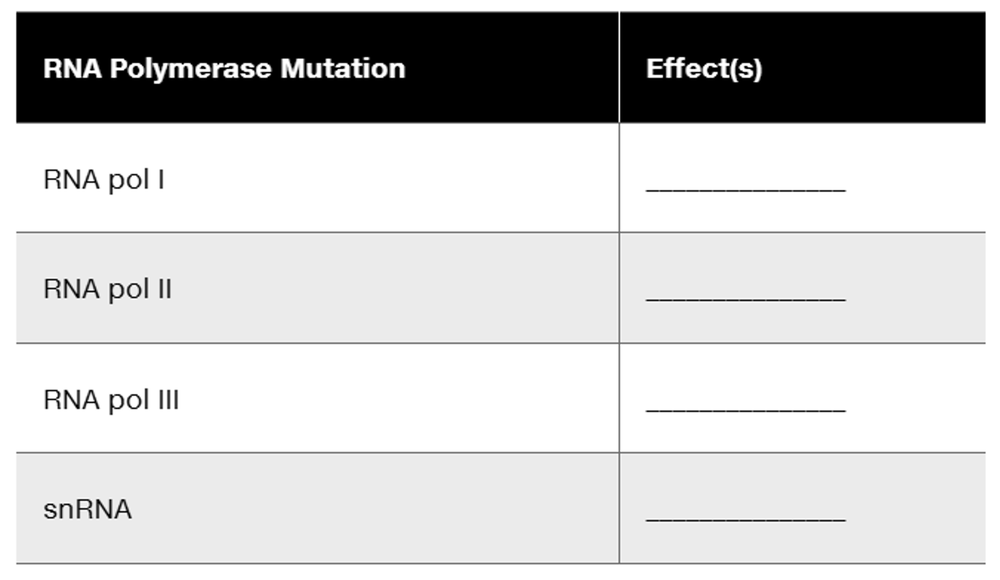
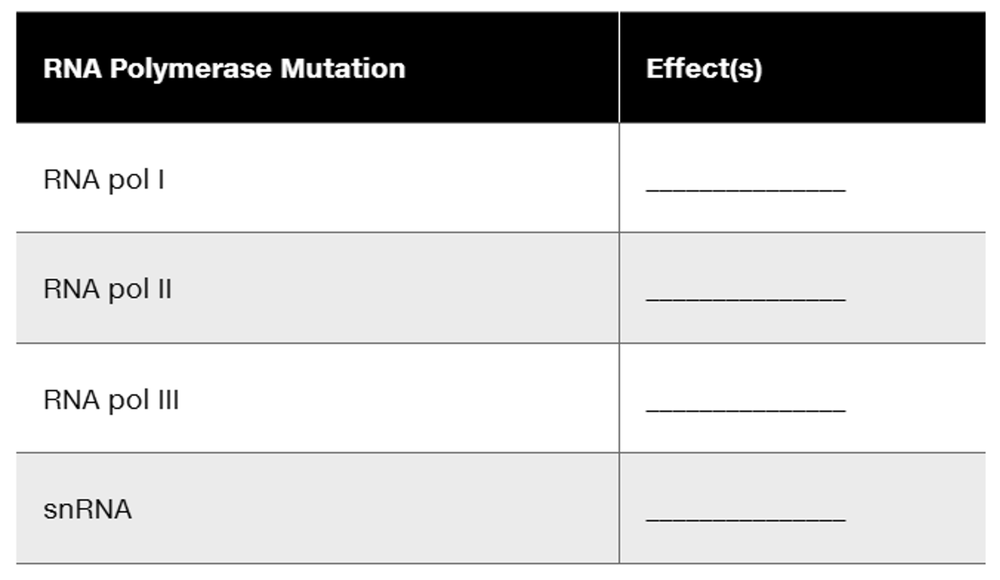
Assume that a mutation affects the gene for each of the following eukaryotic RNA polymerases. Match each mutation with the possible effects from the list provided. More than one effect is possible for each mutation.
Pre-mRNA does not have introns removed.
문제 28b
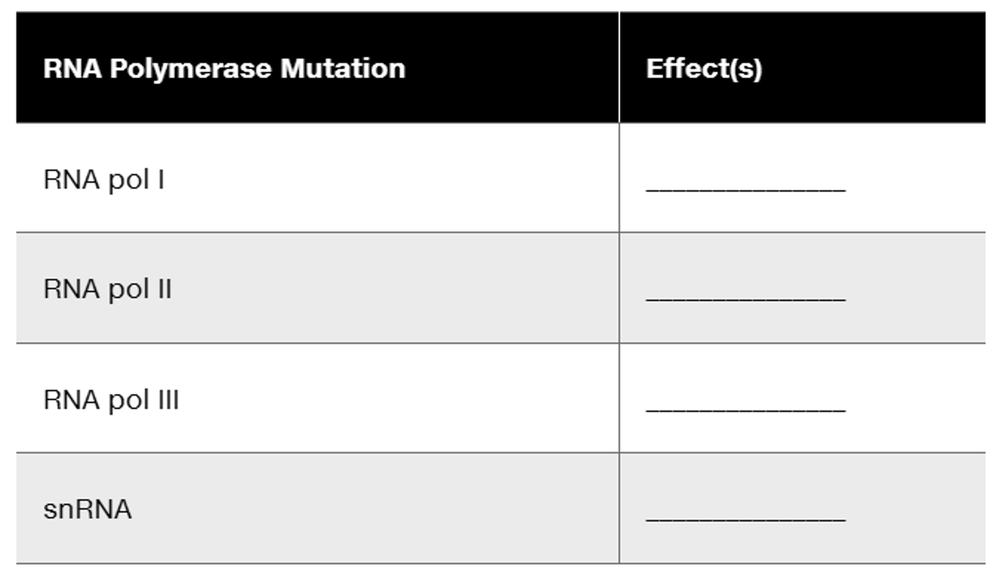
Assume that a mutation affects the gene for each of the following eukaryotic RNA polymerases. Match each mutation with the possible effects from the list provided. More than one effect is possible for each mutation.
Some pre-mRNA is not synthesized.
문제 28c
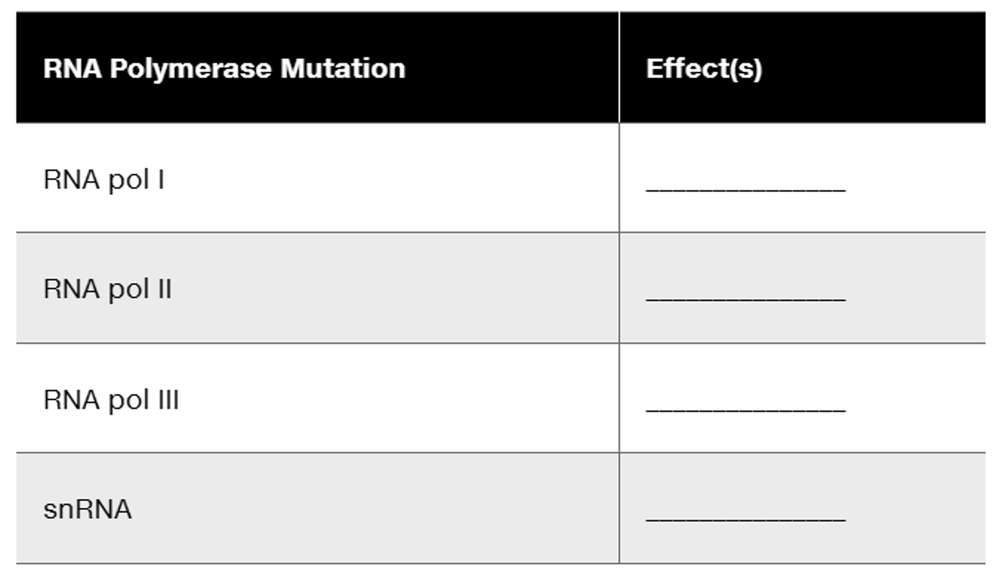
Assume that a mutation affects the gene for each of the following eukaryotic RNA polymerases. Match each mutation with the possible effects from the list provided. More than one effect is possible for each mutation.
Some rRNA is not synthesized.
문제 28d
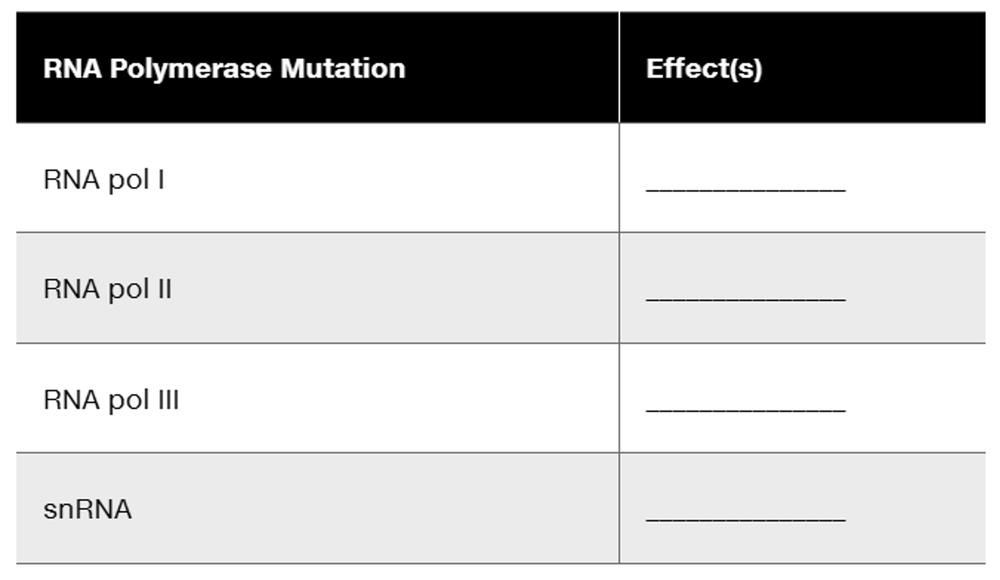
Assume that a mutation affects the gene for each of the following eukaryotic RNA polymerases. Match each mutation with the possible effects from the list provided. More than one effect is possible for each mutation.
Some tRNA is not synthesized.
문제 28e
Assume that a mutation affects the gene for each of the following eukaryotic RNA polymerases. Match each mutation with the possible effects from the list provided. More than one effect is possible for each mutation.
Ribosomal RNA is not processed.
문제 29a
The DNA sequence below gives the first 12 base pairs of the transcribed region of a gene, and the template and nontemplate strands of DNA are identified. The transcription start is the thymine nucleotide at the end of the sequence given. Use the diagram to answer the list of questions. Make a copy of the diagram before you begin answering the questions, or have one group member diagram the answers for bacteria and another group member diagram the answers for eukaryotes.
Nontemplate strand ___________ TTGCTACGGTCA___________
Template strand ___________ AACGATGCCAGT___________
Write the polarity of the two DNA strands shown.
문제 29b
The DNA sequence below gives the first 12 base pairs of the transcribed region of a gene, and the template and nontemplate strands of DNA are identified. The transcription start is the thymine nucleotide at the end of the sequence given. Use the diagram to answer the list of questions. Make a copy of the diagram before you begin answering the questions, or have one group member diagram the answers for bacteria and another group member diagram the answers for eukaryotes.
Nontemplate strand ___________ TTGCTACGGTCA___________
Template strand ___________ AACGATGCCAGT___________
Give the mRNA transcript sequence and the polarity of the transcript.
문제 29c
The DNA sequence below gives the first 12 base pairs of the transcribed region of a gene, and the template and nontemplate strands of DNA are identified. The transcription start is the thymine nucleotide at the end of the sequence given. Use the diagram to answer the list of questions. Make a copy of the diagram before you begin answering the questions, or have one group member diagram the answers for bacteria and another group member diagram the answers for eukaryotes. Nontemplate strand ___________TTGCTACGGTCA___________
Template strand ___________ AACGATGCCAGT___________
Assuming the sequence shown is part of a bacterial gene, draw the approximate positions of the promoter sequence and the termination sequence.
문제 29d
The DNA sequence below gives the first 12 base pairs of the transcribed region of a gene, and the template and nontemplate strands of DNA are identified. The transcription start is the thymine nucleotide at the end of the sequence given. Use the diagram to answer the list of questions. Make a copy of the diagram before you begin answering the questions, or have one group member diagram the answers for bacteria and another group member diagram the answers for eukaryotes. Nontemplate strand ___________TTGCTACGGTCA___________
Template strand ___________ AACGATGCCAGT___________
Assuming the sequence shown is part of a bacterial gene, what consensus sequence(s) would you expect to identify in the promoter?
문제 29e
The DNA sequence below gives the first 12 base pairs of the transcribed region of a gene, and the template and nontemplate strands of DNA are identified. The transcription start is the thymine nucleotide at the end of the sequence given. Use the diagram to answer the list of questions. Make a copy of the diagram before you begin answering the questions, or have one group member diagram the answers for bacteria and another group member diagram the answers for eukaryotes. Nontemplate strand ___________TTGCTACGGTCA___________
Template strand ___________AACGATGCCAGT___________
Write the anticipated bacterial consensus sequence(s) in the approximate position(s) on the diagram.
문제 29f
The DNA sequence below gives the first 12 base pairs of the transcribed region of a gene, and the template and nontemplate strands of DNA are identified. The transcription start is the thymine nucleotide at the end of the sequence given. Use the diagram to answer the list of questions. Make a copy of the diagram before you begin answering the questions, or have one group member diagram the answers for bacteria and another group member diagram the answers for eukaryotes.
Nontemplate strand ___________ TTGCTACGGTCA___________
Template strand ___________ AACGATGCCAGT___________
Assuming the sequence shown is part of a eukaryotic gene, what consensus sequence(s) would you expect to identify within about 100 base pairs of the start of transcription?
문제 29g
The DNA sequence below gives the first 12 base pairs of the transcribed region of a gene, and the template and nontemplate strands of DNA are identified. The transcription start is the thymine nucleotide at the end of the sequence given. Use the diagram to answer the list of questions. Make a copy of the diagram before you begin answering the questions, or have one group member diagram the answers for bacteria and another group member diagram the answers for eukaryotes.
Nontemplate strand ___________ TTGCTACGGTCA___________
Template strand ___________ AACGATGCCAGT___________
Write the anticipated eukaryotic consensus sequence(s) in the approximate position(s) on the diagram.
문제 30a
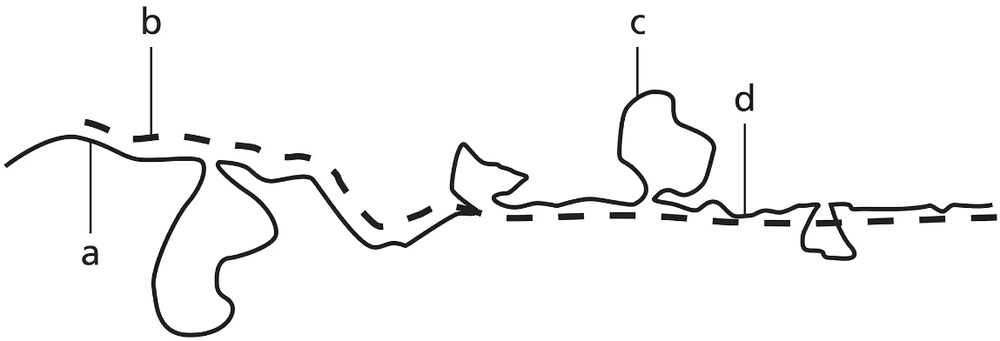
Genomic DNA from a mouse is isolated, fragmented, and denatured into single strands. It is then mixed with mRNA isolated from the cytoplasm of mouse cells. The image represents an electron micrograph result showing the hybridization of single-stranded DNA and mRNA.
Which nucleic acid is indicated by the 'a' pointer? Justify your answer.
문제 30b
Genomic DNA from a mouse is isolated, fragmented, and denatured into single strands. It is then mixed with mRNA isolated from the cytoplasm of mouse cells. The image represents an electron micrograph result showing the hybridization of single-stranded DNA and mRNA.
Which nucleic acid is indicated by the 'b' pointer? Justify your answer.
문제 30c
Genomic DNA from a mouse is isolated, fragmented, and denatured into single strands. It is then mixed with mRNA isolated from the cytoplasm of mouse cells. The image represents an electron micrograph result showing the hybridization of single-stranded DNA and mRNA.
What term best identifies the nucleic acid region indicated by the 'c' pointer?
문제 30d
Genomic DNA from a mouse is isolated, fragmented, and denatured into single strands. It is then mixed with mRNA isolated from the cytoplasm of mouse cells. The image represents an electron micrograph result showing the hybridization of single-stranded DNA and mRNA.
What term best identifies the nucleic acid region indicated by the 'd' pointer?
문제 30e
Genomic DNA from a mouse is isolated, fragmented, and denatured into single strands. It is then mixed with mRNA isolated from the cytoplasm of mouse cells. The image represents an electron micrograph result showing the hybridization of single-stranded DNA and mRNA. Based on this electron micrograph image, how many introns and exons are present in the mouse DNA fragment shown?
문제 31a
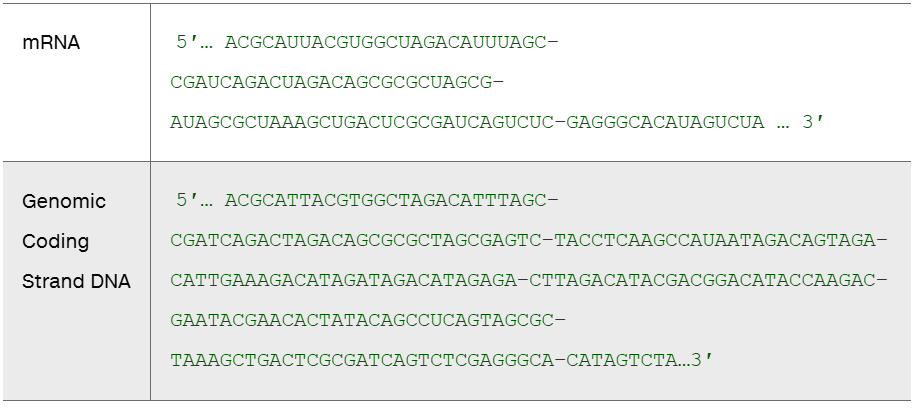
A portion of a human gene is isolated from the genome and sequenced. The corresponding segment of mRNA is isolated from the cytoplasm of human cells, and it is also sequenced. The nucleic acid strings shown here are from genomic coding strand DNA and the corresponding mRNA.
There is one intron in the DNA sequence shown. Locate the intron and underline the splice site sequences.
문제 31b
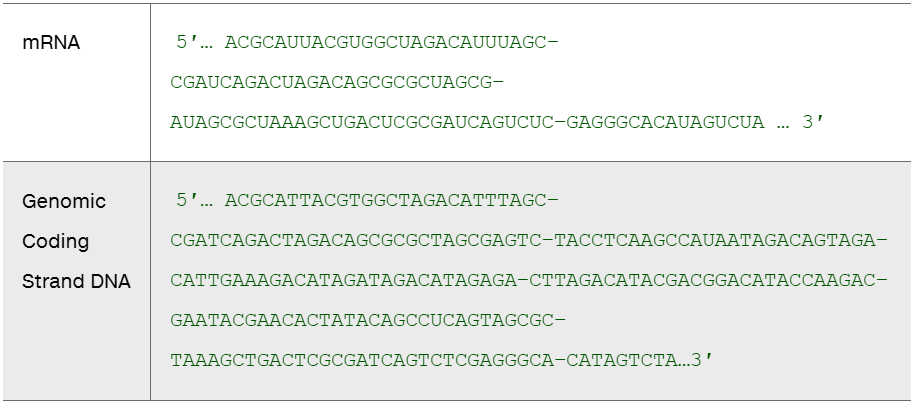
A portion of a human gene is isolated from the genome and sequenced. The corresponding segment of mRNA is isolated from the cytoplasm of human cells, and it is also sequenced. The nucleic acid strings shown here are from genomic coding strand DNA and the corresponding mRNA.
Does this intron contain normal splice-site sequences?