Ch.10 Proteins Workers of the Cell
Frost - General, Organic and Biological Chemistry 4th Edition
Frost4th EditionGeneral, Organic and Biological ChemistryISBN: 9780134988696당신이 사용하는 게 아니라요?교과서 변경
6장, 문제 69b

Identify some differences between the following pairs:
b. complete and incomplete proteins

검증된 단계별 안내
1
Understand the concept of proteins: Proteins are macromolecules made up of amino acids, which are essential for various biological functions in the body.
Define complete proteins: Complete proteins contain all nine essential amino acids that the human body cannot produce on its own. These are typically found in animal-based foods like meat, fish, eggs, and dairy products, as well as some plant-based sources like quinoa and soy.
Define incomplete proteins: Incomplete proteins lack one or more of the nine essential amino acids. These are commonly found in plant-based foods such as grains, nuts, seeds, and legumes.
Explain the significance of combining incomplete proteins: Incomplete proteins can be combined in a diet to provide all essential amino acids. For example, eating rice and beans together creates a complete protein profile.
Summarize the key difference: Complete proteins provide all essential amino acids in a single source, while incomplete proteins require combination with other foods to meet the body's amino acid needs.

비슷한 문제에 대한 검증된 영상 답변:

이 영상 해법은 위 문제에 도움이 된다고 튜터들이 추천한 것입니다.
영상 길이:
4m
도움이 되었나요?

주요 개념

질문에 올바르게 답하기 위해 반드시 이해해야 하는 핵심 개념들은 다음과 같습니다.

Complete Proteins

Complete proteins are those that contain all nine essential amino acids required by the human body for proper functioning. These amino acids cannot be synthesized by the body and must be obtained through diet. Sources of complete proteins include animal products such as meat, fish, eggs, and dairy, as well as some plant-based sources like quinoa and soy.
추천 영상:
가이드 코스
00:47
Complete Ionic Equations

Incomplete Proteins

Incomplete proteins lack one or more of the essential amino acids, making them insufficient for meeting the body's protein needs on their own. They are typically found in plant-based foods such as beans, lentils, nuts, and grains. To achieve a complete amino acid profile, incomplete proteins can be combined with other protein sources, such as rice and beans.
추천 영상:
가이드 코스
2:01
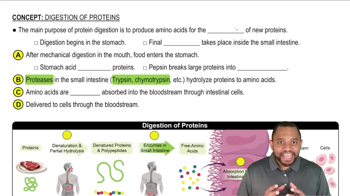
Digestion of Proteins Concept 1

Amino Acids

Amino acids are the building blocks of proteins and play a crucial role in various biological processes. There are 20 different amino acids, nine of which are classified as essential, meaning they must be obtained from food. The balance and availability of these amino acids in the diet are vital for growth, repair, and overall health.
추천 영상:
가이드 코스
3:03
Amino Acid Catabolism: Amino Group Example 2