뒤로
뒤로
문제 57b
Write the IUPAC and common names, if any, for each of the following:
c.
문제 58b
Write the IUPAC and common names, if any, for each of the following:
c.
문제 58e
Write the IUPAC and common names, if any, for each of the following:
e.
문제 59c
Draw the condensed structural formulas for a and b and line-angle formulas for c and d:
c. 3-bromopentanoic acid
문제 60a
Draw the condensed structural formulas for a and b and line-angle formulas for c and d:
a. pentyl formate
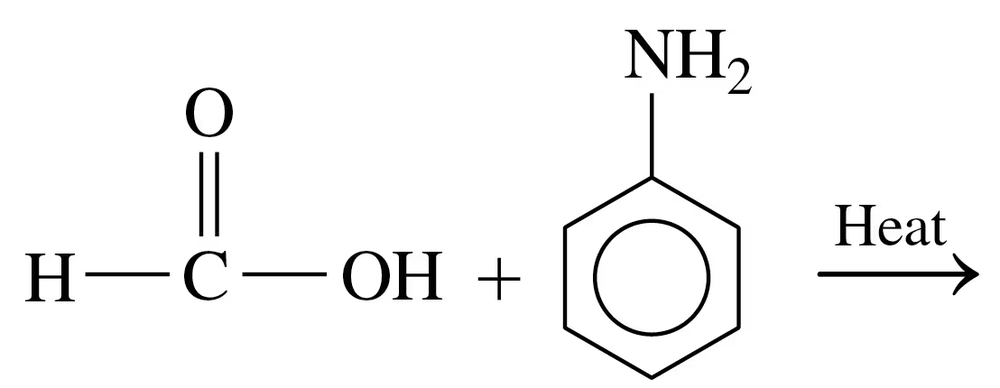
문제 61b
Draw the condensed structural or line-angle formulas for the products of the following:
c.
문제 62b
Draw the condensed structural or line-angle formulas for the products of the following:
b.
문제 62d
Draw the condensed structural or line-angle formulas for the products of the following:
d.
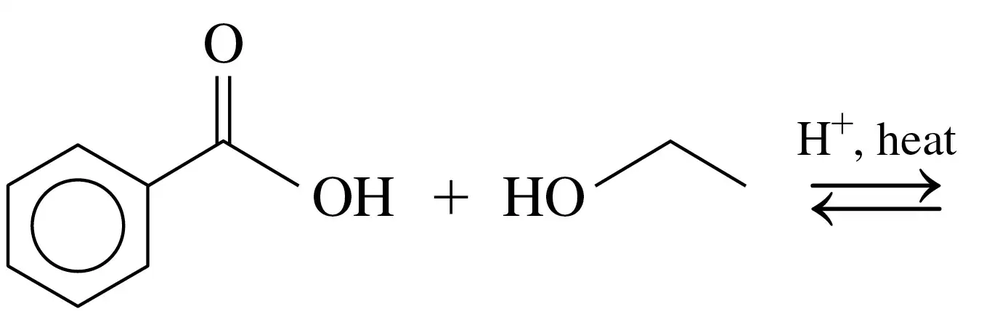
문제 63c
Draw the condensed structural or line-angle formulas for the products of the following:
c.
문제 64a
Draw the condensed structural or line-angle formulas for the products of the following:
a.
문제 64b
Draw the condensed structural or line-angle formulas for the products of the following:
b.
문제 66c
Write the common name and classify each of the following compounds as primary (1°), secondary (2°), or tertiary (3°):
b.
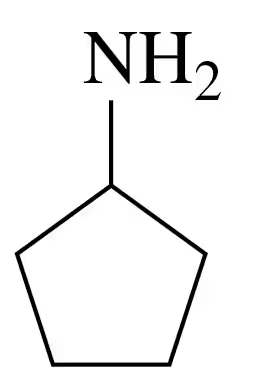
문제 67b
Draw the condensed structural or line-angle formula if cyclic, for each of the following:
b. cyclohexylamine
문제 67d
Draw the condensed structural or line-angle formula if cyclic, for each of the following:
d. N-propylaniline
문제 68d
Draw the condensed structural or line-angle formula if cyclic, for each of the following:
d. ethylmethylammonium bromide
문제 69a
Draw the condensed structural or line-angle formulas for the products of the following:
a. CH3–CH2–NH2 + H2O ⇌
문제 72
Draw the condensed structural formulas for the products of the reaction of aspartate and α-ketoglutarate which is catalyzed by aspartate transaminase (AST).
문제 72b
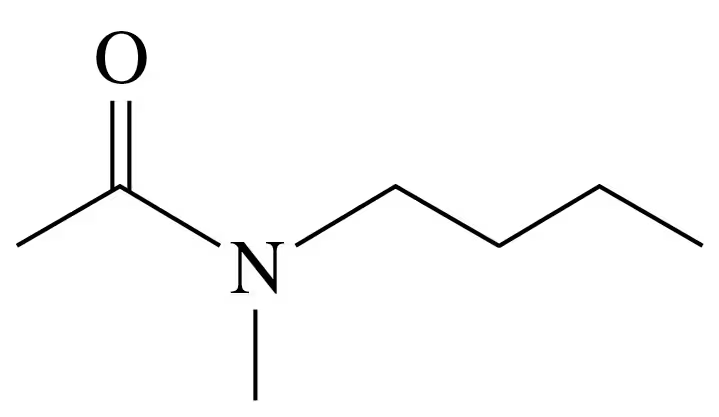
Write the IUPAC name for each of the following:
b .
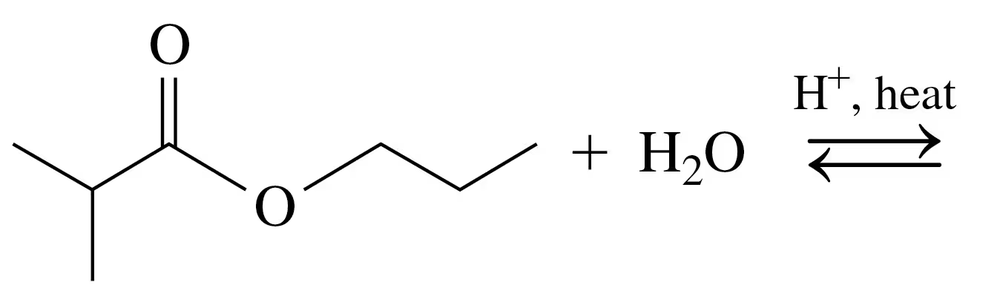
문제 73a
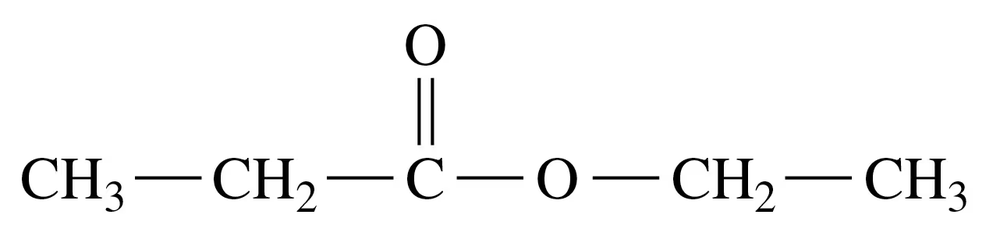
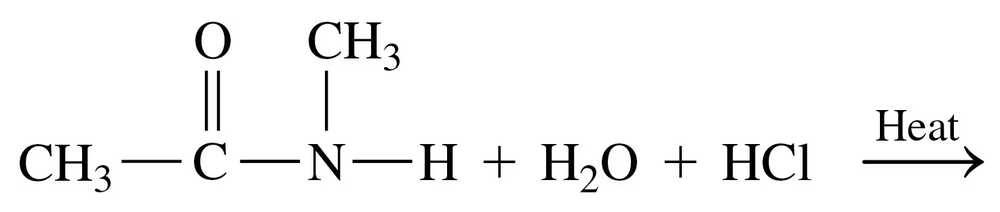
Draw the condensed structural or line-angle formulas for the products from the hydrolysis of each of the following:
a.
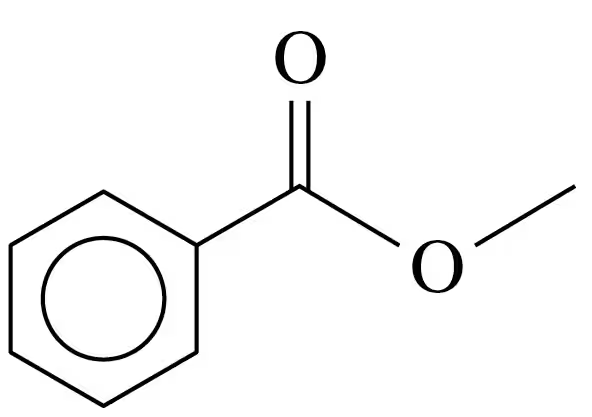
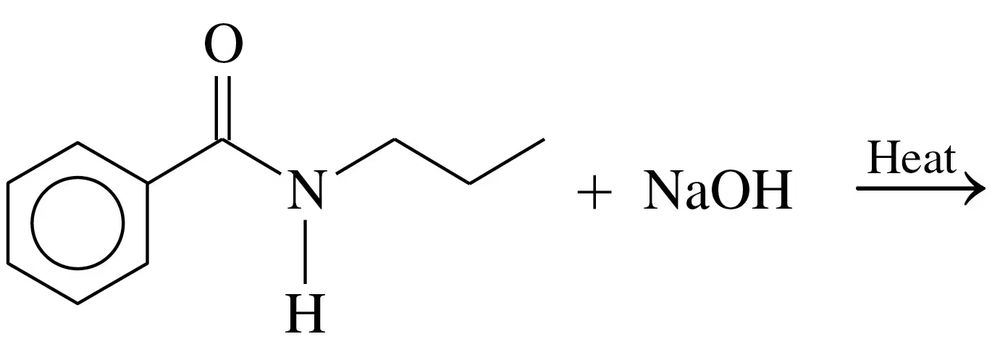
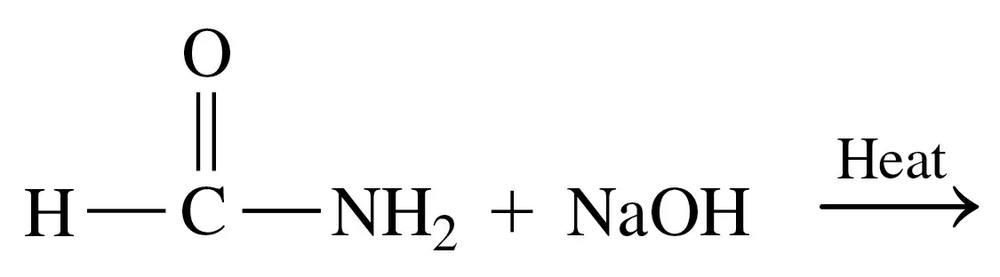
문제 73b
Draw the condensed structural or line-angle formulas for the products from the hydrolysis of each of the following:
b.
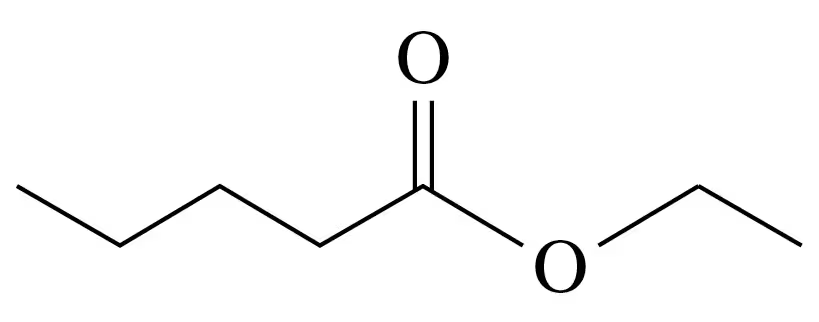
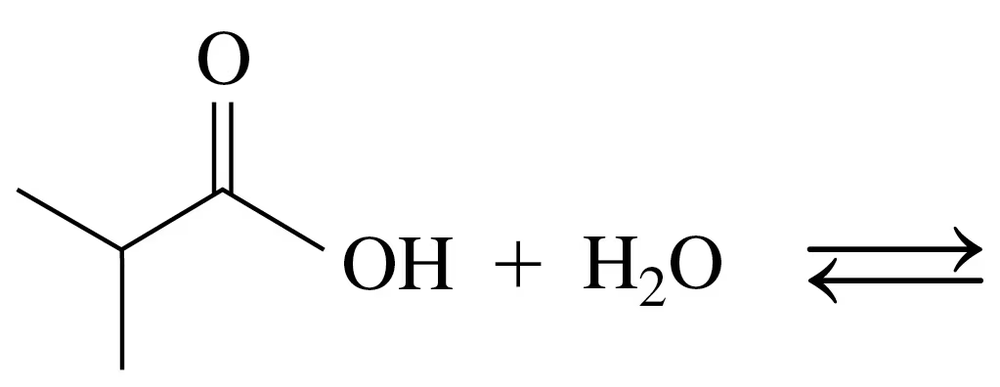
문제 74c
Draw the condensed structural or line-angle formulas for the products from the hydrolysis of each of the following:
b.
문제 77a
Draw the line-angle formula and write the IUPAC name for each of the following:
a. A carboxylic acid that has the formula C6H12O2, with no substituents
문제 79a
Propyl acetate is the ester that gives the odor and smell of pears.
<IMAGE>
a. Draw the condensed structural formula for propyl acetate.
문제 79b
Propyl acetate is the ester that gives the odor and smell of pears.
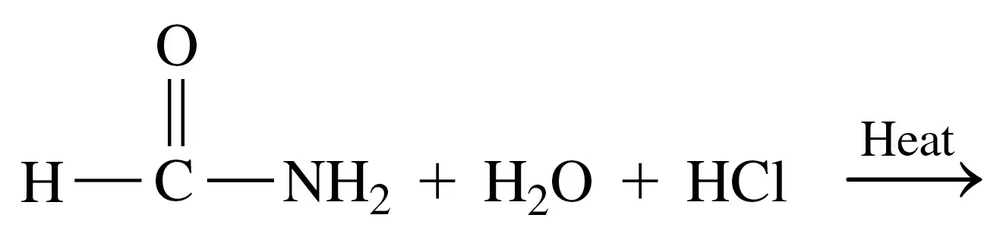
b. Use condensed structural formulas to write the balanced chemical equation for the formation of propyl acetate.
문제 79d
Propyl acetate is the ester that gives the odor and smell of pears.
d. Use condensed structural formulas to write the balanced chemical equation for the base hydrolysis of propyl acetate with NaOH.
문제 79e
Propyl acetate is the ester that gives the odor and smell of pears.
<IMAGE>
e. How many milliliters of a 0.208 M NaOH solution is needed to completely hydrolyze (saponify) 1.58 g of propyl acetate?
문제 80c
Ethyl octanoate is a flavor component of mangoes.
c. Use condensed structural formula to write the balanced chemical equation for the acid hydrolysis of ethyl octanoate.
문제 80e
Ethyl octanoate is a flavor component of mangoes.
<IMAGE>
e. How many milliliters of a 0.315 M NaOH solution is needed to completely hydrolyze (saponify) 2.84 g of ethyl octanoate?
문제 81a
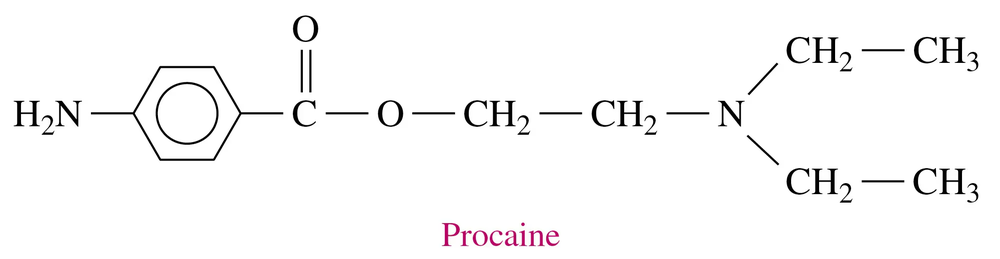
Novocain, a local anesthetic, is the ammonium salt of procaine.
a. Draw the condensed structural formula for the ammonium salt (procaine hydrochloride) formed when procaine reacts with HCl. (Hint: The tertiary amine reacts with HCl.)
문제 81b
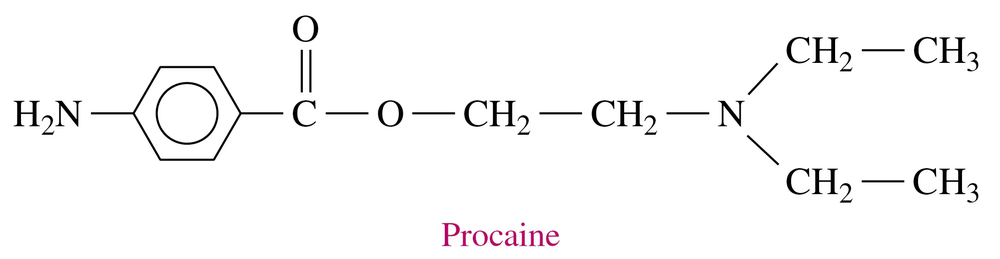
Novocain, a local anesthetic, is the ammonium salt of procaine.
b. Why is procaine hydrochloride used rather than procaine?