뒤로
뒤로
문제 1
Draw the structure of DDE.
문제 2
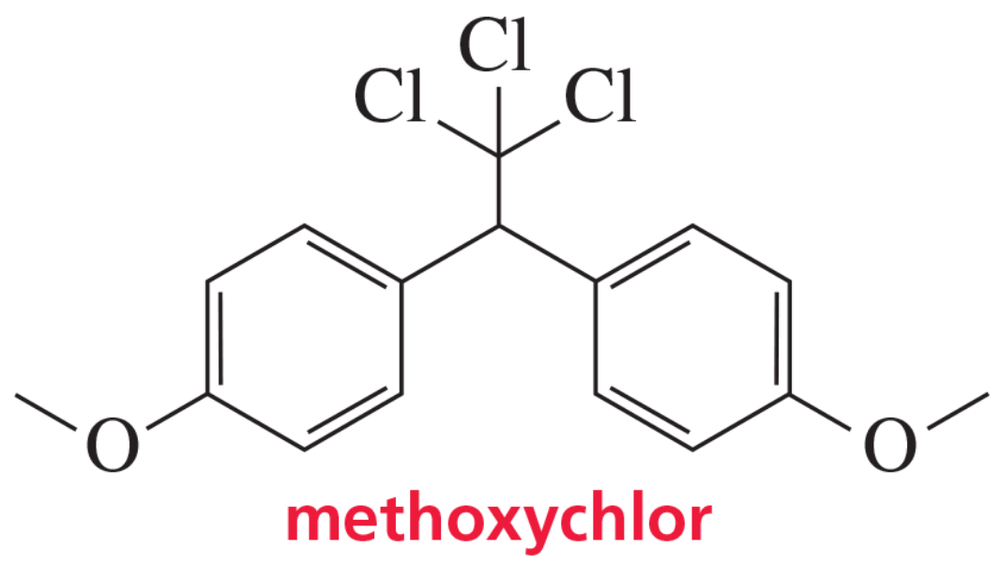
Methoxychlor is an insecticide that was intended to take DDT’s place because it is not as soluble in fatty tissues and is more readily biodegradable. It, too, can accumulate in the environment, however, so its use was also banned—in 2002 in the European Union and in 2003 in the United States. Why is methoxychlor less soluble in fatty tissues than DDT?
문제 3a
How will the rate of the reaction between bromomethane and hydroxide ion be affected if the following changes in concentration are made?
a. The concentration of the alkyl halide is not changed and the concentration of the nucleophile is tripled.
문제 3b
How will the rate of the reaction between bromomethane and hydroxide ion be affected if the following changes in concentration are made?
b. The concentration of the alkyl halide is cut in half and the concentration of the nucleophile is not changed.
문제 3c
How will the rate of the reaction between bromomethane and hydroxide ion be affected if the following changes in concentration are made?
c. The concentration of the alkyl halide is cut in half and the concentration of the nucleophile is doubled.
문제 4
Does increasing the energy barrier for an SN2 reaction increase or decrease the magnitude of the rate constant for the reaction?
문제 5
Rank the following alkyl bromides from most reactive to least reactive in an SN2 reaction:
1-bromo-2-methylbutane, 1-bromo-3-methylbutane, 2-bromo-2-methylbutane, and 1-bromopentane.
문제 6a
A small amount of another organic product is formed in a Williamson ether synthesis. What is this product when the alkyl halide used in the synthesis of butyl propyl ether is
a. propyl bromide?
문제 6b
A small amount of another organic product is formed in a Williamson ether synthesis. What is this product when the alkyl halide used in the synthesis of butyl propyl ether is
b. butyl bromide?
문제 6c,d
Draw the products obtained from the SN2 reaction of:
c. (S)-3-chlorohexane and hydroxide ion.
d. 3-iodopentane and hydroxide ion.
문제 8
Draw the substitution product formed by each of the following SN2 reactions:
a. trans-1-iodo-4-ethylcyclohexane and methoxide ion
b. cis-1-chloro-3-methylcyclobutane and ethoxide ion
문제 9a,b
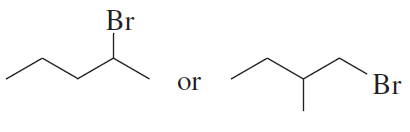
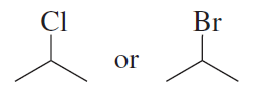
Which alkyl halide is more reactive in an SN2 reaction with a given nucleophile?
a.
b.
문제 9c,d
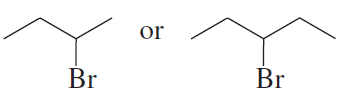
Which alkyl halide is more reactive in an SN2 reaction with a given nucleophile?
c.
d.
문제 10a,b
Indicate whether each of the following solvents is protic or aprotic:
a. chloroform (CHCl3)
b. diethyl ether
문제 10c,d
Indicate whether each of the following solvents is protic or aprotic:
c. acetic acid
d. hexane
문제 11
a. Which is a stronger base: RO− or RS−?
b. Which is a better nucleophile in an aqueous solution?
c. Which is a better nucleophile in DMSO?
문제 12c
Which is a better nucleophile?
c. CH3O− or CH3OH in H2O
문제 12d
Which is a better nucleophile?
d. CH3O− or CH3OH in DMSO
문제 12e,f
Which is a better nucleophile?
e. HO− or -NH2 in NH3
f. HO− or -NH2 in DMSO
문제 14a
Which substitution reaction takes place more rapidly?
a. CH3CH2Br + H2O or CH3CH2Br + HO−
문제 14b
Which substitution reaction takes place more rapidly?
b.
문제 14c
Which substitution reaction takes place more rapidly?
c.
문제 14d
Which substitution reaction takes place more rapidly?
d. CH3CH2Cl + I− or CH3CH2Br + I−
문제 15a,b
What is the product of the reaction of bromoethane with each of the following nucleophiles?
a. CH3CH2CH2O−
b. CH3C≡C−
문제 15c,d
What is the product of the reaction of bromoethane with each of the following nucleophiles?
c. (CH3)3N
d. CH3CH2S-
문제 17a
Explain why the reaction of an alkyl halide with ammonia gives a low yield of primary amine.
문제 17b
Explain why a much better yield of primary amine is obtained from the reaction of an alkyl halide with azide ion (-N3), followed by catalytic hydrogenation. (Hint: An alkyl azide is not nucleophilic.)
문제 18a,b
Draw the stereoisomers that are formed from the following SN1 reactions:
a. 3-bromo-3-methylpentane and methanol
b. 3-chloro-3-methylhexane and methanol
문제 19
Rank the following alkyl halides from most reactive to least reactive in an SN1 reaction:
2-bromo-2-methylpentane, 2-chloro-2-methylpentane, 3-chloropentane, and 2-iodo-2-methylpentane.
문제 21a,b,c
Which of the following reactions take place more rapidly when the concentration of the nucleophile is increased?