뒤로
뒤로 Bruice 8th EditionCh. 8 - Delocalized Electrons: Their Effect on Stability, pKa, and the Products of a Reaction • Aromaticity and Electronic Effects: An Introduction to the Reactions of Benzene
문제 1a
The following compounds have the same molecular formula as benzene. How many monobrominated products could each form?
1. HC≡CC≡CCH2CH3
2. CH2=CHC≡CCH=CH2
문제 1c
How many dibrominated products could each of the compounds form if stereoisomers are included?
문제 2
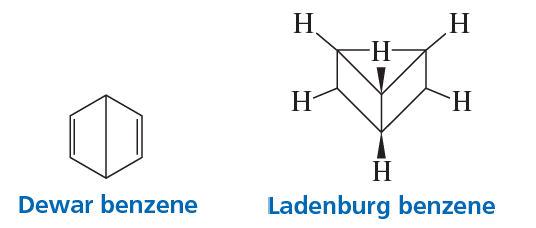
Between 1865 and 1890, other possible structures were proposed for benzene, such as those shown here. Considering what nineteenth-century chemists knew about benzene, which is a better proposal for benzene’s structure: Dewar benzene or Ladenburg benzene? Why?
문제 4a
Which species in each pair is more stable?
a.
문제 4b
Which species in each pair is more stable?
b.
문제 4c
Which species in each pair is more stable?
c.
문제 4d
Which species in each pair is more stable?
d.
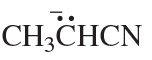
문제 6b
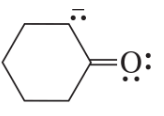
Draw resonance contributors for each of the following species and rank them in order of decreasing contribution to the resonance hybrid. Then draw the resonance hybrid.
b.
문제 6c
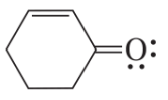
Draw resonance contributors for each of the following species and rank them in order of decreasing contribution to the resonance hybrid. Then draw the resonance hybrid.
c.
문제 6d
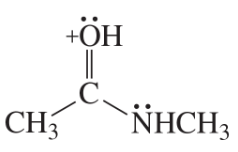
Draw resonance contributors for each of the following species and rank them in order of decreasing contribution to the resonance hybrid. Then draw the resonance hybrid.
d.
문제 6e
Draw resonance contributors for each of the following species and rank them in order of decreasing contribution to the resonance hybrid. Then draw the resonance hybrid.
e.
문제 6f
Draw resonance contributors for each of the following species and rank them in order of decreasing contribution to the resonance hybrid. Then draw the resonance hybrid.
f.
문제 7
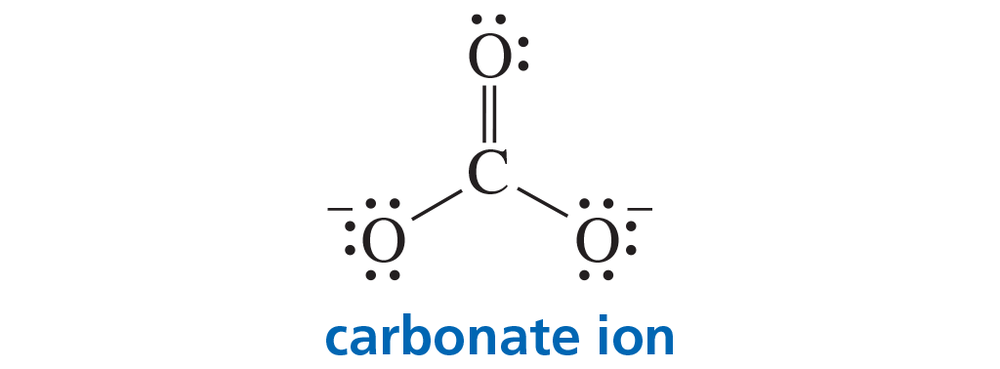
a. Predict the relative bond lengths of the three carbon–oxygen bonds in the carbonate ion.
b. What is the charge on each oxygen?
문제 8a
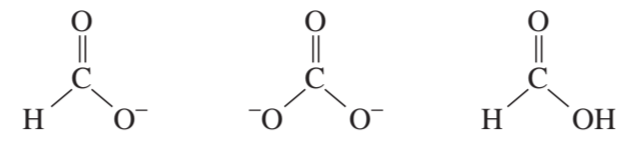
List the following in order of decreasing delocalization energy:
문제 9
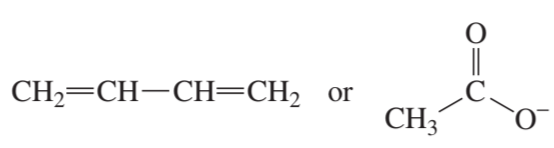
Which has the greater delocalization energy?
문제 10
Which has the greater delocalization energy?
문제 11(8)
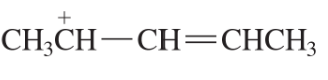
a. Draw resonance contributors for the following species. Do not include structures that are so unstable that their contributions to the resonance hybrid would be negligible. Indicate which are major contributors and which are minor contributors to the resonance hybrid.
b. Do any of the species have resonance contributors that all contribute equally to the resonance hybrid?
11.
문제 12
Name the following dienes and rank them from most stable to least stable.
문제 14
What is the total number of nodes in the 3 and 4 MOs of 1,3-butadiene?
문제 15a,b,c
Answer the following questions for the MOs of 1,3-butadiene:
a. Which are bonding MOs, and which are * antibonding MOs?
b. Which MOs are symmetric, and which are antisymmetric?
c. Which MO is the HOMO and which is the LUMO in the ground state?
문제 15d,e
Answer the following questions for the MOs of 1,3-butadiene:
d. Which MO is the HOMO and which is the LUMO in the excited state?
e. What is the relationship between the HOMO and the LUMO and symmetric and antisymmetric orbitals?
문제 18a,b
Which member of each pair is the stronger base?
a. ethylamine or aniline
b. ethylamine or ethoxide ion
문제 18c,d
Which member of each pair is the stronger base?
c. phenolate ion or ethoxide ion
d. phenolate ion or acetate ion
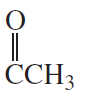
문제 20a,b,c
For each of the following substituents, indicate whether it withdraws electrons inductively, donates electrons by hyperconjugation, withdraws electrons by resonance, or donates electrons by resonance.
a. Br
b. CH2CH3
c.
문제 20d,e,f
For each of the following substituents, indicate whether it withdraws electrons inductively, donates electrons by hyperconjugation, withdraws electrons by resonance, or donates electrons by resonance.
d. NHCH3
e. OCH3
f. +N(CH3)3
문제 21c,d
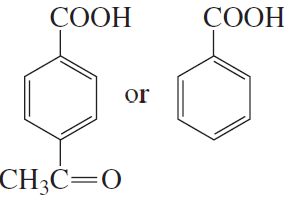
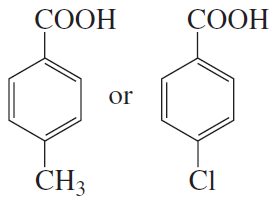
Which acid in each of the following pairs is stronger?
c.
d.
문제 21e,f
Which acid in each of the following pairs is stronger?
e.
f.
문제 23
Explain why the pKa of p-nitrophenol is 7.14, whereas the pKa of m-nitrophenol is 8.39.
문제 24
What is the major product obtained from the addition of HBr to the following compound?
문제 27b
What is the major product of each of the following reactions, assuming that one equivalent of each reagent is used in each reaction?
b.