뒤로
뒤로
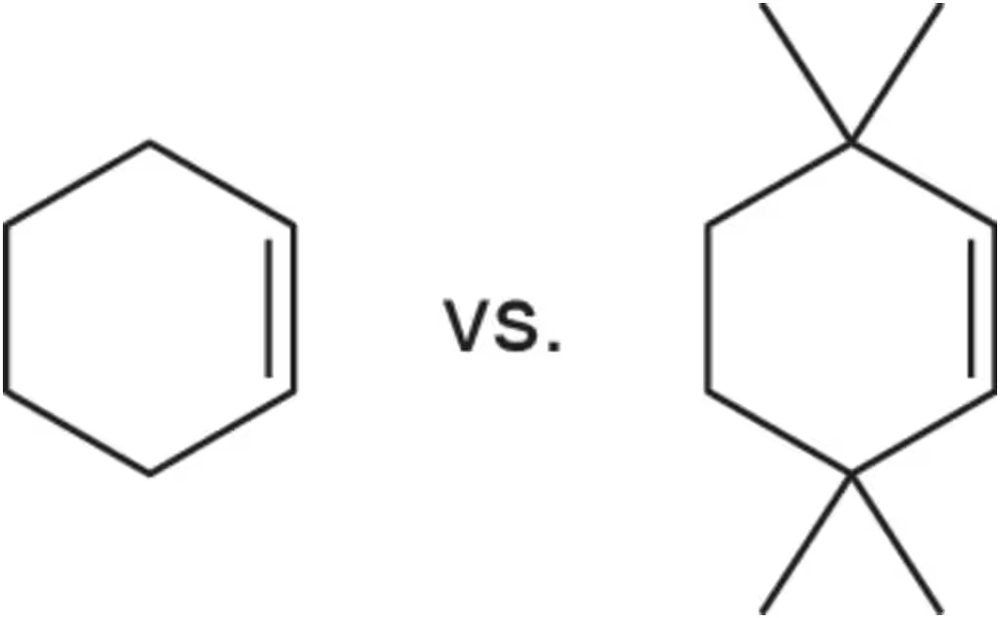
문제 2
Protonation of which of the following alkenes would be faster?
문제 3a
Which of the following indicated atoms would you expect to be most basic?
(a)
문제 3b
Which of the following indicated atoms would you expect to be most basic?
(b)
문제 3c
Which of the following indicated atoms would you expect to be most basic?
(c)
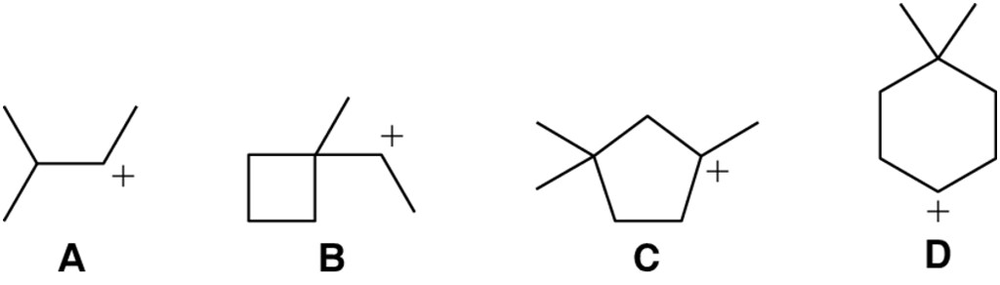
문제 4
Which of the following carbocations would you expect to rearrange?
문제 4
What is the role of a solvent in a chemical reaction? What happens to the solvent at the end of a reaction?
문제 5a
Given that step 1 of the following reaction is rate determining, write the rate law for the overall reaction.
문제 6
For the following molecule, draw the Newman projection (around the 2,3-bond) with a dihedral angle of 180° between the bromine and hydrogen.
문제 7a
In the following reactions, identify the bonds formed and the bonds broken.
(a)
문제 7c
In the following reactions, identify the bonds formed and the bonds broken.
(c)
문제 9
Based on your answer to Assessment 12.8, which bases would you expect to be good leaving groups?
문제 10a
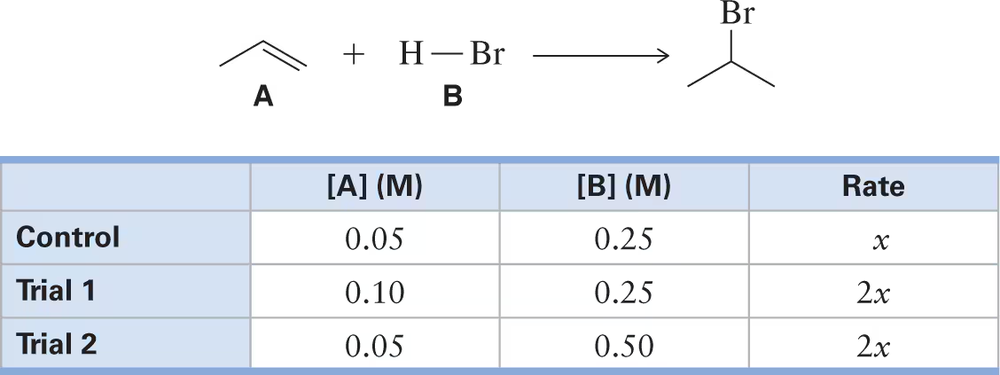
Given the following rate data, how many molecules are in the rate-determining step of this reaction?
문제 11a
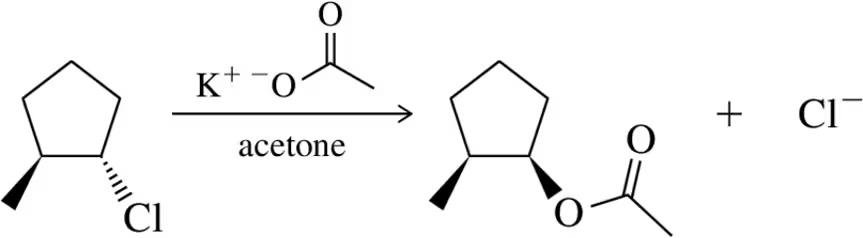
Practice your electron-pushing skills by drawing a mechanism for the following SN2 reactions.
(a)
문제 11b
Practice your electron-pushing skills by drawing a mechanism for the following SN2 reactions.
(b)
문제 11c
Practice your electron-pushing skills by drawing a mechanism for the following SN2 reactions.
(c)
문제 12a
Practice your electron-pushing skills by drawing a mechanism for the following SN1 reactions.
(a)
문제 12b
Practice your electron-pushing skills by drawing a mechanism for the following SN1 reactions.
(b)
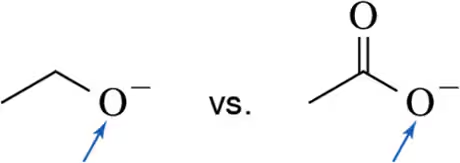
문제 12.50c
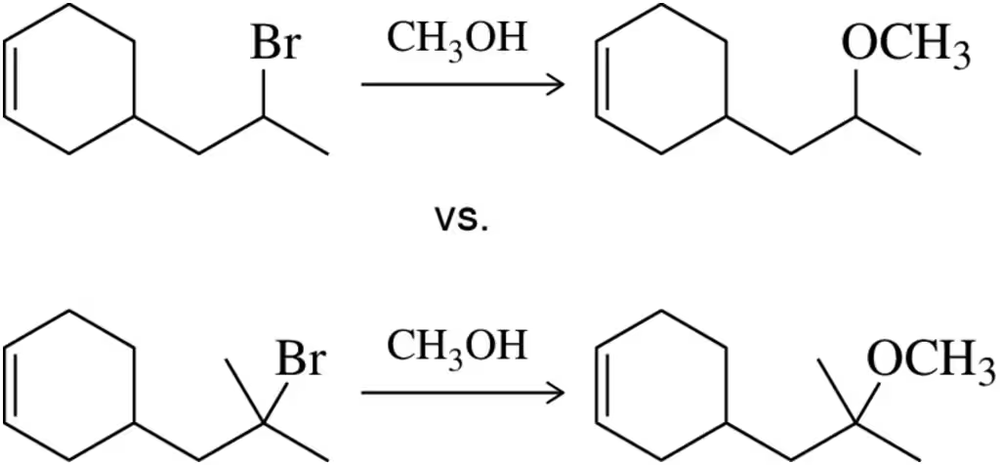
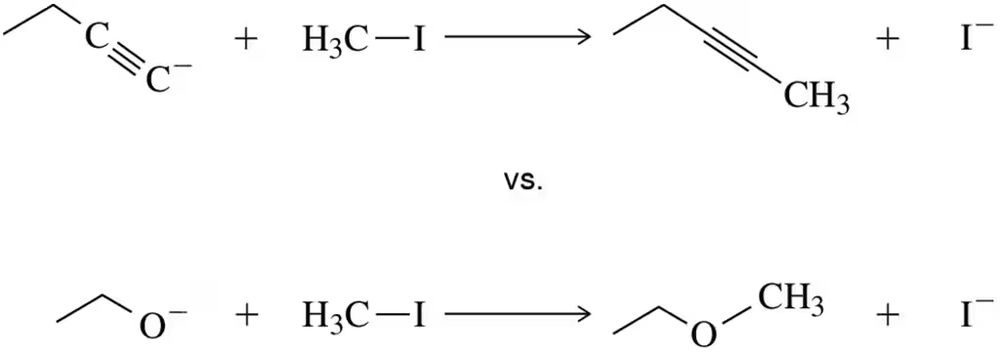
For which of the following reactions would you expect elimination to be more favored than substitution?
(c) <IMAGE>
vs.
<IMAGE>
문제 12c
Practice your electron-pushing skills by drawing a mechanism for the following SN1 reactions.
(c)
문제 13
Which of the following SN2 reactions should proceed at a faster rate? Justify your answer on a reaction coordinate diagram.
문제 14
Which of the following SN1 reactions should proceed at a faster rate? Justify your answer on a reaction coordinate diagram.
문제 15
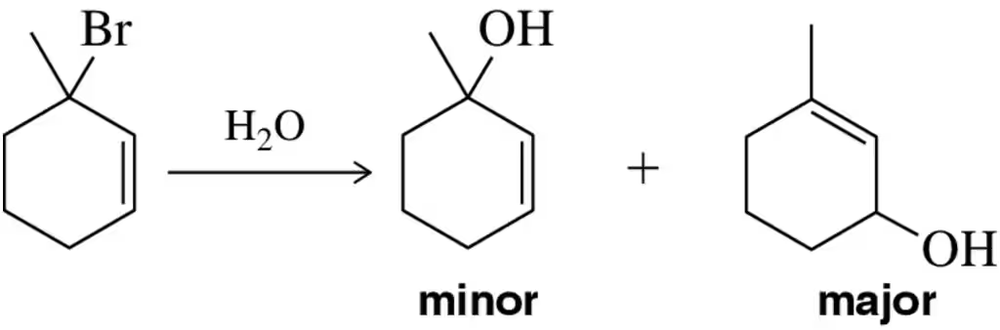
The allylic bromide below gives two SN1 products. Justify the formation of each.
문제 16
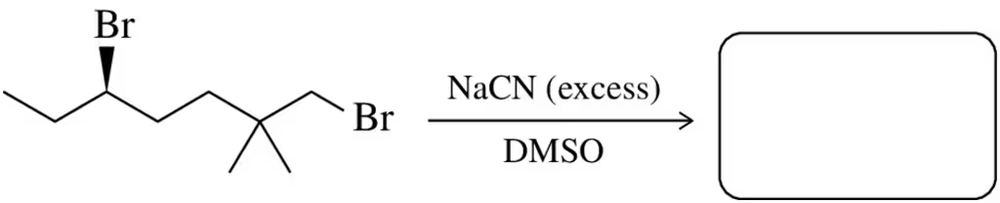
Even with an excess of cyanide, only one equivalent will react with the following dibromoalkane. To which carbon will the cyanide add? Predict the product and explain your choice.
문제 17
Order the following molecules on the basis of their nucleophilic strength using the pKₐ values of their conjugate acids.
문제 18a
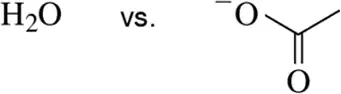
For each pair, choose the more reactive nucleophile.
(a)
문제 18b
For each pair, choose the more reactive nucleophile.
(b)
문제 19
Which SN2 reaction would you expect to be faster? Explain your answer.
문제 20a
Would the following nucleophiles be more likely to participate in an SN1 or SN2 reaction?
(a)
문제 20b
Would the following nucleophiles be more likely to participate in an SN1 or SN2 reaction?
(b) F-
문제 20c
Would the following nucleophiles be more likely to participate in an SN1 or SN2 reaction?
(c)