뒤로
뒤로
문제 35
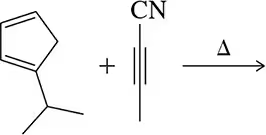
Provide a mechanism of the Diels–Alder reaction shown and predict the regioisomer that will form.
문제 36a
Predict the product of the Diels–Alder reactions shown.
(a)
문제 37a
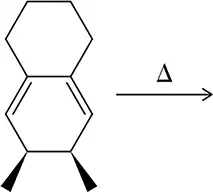
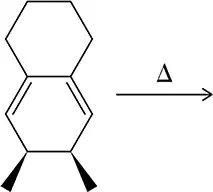
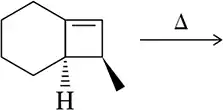
For the following electrocyclic reactions, did the substituents move in a conrotatory or disrotatory direction? Would you use heat or light to cause movement in this direction?
(a)
문제 38c
Given the conditions, would you expect conrotatory or disrotatory ring closing/opening? Justify this on the basis of the molecular orbital picture.
(c)
문제 39c
Draw the products you’d expect to form in Assessment 22.38.
(c)
문제 40a
Predict the product of the Cope reactions shown.
(a)
문제 40c
Predict the product of the Cope reactions shown.
(c)
문제 41b
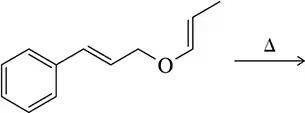
Predict the product of the Claisen reactions shown.
(b)
문제 41c
Predict the product of the Claisen reactions shown.
(c)
문제 43a
Predict the product of the following reactions. [When all of the reactions from this chapter are shown together, you must first decide which type of reaction each is. Is it a Diels–Alder, an electrocyclic, or a sigmatropic rearrangement? Drawing the product will be easier once this determination is made.]
(a)
문제 43b
Predict the product of the following reactions. [When all of the reactions from this chapter are shown together, you must first decide which type of reaction each is. Is it a Diels–Alder, an electrocyclic, or a sigmatropic rearrangement? Drawing the product will be easier once this determination is made.]
(b)
문제 44c
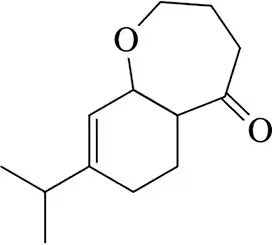
Suggest a diene and a dienophile that would give the following products.
(c)
문제 46
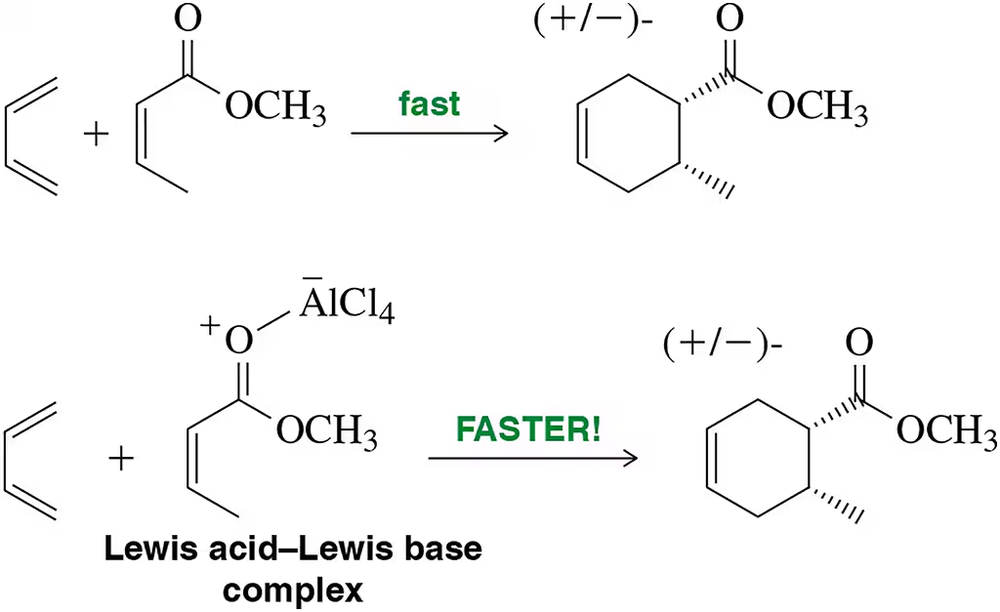
By forming a Lewis acid–Lewis base complex with the dienophile, Lewis acids are able to increase the rate of Diels–Alder reactions. Why might this be true?
문제 50
The [2 + 2] cyclization is especially useful when done intramolecularly.
(a) What makes intramolecular reactions more favorable?
(b) Predict the product of the following cyclization (slight modification of a reaction from Angew. Chem. 2011, 50, 5149)
문제 52
The Claisen rearrangement can be used to attach allyl groups to benzene via initial alkylation of a phenol.
(a) Predict the identity of A and B
(b) provide an arrow-pushing mechanism for each step. [The phenol alkylation is simply a Williamson ether synthesis reaction.]
문제 53
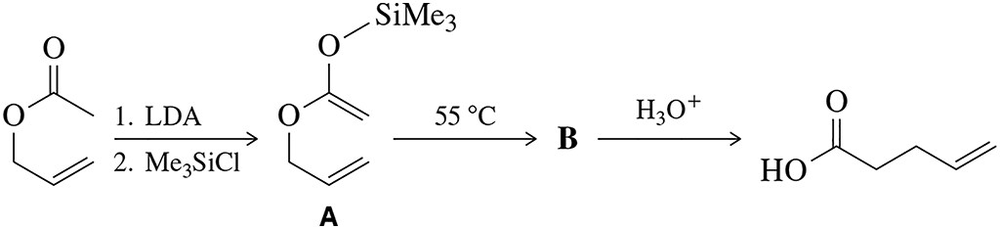
The Ireland–Claisen reaction is a variant of the Claisen reaction studied in this chapter.
(a) Suggest a mechanism for the first step.
(b) Predict the product (B) that would result from heating intermediate A.
(c) Hydrolysis of B gives a carboxylic acid.
Suggest a mechanism for this reaction.
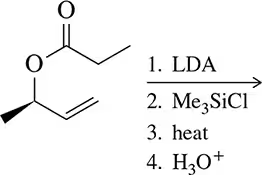
문제 54a
Only after working Assessment 22.53, predict the product of the following reactions.
(a)
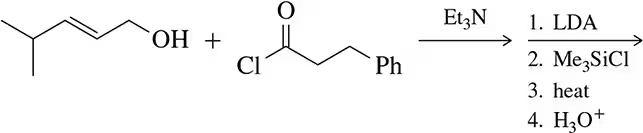
문제 54b
Only after working Assessment 22.53, predict the product of the following reactions.
(b)
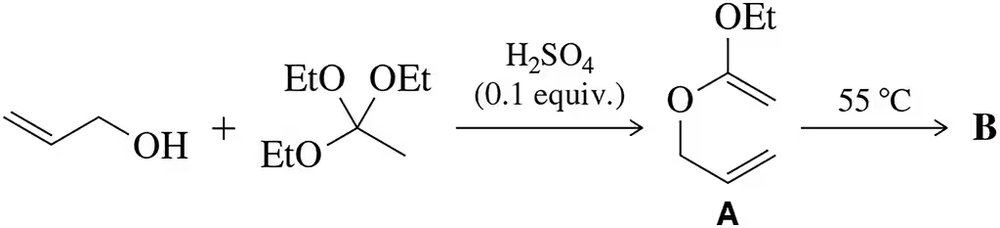
문제 55
The Johnson–Claisen reaction is a variant of the Claisen reaction studied in this chapter. (a) Suggest a mechanism for the first step. (b) Predict the product (B) that would result from heating intermediate A.
문제 56
The Eschenmoser–Claisen reaction is a variant of the Claisen reaction studied in this chapter. Based on your answers to Assessments 22.53–22.55, predict a product of this reaction.
문제 58
In Chapter 20, we studied the aldol reaction. Although not discussed at the time, this reaction is stereospecific, proceeding through the Zimmerman–Traxler transition state shown here.
(a) Show an arrow-pushing mechanism for this concerted reaction.
(b) Why is this a favorable mechanism?
문제 60
While not covered explicitly in this chapter, the ene reaction occurs similarly to the Diels–Alder reaction but replaces the electrons from one bond in the diene with the electrons in a C―H bond. Draw the mechanism for the following reaction. [Number the carbons and draw in the hydrogens of the product. And, of course, make a note of bonds formed and bonds broken.]
문제 62
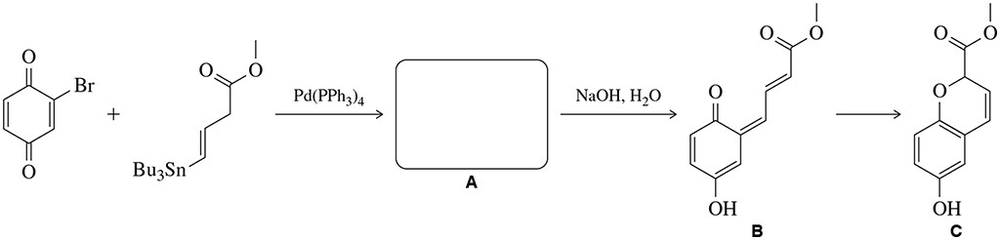
The product of the Stille coupling reaction (A) tautomerizes in a basic solution to give compound B. B spontaneously converts to C. (a) Propose a structure for A. (b) Suggest a mechanism for the conversion of A to B.
문제 62c
The product of the Stille coupling reaction (A) tautomerizes in a basic solution to give compound B. B spontaneously converts to C.
(c) Suggest a mechanism for the conversion of B to C




![Chemical structure illustrating a [2 + 2] cyclization reaction with hydroxyl and methoxy groups, indicating photochemical conditions.](https://static.studychannel.pearsonprd.tech/courses/organic-chemistry/thumbnails/223f2cb8-866f-4e15-b954-21178f20d122)