Ch 41: Atomic Physics
Knight Calc - Physics for Scientists and Engineers 5th Edition
Knight Calc5th EditionPhysics for Scientists and EngineersISBN: 9780137344796당신이 사용하는 게 아니라요?교과서 변경
41장, 문제 44b

Suppose you put five electrons into a 0.50-nm-wide one-dimensional rigid box (i.e., an infinite potential well). What is the ground-state energy—that is, the total energy of all five electrons in the ground-state configuration?

검증된 단계별 안내
1
Understand the problem: We are dealing with a one-dimensional infinite potential well (rigid box) of width 0.50 nm. The task is to calculate the total ground-state energy of five electrons, considering the Pauli exclusion principle and the quantized energy levels of the system.
Recall the energy levels for a particle in a one-dimensional infinite potential well: The energy of the nth quantum state is given by the formula: En = (n2h2)/(8mL2), where h is Planck's constant, m is the mass of the particle (electron in this case), and L is the width of the box.
Apply the Pauli exclusion principle: Electrons are fermions, so no two electrons can occupy the same quantum state. Each energy level can hold two electrons (one with spin up and one with spin down). For five electrons, the first two will occupy the n=1 level, the next two will occupy the n=2 level, and the fifth electron will occupy the n=3 level.
Calculate the energy for each occupied level: Use the formula for En to calculate the energy of the n=1, n=2, and n=3 levels. Multiply the energy of each level by the number of electrons occupying that level (2 for n=1, 2 for n=2, and 1 for n=3).
Sum the energies: Add the contributions from all occupied levels to find the total ground-state energy of the system. This will give you the total energy of the five electrons in the ground-state configuration.

비슷한 문제에 대한 검증된 영상 답변:

이 영상 해법은 위 문제에 도움이 된다고 튜터들이 추천한 것입니다.
도움이 되었나요?

주요 개념

질문에 올바르게 답하기 위해 반드시 이해해야 하는 핵심 개념들은 다음과 같습니다.

Quantum Mechanics and Infinite Potential Well

In quantum mechanics, an infinite potential well is a model where a particle is confined to a specific region of space with infinitely high potential barriers. This means the particle cannot exist outside this region. The energy levels of particles in such a well are quantized, leading to discrete energy states that depend on the width of the well and the mass of the particle.
추천 영상:
가이드 코스
07:24
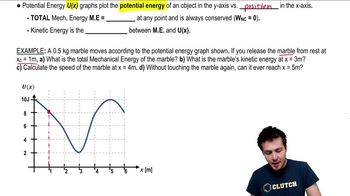
Potential Energy Graphs

Pauli Exclusion Principle

The Pauli Exclusion Principle states that no two fermions, such as electrons, can occupy the same quantum state simultaneously. In the context of the infinite potential well, this principle dictates that each electron must occupy a unique energy level, which affects the total energy calculation for multiple electrons in the system.
추천 영상:
가이드 코스
14:47
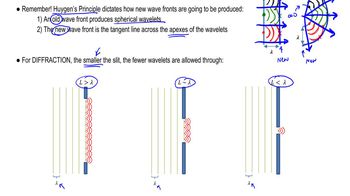
Diffraction with Huygen's Principle

Energy Levels in a Quantum Well

The energy levels of a particle in a one-dimensional infinite potential well are given by the formula E_n = n^2 * (h^2 / (8mL^2)), where n is the quantum number, h is Planck's constant, m is the mass of the particle, and L is the width of the well. For multiple electrons, the total ground-state energy is the sum of the energies of the lowest occupied levels, taking into account the Pauli Exclusion Principle.
추천 영상:
가이드 코스
04:10
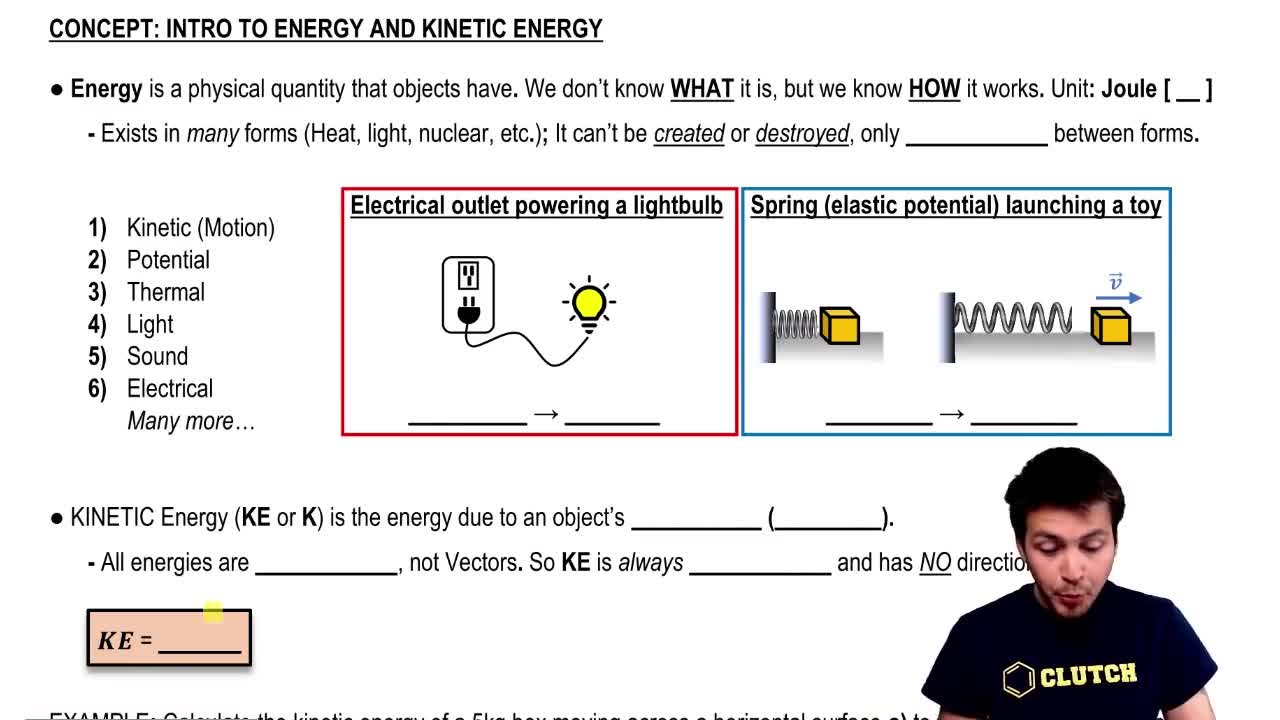
Intro to Energy & Types of Energy